Have you ever watched a professional film or vlog and wondered how they achieve such impossibly smooth, cinematic shots? The secret often lies in a powerful camera stabilizer, and in the competitive world of filmmaking, the DJI RS 4 (Standard Version) emerges as a true game-changer. Designed to deliver unparalleled stability and intuitive control, this single-handed gimbal is poised to transform how mirrorless camera users capture their stories.
In this in-depth review, we’ll dive into what makes the DJI RS 4 an indispensable tool for content creators. We’ll explore its innovative features, assess its performance in real-world scenarios, compare it to its siblings and competitors, and provide a comprehensive guide to help you decide if this is the ultimate stabilizer to elevate your craft. Get ready to discover the world of buttery-smooth footage.
What is a Camera Stabilizer, and Why You Need the DJI RS 4?
A camera stabilizer, often referred to as a gimbal, is a device designed to hold a camera and keep it steady, counteracting unwanted movements such as shakes, tilts, and pans. The result is fluid, professional-looking video footage that is free from jarring jitters. For anyone serious about video production, from enthusiastic vloggers to professional cinematographers, a reliable stabilizer is crucial for creating engaging, high-quality content that stands out.
The DJI RS 4 is a testament to the evolution of these essential tools. It goes beyond basic stabilization, offering advanced features that empower creators to achieve a cinematic aesthetic with ease. By eliminating the imperfections of handheld shooting, the RS 4 allows you to focus on storytelling, composition, and capturing dynamic movement. Whether you’re tracking a subject, executing complex crane shots, or simply walking and talking, the RS 4 ensures your audience experiences a smooth, immersive visual journey.
Key Features and Specifications of the DJI RS 4
The DJI RS 4 (Standard Version) packs a formidable array of features designed to enhance user experience and deliver superior stabilization. Understanding these core specifications will help you appreciate its capabilities.
At its heart, the RS 4 boasts a payload capacity of up to 3kg (6.6 lbs), making it an ideal companion for a wide range of mirrorless cameras and their accompanying lenses. This capacity is sufficient for popular full-frame setups, ensuring broad compatibility for most creators. Driving its exceptional performance is DJI’s cutting-edge 4th-Gen RS Stabilization Algorithm, which dynamically anticipates and compensates for camera movements, resulting in remarkably smooth footage even in challenging conditions.
 DJI RS 4 gimbal in action, stabilizing a mirrorless camera during a dynamic outdoor shoot, showcasing its smooth motion capabilities.
Significant design improvements are evident throughout the RS 4. It features a longer tilt-axis arm, a thoughtful upgrade that simplifies balancing, especially when incorporating additional accessories like microphones or external monitors. Complementing this, the Teflon-coated axis arms provide a smoother sliding motion during adjustments, making the balancing process quicker and more precise. The auto-locking axes automatically secure the gimbal when powered off and unlock upon startup, streamlining workflow. For fine-tuning, the geared design on the camera support plate allows for minute, accurate positioning of your camera’s center of gravity.
For content creators focused on social media, the native vertical shooting support is a standout feature. The RS 4 allows for quick and easy switching between horizontal and vertical orientations without the need for additional accessories, a huge advantage for platforms like TikTok and Instagram Reels.
Powering extended shoots, the standard BG21 Grip offers up to 12 hours of battery life, rechargeable via a convenient USB-C port. For those requiring even longer sessions, an optional BG70 Grip can extend runtime to an impressive 29.5 hours.
Control is intuitive with the RS 4’s 1.8-inch OLED touchscreen, which provides clear status information and easy menu navigation, even in bright sunlight. Physical controls include a customizable joystick for pan and tilt, a dedicated mode switch for quick transitions between Pan Follow (PF), Pan Tilt Follow (PTF), and First Person View (FPV) modes, and a front control wheel that can manage roll or, when paired with an accessory, manual focus. Bluetooth connectivity also enables seamless control of your camera’s recording functions directly from the gimbal.
Measuring approximately 14.6 by 7.4 by 7.5 inches when set up, the RS 4 weighs about 3.1 pounds, striking a balance between portability and robust build quality for extended single-handed operation.
Factors to Consider When Choosing a Camera Stabilizer: Is the RS 4 Right for You?
Selecting the ideal camera stabilizer involves weighing several crucial factors to ensure it aligns perfectly with your equipment and creative ambitions. The DJI RS 4 stands out for many, but its suitability depends on your specific needs.
Camera Type
|
Our Picks for the Best Camera Stabilizer in 2026
As an Amazon Associate I earn from qualifying purchases.
|
||
| Num | Product | Action |
|---|---|---|
| 1 | FeiyuTech SCORP 3 Gimbal Stabilizer for Camera, Built-in AI Tracking Sensor & Detachable Remote Control, 3.5KG Payload Camera Stabilizer with Touch Screen, Vertical Shooting |

|
| 2 | Zeadio Camera Stabilizer Kit, All-in-One Handheld Stabilizer with LED Video Light, Microphone, Phone Holder & Action Camera adaper, Fits for All Camera, DSLR, Action Camera and All Smartphones |
|
| 3 | DJI Osmo Mobile 7P Gimbal Stabilizer for iPhone, Android, Native Tracking, Lighting, 3-Axis Phone Gimbal, Quick Launch, One-Tap Edit, Built-in Extension Rod & Tripod, 10hrs Use, Phone Charging |
|
| 4 | ZHIYUN CINEPEER Weebill 3E [Official], 3-Axis Lightweight Gimbal Stabilizer for DSLR & Mirrorless Camera Canon/Sony/Panasonic/Nikon, 3KG Payload, Native Vertical Shooting, Bluetooth Shutter Control |
|
| 5 | DJI RS 3 Mini, 3-Axis Gimbal Stabilizer for Cameras Canon/Sony/Panasonic/Nikon/Fujifilm, 2 kg (4.4 lbs) Tested Payload, Camera Gimbal with Native Vertical Shooting, Black |
|
| 6 | DJI Osmo Mobile 8 Advanced Tracking Combo Gimbal Stabilizer for Phone, AI Native Tracking with Audio & Lighting, 360° Pan Rotation, Built-in Extension Rod & Tripod, 10h Battery, Extension Rod |
|
| 7 | FeiyuTech SCORP 2 Gimbal Stabilizer for DSLR and Mirrorless Camera, Integrated Al Tracking Sensor, 3-Axis Camera Stabilizer for Sony Canon Panasonic Nikon, 2.5kg Payload Touch Screen Vertical Shooting |
|
| 8 | 3-Shoe DSLR/Mirrorless/Action Camera Camcorder Phone Stabilizer Expansion Cage Mount Moviemaking Holder Rig YouTube Tiktok Vlogging Video Kit Compatible with GoPro Canon Nikon Sony iPhone Android |
|
| 9 | DJI Osmo Mobile 7 Gimbal Stabilizer for iPhone, Android, Built-in Tripod, Portable Stabilizer for iPhone, Selfie Stick, 3-Axis Phone Gimbal, ActiveTrack 7.0, One-Tap Edit, 10hrs Use, Phone Charging |
|
| 10 | Zeadio Video Action Stabilizing Handle Grip Handheld Stabilizer with Cold-Shoe Mount for All DSLR Camera Camcorder |
|
The DJI RS 4 is primarily designed for DSLR and mirrorless cameras. Its 3kg (6.6 lbs) payload capacity and robust build make it an excellent choice for midsize full-frame cameras such as the Sony a7 IV, Canon EOS R6 Mark II, Nikon Z 6 II, or Lumix S5 II, especially when paired with standard or wide-angle zoom lenses. However, if your setup includes larger cinema cameras or very heavy lenses, you might find the 3kg limit restrictive. For action cameras or smartphones, the RS 4 would be considered overkill. Smaller, more specialized gimbals like the DJI RS 3 Mini or dedicated smartphone gimbals would be more appropriate and cost-effective for these lighter setups.
Budget
Price is always a significant consideration. The DJI RS 4 (Standard Version) is typically priced around $549 USD, with a Combo kit offering additional accessories for approximately $719 USD. This places it in the mid-to-high range for single-handed gimbals. While it represents a significant investment, the value proposition lies in its professional-grade performance, intuitive design, and the ability to consistently produce high-quality, stable footage. For budget-conscious hobbyists, alternatives exist, but they may compromise on payload, features, or overall stabilization quality.
Intended Use
Your primary use case will heavily influence your choice. For vlogging and travel filmmaking, the RS 4’s relatively compact size, easy setup, and impressive battery life make it an excellent choice for dynamic, on-the-go shooting. The enhanced vertical shooting mode is particularly beneficial for creating quick, engaging content for social media. For sports and action-packed scenarios, the RS 4 is capable of handling fast movements, and its robust stabilization algorithm ensures smooth results. However, for extremely intense or high-impact sports, specialized action Camera Stabilizers or even more robust two-handed gimbals might be considered. For professional filmmaking and short films, the RS 4 delivers the cinematic quality required, especially for solo creators needing precise control over pan, tilt, roll, and focus.
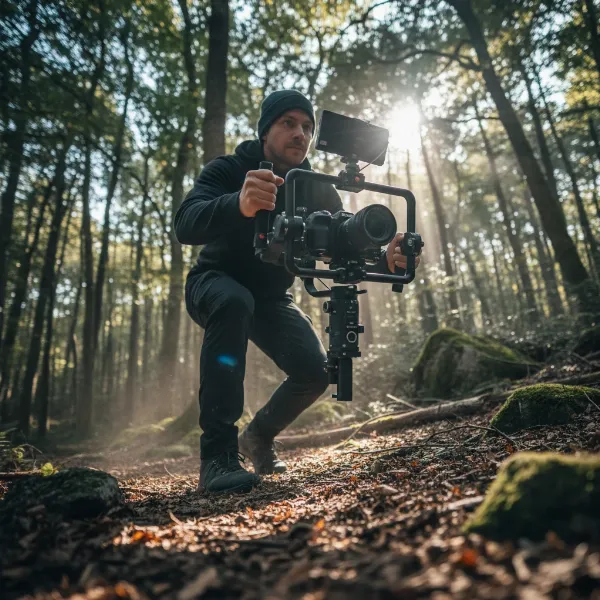 Filmmaker using a DJI RS 4 gimbal for a creative low-angle shot, highlighting its versatility and ease of use in diverse shooting scenarios.
Weight and Size Considerations
The RS 4 weighs approximately 3.1 pounds when set up, making it manageable for single-handed operation over long shooting periods, though fatigue can still set in during extremely extended sessions. Its payload capacity of 3kg (6.6 lbs) is crucial. It’s vital to ensure your camera and lens combination falls comfortably within this limit. Attempting to mount an overweight setup will strain the motors, compromise stabilization, and potentially damage the gimbal. If you anticipate needing to support heavier rigs frequently, or if you regularly use bulky lenses and accessories like matte boxes, the higher payload capacity of the DJI RS 4 Pro (4.5kg) would be a more suitable upgrade.
DJI RS 4 vs. Alternatives: A Comparative Look
Understanding how the DJI RS 4 (Standard Version) stacks up against its competitors and its own family members is crucial for making an informed decision.
DJI RS 4 vs. DJI RS 4 Pro
The most immediate comparison is with its more advanced sibling, the DJI RS 4 Pro. The primary distinction lies in payload capacity: the standard RS 4 supports up to 3kg, while the RS 4 Pro can handle a hefty 4.5kg (10 lbs). This increased capacity makes the Pro version better suited for larger cinema cameras or heavier professional lens setups. Beyond payload, the RS 4 Pro includes advanced features such as the 2nd-generation LiDAR focusing system and greater compatibility with a wider range of DJI accessories, including vehicle mounts. For most mirrorless camera users, the standard RS 4 offers ample performance and features, making the Pro a worthwhile upgrade only if your equipment demands the higher payload or specialized focusing capabilities.
DJI RS 4 vs. Older DJI Models (e.g., RS 3, RS 3 Mini)
Compared to its direct predecessor, the DJI RS 3, the RS 4 offers several quality-of-life improvements rather than a revolutionary overhaul. Key upgrades include the longer tilt-axis arm, Teflon-coated axes for smoother balancing, and enhanced native vertical shooting. If you already own an RS 3 and are satisfied with its performance, an immediate upgrade might not be necessary, as the core stabilization is still excellent. However, for users with older models lacking features like the geared balance plate or auto-locking arms, the RS 4 represents a significant step up in convenience and functionality.
The DJI RS 3 Mini, on the other hand, is a much lighter and smaller gimbal designed for smaller mirrorless cameras, APS-C bodies, or even compact full-frame cameras, with a payload of only 4.4 pounds. While highly portable, it lacks the RS 4’s robustness, payload capacity, and some advanced design elements like the geared balance plate. Upgrading from the RS 3 Mini to the RS 4 is a sensible choice for creators moving to larger camera setups or demanding more comprehensive feature sets.
DJI RS 4 vs. Other Brands (e.g., Zhiyun, Moza)
The gimbal market is competitive, with strong offerings from brands like Zhiyun and Moza. For instance, the Zhiyun Weebill 3 is often praised for its compact size and ergonomic design, making it a strong alternative for mirrorless users prioritizing portability. The Moza Air 2S is known for its robust build and higher payload capacity, often competing with the RS 4 Pro.
While these competitors offer compelling features, DJI often holds an edge in terms of its integrated ecosystem and strong brand reputation for reliability and innovation. The RS 4’s seamless compatibility with DJI’s Focus Pro system and the Ronin app provides a cohesive workflow that can be difficult for other brands to match. When considering alternatives, always compare payload capacity, battery life, stabilization performance, ease of use, and accessory ecosystem to find the best fit for your unique needs.
Getting Started: Setup, Usage Tips, and Maintenance
Mastering the DJI RS 4 is a straightforward process, but like any sophisticated piece of camera gear, it benefits from proper setup, smart usage, and consistent maintenance.
Balancing and Setup
One of the most critical steps for any gimbal is balancing your camera setup. The RS 4 makes this process notably easier thanks to its longer tilt-axis arm and Teflon-coated axis arms that allow for smoother, less frictional adjustments. The geared design on the camera support plate further simplifies fine-tuning the camera’s center of gravity. DJI has also implemented auto-locking axes, which automatically secure the gimbal when powered off and release when turned on, saving precious setup time.
Once the physical balance is achieved, the RS 4 offers an Auto-Calibrate function via its 1.8-inch OLED touchscreen. This optimizes motor strength for your specific camera and lens combination, ensuring peak performance. For first-time gimbal users, consulting the online manual is essential for detailed instructions. Initial activation and further fine-tuning of motion response and user profiles are managed through the Ronin smartphone app, which connects via Bluetooth. While an activation step, DJI allows up to five uses before activation is mandatory, minimizing immediate setup stress.
Tips for Smooth Footage
Achieving truly cinematic results with the RS 4 involves more than just balancing. Here are some pro tips:
- Explore Stabilisation Modes: Experiment with Pan Follow (PF), Pan Tilt Follow (PTF), and FPV (First Person View) modes to understand their unique effects on movement. The physical mode switch allows for quick transitions.
- Utilize the Front Control Wheel: This customizable wheel can control the roll axis for Dutch angle shots or, with the optional Focus Pro Motor, enable precise manual focus pulls directly from the gimbal.
- Consider the Combo Kit: If you frequently use manual lenses, the Focus Pro Motor included in the Combo kit is invaluable for smooth, controlled focus. The Briefcase Handle is also excellent for achieving stable low-angle shots.
- ActiveTrack with Ronin Transmitter: For solo creators, pairing the RS 4 with the optional Ronin Transmitter unlocks ActiveTrack, allowing the gimbal to intelligently follow a chosen subject, adding dynamic movement to vlogs and interviews.
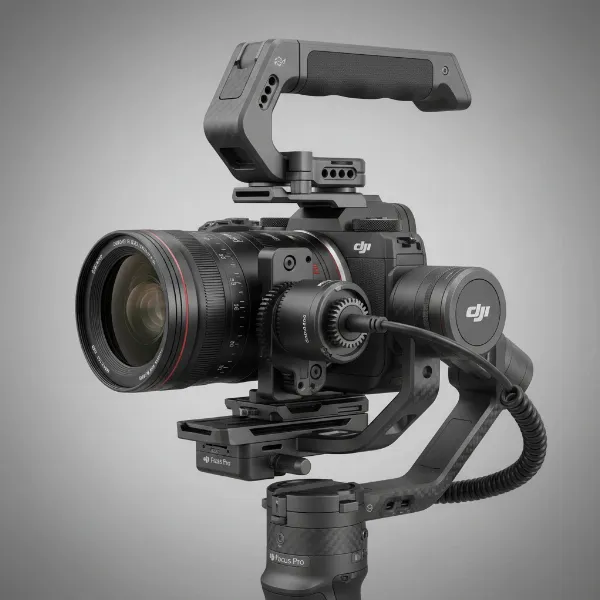 A close-up of a DJI RS 4 gimbal with the Focus Pro Motor and Briefcase Handle attached, demonstrating an enhanced setup for professional use.
Care and Maintenance
To ensure the longevity and optimal performance of your DJI RS 4, regular care is important:
- Clean Regularly: After each use, wipe down the gimbal with a soft, dry cloth to remove dust and debris. Be gentle around motors and joints.
- Check Screws: Periodically inspect and tighten any loose screws, as this can affect balance and overall stability.
- Update Firmware: DJI frequently releases firmware updates via the Ronin app that improve performance, add features, and fix bugs. Keep your gimbal updated for the best experience.
- Proper Storage: Always store the RS 4 in its dedicated carrying case (included with the Combo kit or available separately) to protect it from impacts, dust, and environmental elements. Its robust construction is designed for durability, but mindful storage extends its life.
> “The DJI RS 4 has truly streamlined my workflow. The quick balancing and native vertical shooting have saved me countless hours on set, allowing me to focus purely on creative direction.” – Timothy McDowell, Drone & Outdoor Tech Editor at Pixoneye.com
Where to Buy the DJI RS 4 (Standard Version)
When you’re ready to invest in the DJI RS 4, there are several reputable avenues for purchase, each offering different advantages.
The most direct option is purchasing from the official DJI website. This ensures you receive a genuine product, access to the latest firmware, and direct support from the manufacturer. You can also find the DJI RS 4 (Standard Version) at authorized retailers such as Amazon, B&H Photo, and Adorama. These retailers often offer competitive pricing, various shipping options, and sometimes bundle deals that can provide additional value.
Consider whether the Combo kit is worth the extra investment. It typically includes essential accessories like the Briefcase Handle, the Focus Pro Motor, and a zippered carrying case. These add-ons significantly enhance functionality and convenience, especially for professional use, and often cost more when purchased separately.
Before finalizing your purchase, always review the warranty and return policies of the retailer. DJI usually offers a standard one-year warranty, and many retailers provide a 14-day return window. Understanding these terms can provide peace of mind, especially for a significant investment. Be cautious of unofficial sellers or unusually low prices, as these may indicate counterfeit products or lack of warranty support.
Expert Buying Guide: Final Advice
As an Admin of StabilizerPro.com with over a decade of experience in camera stabilization, I can attest to the transformative power of a reliable gimbal. The DJI RS 4 (Standard Version) stands out as an exceptional choice for a broad spectrum of creators. Here’s my expert advice to help you make your final decision:
- Assess Your Current and Future Needs: Be honest about your camera gear. Does your camera and typical lens combination fall within the RS 4’s 3kg payload? Consider not just your current setup but also any planned upgrades. If you foresee moving to much heavier cinema cameras or specialized lenses, jumping straight to the RS 4 Pro might save you from a future upgrade.
- Prioritize Features Based on Your Workflow: If creating vertical content for social media is a core part of your strategy, the RS 4’s native vertical shooting support is a massive advantage. If manual focus is crucial to your cinematic style, the compatibility with the Focus Pro Motor is a key consideration.
- Read Reviews and Compare Thoroughly: While this review provides an in-depth look, always cross-reference with other trusted sources. Pay attention to user feedback regarding specific camera models you might own. Our comparison section offers a good starting point against other DJI models and competitor brands.
- Understand the Value of the Combo Kit: For most serious videographers, the Combo kit offers superior value. The included Briefcase Handle and Focus Pro Motor are highly functional accessories that enhance versatility and control, making the slightly higher price point justifiable.
- Don’t Overlook DJI Care Refresh: For professional users or those who frequently shoot in dynamic or risky environments, DJI Care Refresh offers extended warranty coverage, including accidental damage and replacements at a reduced cost. It’s an investment in peace of mind that can save you significant costs down the line.
The DJI RS 4 is more than just a camera accessory; it’s a creative tool that empowers you to tell your stories with unmatched fluidity and professionalism.
Conclusion
The DJI RS 4 (Standard Version) stands as a testament to DJI’s relentless innovation in camera stabilization. With its exceptionally smooth stabilization powered by the 4th-Gen RS Algorithm, user-friendly design improvements like the longer tilt-axis arm and auto-locking axes, and versatile native vertical shooting capabilities, it solidifies its position as an Editors’ Choice for mirrorless camera users. Its robust 3kg payload capacity and impressive battery life further enhance its appeal, making it a reliable workhorse for vloggers, filmmakers, and content creators alike.
While the RS 4 Pro caters to those with heavier setups, the standard RS 4 offers a perfect balance of features, performance, and price for the vast majority. It’s a tool that not only solves the problem of shaky footage but also unlocks new creative possibilities, allowing you to produce polished, professional-grade videos with confidence.
Are you ready to elevate your filmmaking and bring your creative vision to life with the unparalleled stability of the DJI RS 4?
Frequently Asked Questions
What is the maximum payload capacity of the DJI RS 4 (Standard Version)?
The DJI RS 4 (Standard Version) can support a maximum payload of up to 3 kilograms (approximately 6.6 pounds). This capacity makes it suitable for a wide array of mirrorless cameras and lens combinations, allowing creators to use professional setups effectively.
Does the DJI RS 4 support native vertical shooting?
Yes, the DJI RS 4 features enhanced native vertical shooting support. You can easily switch between horizontal and vertical orientations without the need for additional accessories, making it highly convenient for creating content optimized for social media platforms.
How does the DJI RS 4’s battery life compare to previous models?
The DJI RS 4 offers an impressive battery life of up to 12 hours with its standard BG21 Grip when stationary. This is a solid improvement over older models and can be further extended to nearly 30 hours with the optional BG70 High-Capacity Battery Grip, ensuring long shooting days.
Is the DJI RS 4 easy for beginners to use?
While all gimbals have a slight learning curve, the DJI RS 4 is designed with user-friendliness in mind. Features like the longer tilt-axis arm, Teflon-coated axes for easier balancing, and an intuitive touchscreen interface simplify the setup and operation process, though reading the online manual is recommended for new users.
What are the key differences between the DJI RS 4 and the RS 4 Pro?
The main differences between the DJI RS 4 and the RS 4 Pro are their payload capacity (3kg for standard vs. 4.5kg for Pro) and advanced features. The Pro version supports heavier camera setups and includes additional capabilities like the 2nd-generation LiDAR focusing system and broader accessory compatibility.