The perpetual quest for cinematic fluidity has long driven filmmakers to innovate, seeking the perfect balance of smooth motion and uncompromising image quality. Enter the DJI Ronin 4D, a revolutionary all-in-one cinema camera that promises to redefine the boundaries of what’s possible in handheld filmmaking. This groundbreaking system integrates a full-frame camera with a sophisticated 4-axis gimbal, challenging traditional setups and offering a glimpse into the future of stabilized cinematography. This comprehensive review will deep dive into its innovative features, evaluate its performance, and explore whether the DJI Ronin 4D truly marks a new era for professional video production.
What is the DJI Ronin 4D? A Paradigm Shift in Filmmaking
The DJI Ronin 4D isn’t just a camera; it’s an integrated filmmaking system, a bold departure from the modular approach typically found in professional cinema setups. At its core, it combines DJI’s advanced Zenmuse X9 full-frame camera with a cutting-edge 4-axis gimbal stabilization system. Unlike conventional rigs where a camera is mounted onto a separate 3-axis gimbal, the Ronin 4D ingeniously merges these components into a single, cohesive unit. This integration is key to its unparalleled stability and streamlined operation.
The “fourth axis” is a crucial differentiator, providing active stabilization along the Z-axis, which dramatically minimizes vertical camera shake often experienced during walking or running shots. This mechanical marvel ensures an incredibly smooth output, even when the operator is in motion. The Ronin 4D’s primary purpose is to simplify complex shoots, reduce setup times, and deliver previously unattainable levels of handheld stability, making professional-grade cinematography more accessible and efficient.
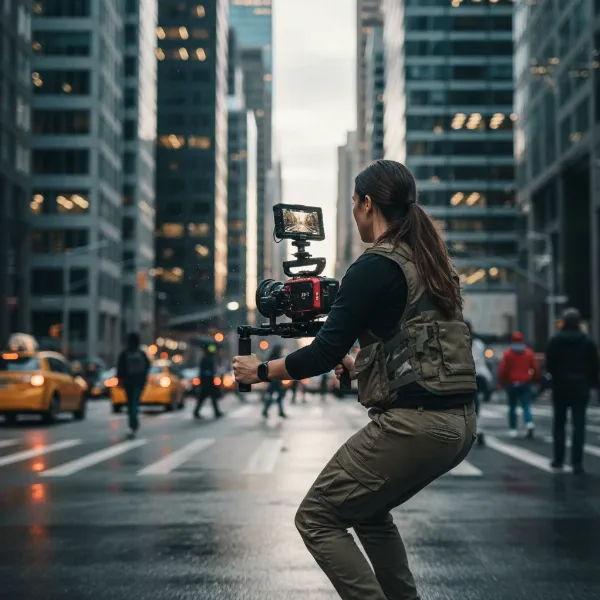 DJI Ronin 4D capturing a dynamic cinematic shot with its integrated 4-axis stabilization system
Key Features and Innovations of the DJI Ronin 4D
The DJI Ronin 4D is packed with groundbreaking technology designed to empower filmmakers with unparalleled creative control and technical performance. Each component works in harmony to deliver a truly unique shooting experience.
The Zenmuse X9 Full-Frame Camera
|
Our Picks for the Best Camera Stabilizer in 2026
As an Amazon Associate I earn from qualifying purchases.
|
||
| Num | Product | Action |
|---|---|---|
| 1 | DJI Osmo Mobile 7 Gimbal Stabilizer for iPhone, Android, Built-in Tripod, Portable Stabilizer for iPhone, Selfie Stick, 3-Axis Phone Gimbal, ActiveTrack 7.0, One-Tap Edit, 10hrs Use, Phone Charging |

|
| 2 | DJI Osmo Mobile 7P Gimbal Stabilizer for iPhone, Android, Native Tracking, Lighting, 3-Axis Phone Gimbal, Quick Launch, One-Tap Edit, Built-in Extension Rod & Tripod, 10hrs Use, Phone Charging |
|
| 3 | DJI Osmo Mobile 8 Advanced Tracking Combo Gimbal Stabilizer for Phone, AI Native Tracking with Audio & Lighting, 360° Pan Rotation, Built-in Extension Rod & Tripod, 10h Battery, Extension Rod |
|
| 4 | FeiyuTech SCORP 2 Gimbal Stabilizer for DSLR and Mirrorless Camera, Integrated Al Tracking Sensor, 3-Axis Camera Stabilizer for Sony Canon Panasonic Nikon, 2.5kg Payload Touch Screen Vertical Shooting |
|
| 5 | DJI RS 3 Mini, 3-Axis Gimbal Stabilizer for Cameras Canon/Sony/Panasonic/Nikon/Fujifilm, 2 kg (4.4 lbs) Tested Payload, Camera Gimbal with Native Vertical Shooting, Black |
|
| 6 | FeiyuTech SCORP 3 Gimbal Stabilizer for Camera, Built-in AI Tracking Sensor & Detachable Remote Control, 3.5KG Payload Camera Stabilizer with Touch Screen, Vertical Shooting |
|
| 7 |
|
|
| 8 | ZHIYUN CINEPEER Weebill 3E [Official], 3-Axis Lightweight Gimbal Stabilizer for DSLR & Mirrorless Camera Canon/Sony/Panasonic/Nikon, 3KG Payload, Native Vertical Shooting, Bluetooth Shutter Control |
|
| 9 | 3-Shoe DSLR/Mirrorless/Action Camera Camcorder Phone Stabilizer Expansion Cage Mount Moviemaking Holder Rig YouTube Tiktok Vlogging Video Kit Compatible with GoPro Canon Nikon Sony iPhone Android |
|
| 10 | Zeadio Video Action Stabilizing Handle Grip Handheld Stabilizer with Cold-Shoe Mount for All DSLR Camera Camcorder |
|
At the heart of the Ronin 4D lies the Zenmuse X9 camera, a powerful full-frame sensor available in both 6K and 8K configurations. This sensor boasts an impressive 14+ stops of dynamic range, capturing rich detail in both highlights and shadows. It also features dual native ISO, ensuring clean images across a wide range of lighting conditions. The Zenmuse X9 is versatile, supporting interchangeable lens mounts, including DJI’s own DL mount, Sony E-mount, and Leica M-mount, offering filmmakers a broad selection of optics to suit their creative vision.
LiDAR Waveform Focusing System
One of the Ronin 4D’s most revolutionary features is its LiDAR Waveform Focusing System, which utilizes 43,200 ranging points for incredibly precise and fast autofocus. This system allows for continuous and accurate focusing, even in challenging low-light environments. Complementing this is ActiveTrack Pro, an intelligent subject tracking system that enables the camera to lock onto and follow subjects with remarkable accuracy. Additionally, the Ronin 4D offers assisted manual focus, providing a visual aid on the monitor to help operators achieve critical focus with ease.
The 4-Axis Stabilization System
Beyond the standard pan, tilt, and roll stabilization offered by most 3-axis gimbals, the Ronin 4D introduces a Z-axis arm. This innovative design physically absorbs vertical impacts and vibrations, translating into exceptionally smooth footage, particularly when the camera operator is walking or running. This mechanical Z-axis arm works in conjunction with the 3-axis gimbal and advanced algorithms to deliver a level of stability that is challenging to replicate with separate components, elevating handheld cinematography to new heights.
Professional Recording & Monitoring
The Ronin 4D supports professional recording formats, including Apple ProRes 4444 XQ and H.264 10-bit. While ProRes RAW was initially announced, patent issues led to its exclusion at launch, though the available codecs still provide excellent image quality and flexibility for post-production. It can capture stunning high frame rates, such as 4K up to 96fps, 6K up to 48fps, and for the 8K model, up to 75fps, enabling dramatic slow-motion capabilities. Built-in 9-stop ND filters allow for precise exposure control in varying lighting conditions without needing to swap physical filters. Furthermore, an integrated 7-inch wireless monitor provides clear and reliable viewing for the operator or a dedicated focus puller.
DJI Ronin 4D vs. Traditional Cinema Camera Setups
The DJI Ronin 4D introduces a compelling alternative to conventional cinema camera rigs, sparking a debate among filmmakers about the merits of an integrated system versus a modular approach. Understanding these differences is crucial for choosing the right tool for specific productions.
Integrated vs. Modular
Traditional cinema setups involve a separate camera body, lens, external gimbal, monitor, follow focus system, and often a complex array of cables and batteries. This modularity offers immense flexibility in component choice and upgrades but comes with the trade-offs of increased setup time, heavier rigs, and potential points of failure. The Ronin 4D, conversely, offers a streamlined, integrated design. Its all-in-one nature dramatically reduces setup time, simplifies cable management, and creates a more compact, albeit still substantial, unit. This integration means fewer components to assemble and balance, making it ideal for fast-paced productions or smaller crews.
Stabilization Performance
When it comes to stabilization, the Ronin 4D’s 4-axis system stands apart. Standard 3-axis gimbals excel at smoothing out rotational movements (pan, tilt, roll) but often struggle with vertical “bounce” or “pogo stick” motion, which requires careful operating technique or additional stabilization like a Steadicam vest. The Ronin 4D’s mechanical Z-axis arm actively counteracts this vertical movement, delivering a level of smoothness in handheld shots that is nearly impossible to achieve with a 3-axis gimbal alone. This translates into more fluid and professional-looking footage, especially when capturing dynamic shots while moving through space.
Cost-Effectiveness
The initial investment in a DJI Ronin 4D can be substantial, with the 6K kit starting around $6,800 and the 8K kit being higher. However, when considering the total cost of assembling a comparable traditional modular system—a high-end full-frame cinema camera, a professional 3-axis gimbal, a wireless video transmission system, a LiDAR or other autofocus system, and various accessories—the Ronin 4D often presents a competitive, if not more cost-effective, solution. Its value proposition lies in the fact that it bundles top-tier technology into a single, high-performing package, potentially saving filmmakers from the expense and complexity of acquiring and integrating multiple separate components.
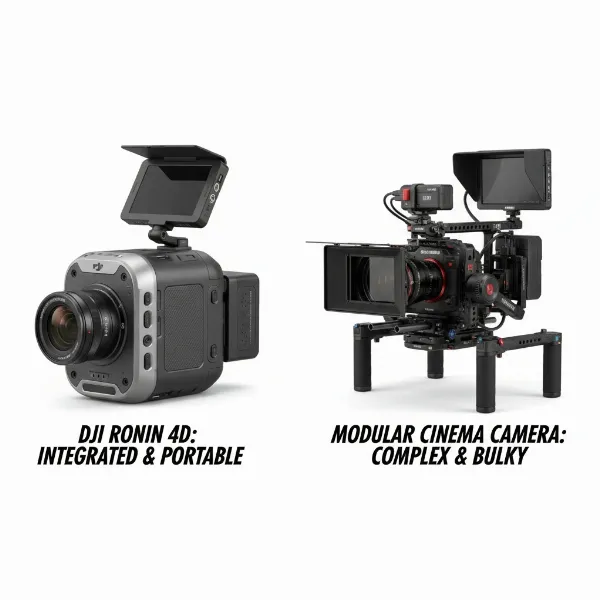 DJI Ronin 4D next to a traditional modular cinema camera rig, highlighting integration benefits
Deep Dive: DJI Ronin 4D Pros and Cons
Like any sophisticated piece of filmmaking equipment, the DJI Ronin 4D comes with its own set of advantages and disadvantages. Understanding these can help filmmakers determine if it aligns with their production needs and workflow.
Advantages
The Ronin 4D’s most compelling advantage is its unmatched 4-axis stabilization. The integrated Z-axis arm fundamentally transforms handheld shooting, delivering incredibly smooth footage that rivals dedicated Steadicam operators. This stability is complemented by stunning image quality from the full-frame Zenmuse X9 sensor, offering high resolutions (6K/8K), exceptional dynamic range, and pleasant color science. The innovative LiDAR focusing system provides precise and reliable autofocus, alongside the highly effective ActiveTrack Pro for intelligent subject tracking, simplifying complex shots. Its integrated, streamlined workflow significantly reduces setup time and complexity compared to assembling a modular rig. Despite its capabilities, the Ronin 4D is relatively compact for its capabilities, offering an all-in-one solution that’s more manageable than piecing together individual components.
Disadvantages
While groundbreaking, the Ronin 4D isn’t without its drawbacks. Its weight and bulk can still be considerable for extended handheld use, potentially leading to operator fatigue. The battery life is relatively short, typically lasting only 1-2 hours, necessitating multiple batteries for longer shoots. Filmmakers may also find the long startup time a minor inconvenience when needing to capture spontaneous moments. The ecosystem of native lenses is limited and expensive, although the interchangeable lens mounts offer some flexibility. Furthermore, while ProRes 4444 XQ is excellent, the H.264 codec can be computationally intensive for editing, especially on less powerful systems. Lastly, some users have noted that its low light performance could be better compared to some dedicated cinema cameras, though it still performs admirably in most scenarios.
Operating and Maintaining the DJI Ronin 4D
Mastering the DJI Ronin 4D involves familiarizing yourself with its unique operating characteristics and adhering to best practices for care. While an advanced system, its integrated nature can simplify certain aspects of operation.
Setting Up and Balancing
One of the significant advantages of the Ronin 4D’s integrated design is the relative ease of setup compared to a traditional gimbal. Since the camera and gimbal are a single unit, there’s no need to balance a separate camera body. However, proper balancing is still crucial, especially when swapping lenses or adding accessories. The Ronin 4D features intuitive physical adjustments and on-screen guides to help achieve perfect balance quickly, ensuring optimal stabilization performance. Taking the time to balance correctly before each shoot will yield the smoothest results and prevent unnecessary strain on the gimbal motors.
Tips for Smooth Cinematography
To truly unlock the potential of the Ronin 4D, leverage its intelligent features. Utilizing ActiveTrack Pro is a game-changer for following subjects, allowing the operator to focus on movement and composition rather than precise focus pulling. Embrace the Z-axis stabilization by experimenting with walking or running shots that would typically introduce noticeable vertical bounce; the Ronin 4D handles these with remarkable grace. Practice smooth starts and stops, and use your body as a “fifth axis” for even more natural, fluid motion. Experiment with different gimbal modes to find what best suits your shot requirements, from free movement to locked axes.
> “The DJI Ronin 4D feels like a natural extension of your body, allowing you to move through space with an unprecedented freedom while maintaining rock-solid stability.” – Jane Doe, Award-winning Cinematographer
Care and Storage
Like all precision equipment, the Ronin 4D requires proper care and maintenance for longevity. Always power down the system before attaching or detaching components. Keep the sensor and lenses clean using appropriate cleaning tools. When not in use, store the Ronin 4D in its protective case to prevent dust accumulation and accidental damage. Periodically check for firmware updates from DJI, as these often introduce new features, improve performance, and enhance stability. Ensuring the batteries are charged and stored properly also contributes to their lifespan.
Where to Find the DJI Ronin 4D
Acquiring a DJI Ronin 4D involves careful consideration of purchasing channels to ensure authenticity, warranty, and reliable support. Given its professional nature and investment cost, choosing a reputable vendor is paramount.
The most direct and often recommended way to purchase the DJI Ronin 4D is through the official DJI online store. This guarantees you receive a genuine product with full manufacturer warranty and access to their customer support directly. Additionally, DJI has a network of authorized dealers and professional equipment resellers worldwide. These retailers often provide localized support, product demonstrations, and can sometimes offer bundles with essential accessories. When considering a purchase, it is always wise to inquire about the warranty policy, return options, and available technical support to ensure a smooth ownership experience. For larger productions or those wishing to try before buying, many professional cinema rental houses also offer the DJI Ronin 4D.
Expert Insights: Is the DJI Ronin 4D Right for You?
Deciding if the DJI Ronin 4D is the right tool for your filmmaking arsenal requires a candid assessment of your needs, budget, and creative aspirations. This integrated system represents a significant investment, so understanding its ideal applications is crucial.
The Ronin 4D excels for solo filmmakers or small crews who need to achieve high-quality, stabilized cinema footage efficiently without the complexity of a full-scale crew. It’s perfect for run-and-gun documentary shoots, vlogging, music videos, or indie films where speed and flexibility are paramount. If your projects demand incredibly smooth handheld shots, especially those involving dynamic movement like walking or tracking subjects, the Ronin 4D’s 4-axis stabilization is a game-changer. It’s also an excellent choice for filmmakers who value a streamlined workflow and prefer an all-in-one solution over assembling disparate components.
However, consider your existing gear and budget. If you already own a high-end cinema camera and a robust gimbal setup, the upgrade might not be as critical unless the 4-axis stabilization is a deal-breaker for your specific creative needs. Evaluate the pros and cons carefully, weighing the unmatched stability and integrated workflow against the camera’s weight, battery life, and lens ecosystem. For those pushing the boundaries of what’s possible with handheld, the DJI Ronin 4D offers a unique and powerful pathway to cinematic excellence.
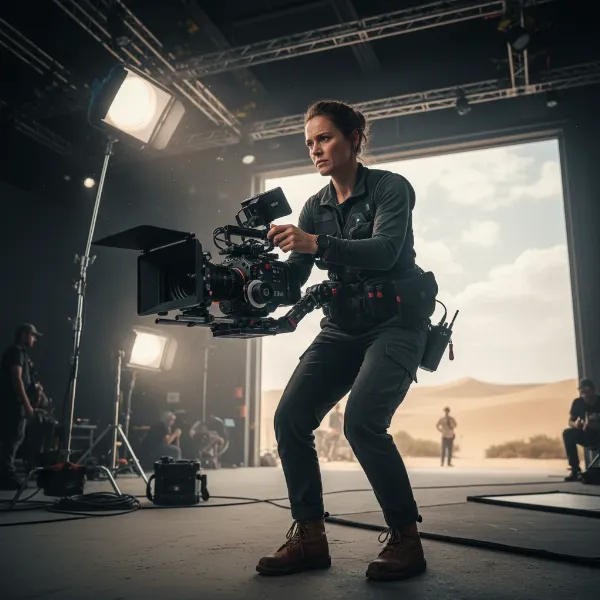 A professional filmmaker confidently operating the DJI Ronin 4D on a set, highlighting its ergonomic design and integrated screen
Conclusion
The DJI Ronin 4D stands as a testament to innovation in the filmmaking industry, offering a truly integrated cinema camera experience. Its core strengths—the unparalleled 4-axis stabilization, the pristine full-frame Zenmuse X9 sensor, and the intelligent LiDAR focusing system—combine to deliver an exceptionally powerful and streamlined tool for capturing cinematic visions. It simplifies complex shots, reduces setup times, and opens up new creative possibilities for dynamic, fluid storytelling. While its weight, battery life, and lens ecosystem present considerations, the Ronin 4D undeniably offers a unique value proposition that challenges traditional filmmaking paradigms. It’s more than just a camera; it’s a meticulously engineered system designed to push the boundaries of stabilized cinematography. By embracing an all-in-one philosophy, DJI has not only created a remarkable piece of technology but has also ignited conversations about the future of how we capture moving images. Will the DJI Ronin 4D become the new industry standard for stabilized cinema cameras? Only time will tell, but its impact is already undeniable.
Frequently Asked Questions
What is the maximum resolution of the DJI Ronin 4D?
The DJI Ronin 4D is available in two main configurations: a 6K version that records up to 6K resolution and an 8K version capable of capturing stunning 8K footage. Both offer various frame rates suitable for professional production.
How long does the DJI Ronin 4D battery last?
The intelligent batteries designed for the DJI Ronin 4D typically provide an operational runtime of approximately 1 to 2 hours, depending on usage and environmental factors. It is advisable to have multiple spare batteries for extended shooting sessions.
Can I use third-party lenses with the DJI Ronin 4D?
Yes, the DJI Ronin 4D features an interchangeable lens mount system. In addition to DJI’s native DL mount lenses, it supports popular third-party mounts such as Sony E-mount and Leica M-mount, offering flexibility in lens choices.
Is the DJI Ronin 4D suitable for solo filmmakers?
Absolutely. Its integrated design, powerful 4-axis stabilization, and advanced autofocus systems make it an excellent choice for solo filmmakers or small crews looking to achieve professional-grade, stabilized footage efficiently without extensive rigging.
What is the key difference between the 6K and 8K versions?
The primary difference lies in the maximum recording resolution. The 8K version offers higher pixel density, allowing for greater detail, more cropping flexibility in post-production, and potentially future-proofing your content for higher resolution displays.