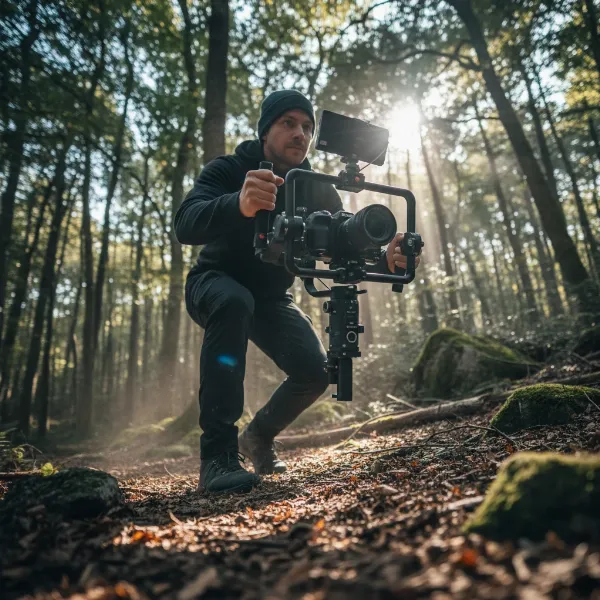
In today’s visually-driven world, capturing smooth, stable footage with your smartphone is no longer a luxury but a necessity for quality content. From travel vlogs to cinematic shorts, a reliable camera stabilizer transforms shaky handheld videos into professional-looking masterpieces. DJI, a leader in drone and camera technology, offers two highly popular smartphone gimbals: the Osmo Mobile SE and the Osmo Mobile 6. While both promise exceptional stabilization, subtle yet significant differences cater to distinct user needs and budgets. This comprehensive comparison will help you navigate their features, performance, and value, guiding you to the perfect gimbal for your creative journey.
What is a Camera Stabilizer? Why You Need One for Your Smartphone
A camera stabilizer, specifically a smartphone gimbal, is a device designed to hold your phone and use motors to counteract unwanted movements and vibrations, ensuring your footage remains incredibly smooth and steady. Unlike simple handheld shooting, which often results in shaky and unprofessional-looking videos, a 3-axis gimbal actively stabilizes your smartphone across its pan, tilt, and roll axes. This allows for fluid camera movements, dynamic tracking shots, and a polished, cinematic feel that elevates your content far beyond what’s achievable without one. Whether you’re capturing fast-paced action, subtle pans, or simply walking and talking, a good gimbal makes every shot count, enhancing your storytelling and engaging your audience more effectively.
Key Factors When Choosing a Smartphone Gimbal
Selecting the right smartphone gimbal involves weighing several practical considerations against your specific filming requirements and aspirations. Understanding these factors will ensure your investment genuinely enhances your mobile videography experience.
Your Smartphone Compatibility
|
Our Picks for the Best Camera Stabilizer in 2026
As an Amazon Associate I earn from qualifying purchases.
|
||
| Num | Product | Action |
|---|---|---|
| 1 | DJI RS 3 Mini, 3-Axis Gimbal Stabilizer for Cameras Canon/Sony/Panasonic/Nikon/Fujifilm, 2 kg (4.4 lbs) Tested Payload, Camera Gimbal with Native Vertical Shooting, Black |

|
| 2 | DJI Osmo Mobile 7P Gimbal Stabilizer for iPhone, Android, Native Tracking, Lighting, 3-Axis Phone Gimbal, Quick Launch, One-Tap Edit, Built-in Extension Rod & Tripod, 10hrs Use, Phone Charging |
|
| 3 | DJI Osmo Mobile 7 Gimbal Stabilizer for iPhone, Android, Built-in Tripod, Portable Stabilizer for iPhone, Selfie Stick, 3-Axis Phone Gimbal, ActiveTrack 7.0, One-Tap Edit, 10hrs Use, Phone Charging |
|
| 4 | Zeadio Camera Stabilizer Kit, All-in-One Handheld Stabilizer with LED Video Light, Microphone, Phone Holder & Action Camera adaper, Fits for All Camera, DSLR, Action Camera and All Smartphones |
|
| 5 | FeiyuTech SCORP 3 Gimbal Stabilizer for Camera, Built-in AI Tracking Sensor & Detachable Remote Control, 3.5KG Payload Camera Stabilizer with Touch Screen, Vertical Shooting |
|
| 6 | Zeadio Video Action Stabilizing Handle Grip Handheld Stabilizer with Cold-Shoe Mount for All DSLR Camera Camcorder |
|
| 7 | 3-Shoe DSLR/Mirrorless/Action Camera Camcorder Phone Stabilizer Expansion Cage Mount Moviemaking Holder Rig YouTube Tiktok Vlogging Video Kit Compatible with GoPro Canon Nikon Sony iPhone Android |
|
| 8 | FeiyuTech SCORP 2 Gimbal Stabilizer for DSLR and Mirrorless Camera, Integrated Al Tracking Sensor, 3-Axis Camera Stabilizer for Sony Canon Panasonic Nikon, 2.5kg Payload Touch Screen Vertical Shooting |
|
| 9 | DJI Osmo Mobile 8 Advanced Tracking Combo Gimbal Stabilizer for Phone, AI Native Tracking with Audio & Lighting, 360° Pan Rotation, Built-in Extension Rod & Tripod, 10h Battery, Extension Rod |
|
| 10 | ZHIYUN CINEPEER Weebill 3E [Official], 3-Axis Lightweight Gimbal Stabilizer for DSLR & Mirrorless Camera Canon/Sony/Panasonic/Nikon, 3KG Payload, Native Vertical Shooting, Bluetooth Shutter Control |
|
While most modern gimbals are designed to be broadly compatible, it’s crucial to check the supported dimensions and weight capacity for your specific smartphone. Both the DJI Osmo Mobile SE and OM 6 accommodate a wide range of smartphones, typically supporting devices with widths between 67-84mm and thicknesses of 6.9-10mm. Ensure your phone, especially if it’s a larger “Max” model or uses a bulky case, falls within these specifications to guarantee a secure fit and optimal balancing.
Budget Considerations
Price often plays a significant role in any purchase decision, and smartphone gimbals are no exception. The DJI Osmo Mobile SE is positioned as a more budget-friendly option, making it an attractive entry point for beginners or those with occasional stabilization needs. In contrast, the DJI Osmo Mobile 6, with its more advanced features and refined design, comes at a higher price point. Evaluating the added functionalities against their cost is essential to determine which model offers the best value for your investment.
Your Filming Needs
Consider your primary use case. Are you a casual user looking to improve family vacation videos or create simple social media content? Or are you a dedicated vlogger, aspiring filmmaker, or content creator who demands more precise control, advanced features, and a quicker setup for dynamic shooting scenarios? Your filming aspirations will heavily influence whether the essential functionality of the SE is sufficient or if the premium features of the OM 6 are justified.
Portability and Design
For creators on the go, the physical attributes of a gimbal are paramount. Both the SE and OM 6 are designed to be foldable and compact, making them easy to carry in a bag. However, there are subtle differences in their folded dimensions and overall weight. The Osmo Mobile 6 also integrates a built-in extension rod, a feature absent in the SE, which significantly enhances its versatility for high-angle shots, low-angle perspectives, or group selfies without additional accessories.
 A side-by-side comparison of DJI Osmo Mobile SE and OM 6 gimbals, highlighting their design differences and portability
DJI Osmo Mobile SE vs. OM 6: A Detailed Comparison
The DJI Osmo Mobile SE and OM 6 represent two compelling options within DJI’s popular smartphone gimbal lineup. While they share core stabilization capabilities, a closer look reveals key distinctions in their design, features, and overall user experience. This detailed comparison will help you understand where each model excels and which might be the better fit for your videography needs.
Comparison Table
| Feature | DJI Osmo Mobile SE | DJI Osmo Mobile 6 |
|---|---|---|
| Price (approx.) | $99 – $109 | $149 – $159 |
| Built-in Extension Rod | No | Yes |
| Control Wheel | No (Zoom slider only) | Yes (Side wheel for zoom/focus) |
| Quick Launch | No (Manual power on) | Yes (Unfold to power on & launch app) |
| Battery Life | ~8 hours (2600 mAh) | ~6.5 hours (1000 mAh) |
| Charging Time | ~2 hours 12 minutes | ~1 hour 24 minutes |
| Weight | ~352g (slightly heavier when folded) | ~309g (marginally lighter) |
| Magnetic Clamp | Standard magnetic clamp | Responsive magnetic clamp |
| Stabilization | 3-axis, ActiveTrack 5.0, RockSteady (earlier version) | 3-axis, ActiveTrack 5.0, RockSteady 2.0, HorizonSteady |
| Grip | Standard | More refined, textured grip |
| Tilt Range | Wider (-106.54° to 235.5°) | Standard (-101.64° to 78.55°) |
Understanding the Core Differences
Beyond the specifications, certain features fundamentally alter the user experience and creative possibilities offered by each gimbal.
Design and Build Quality
The Osmo Mobile 6 boasts a more refined and ergonomic design, featuring a textured grip that enhances comfort and stability during prolonged use. Its built-in extension rod, a standout feature, allows for greater creative flexibility, enabling users to capture unique high or low-angle shots and expansive selfies that are impossible with the SE without additional accessories. While both models utilize a magnetic phone clamp for quick attachment, the OM 6’s mechanism is often described as more responsive and seamless, allowing for faster transitions between shooting handheld and gimbal-mounted. The SE, while sturdy and portable, relies on a simpler twist-lock design for its attachment, which may require slightly more deliberate action.
Control and User Experience
One of the most significant upgrades in the Osmo Mobile 6 is the introduction of an intuitive side wheel. This multi-functional wheel provides seamless control over zoom and manual focus adjustments, offering a level of precision that professional videographers appreciate. In contrast, the Osmo Mobile SE features a more basic slider for zoom control, lacking the nuanced focus capabilities of its premium counterpart. Furthermore, the OM 6’s “Quick Launch” feature is a game-changer for spontaneous shooting. It instantly powers on the gimbal and can even launch the DJI Mimo app when your smartphone is attached, drastically reducing setup time and ensuring you never miss a fleeting moment. The SE, while quick to boot with a button press, lacks this instant-on functionality.
Battery Performance
Interestingly, the DJI Osmo Mobile SE takes the lead in battery longevity, offering approximately 8 hours of continuous use compared to the Osmo Mobile 6’s 6 to 6.5 hours. This extended runtime makes the SE a compelling choice for long shooting days or travel where charging opportunities are limited. However, the OM 6 compensates with a faster charging time, replenishing its battery in about 1 hour and 24 minutes, whereas the SE requires roughly 2 hours and 12 minutes for a full charge. This trade-off means the SE offers longer usage per charge, but the OM 6 gets back to action quicker when it does need power.
Stabilization Technology
Both gimbals provide excellent 3-axis stabilization, effectively eliminating shakes and jitters to deliver smooth, cinematic footage. They also both integrate DJI’s intelligent ActiveTrack 5.0, which ensures your subject remains perfectly framed, even during dynamic movements. However, some sources suggest the Osmo Mobile 6 incorporates advanced stabilization algorithms like “RockSteady 2.0” and “HorizonSteady,” offering enhanced performance, particularly during more vigorous movements or on uneven terrain. While the SE performs admirably under normal conditions with its version of RockSteady, the OM 6 might offer a slight edge in demanding situations, providing an even more consistently level horizon and smoother transitions.
Top Features Both Gimbals Share
Despite their differences, both the DJI Osmo Mobile SE and Osmo Mobile 6 are built on a foundation of robust, user-friendly features that make them excellent tools for smartphone videography.
First and foremost, both models boast 3-axis mechanical stabilization, the core technology that eliminates unwanted camera shake across the pan, tilt, and roll axes. This ensures your footage remains incredibly smooth and professional, regardless of your movement. You’ll also find ActiveTrack 5.0 in both gimbals, an intelligent tracking system that keeps your chosen subject perfectly in frame, even if they’re moving rapidly. This feature is invaluable for capturing dynamic action or solo vlogging.
Both gimbals feature a foldable design, making them highly portable and easy to pack for any adventure. The magnetic phone clamp is another shared convenience, allowing for quick attachment and detachment of your smartphone. Furthermore, the DJI Mimo app, compatible with both devices, unlocks a suite of intelligent shooting modes, including Time-Lapse, Motionlapse, Hyperlapse, DynamicZoom (Dolly Zoom), and Panorama. These modes empower users to unleash their creativity and produce unique, engaging content with ease. Gesture control is also present in both, allowing you to start recording or take photos with simple hand gestures, perfect for hands-free operation or group shots.
Who Should Buy Which Gimbal?
Choosing between the DJI Osmo Mobile SE and the OM 6 ultimately depends on your individual needs, budget, and how you plan to use the device.
Choose the DJI Osmo Mobile SE if…
- You are budget-conscious: The SE offers excellent stabilization and core features at a significantly lower price point, providing superb value.
- You are a casual user or beginner: Its straightforward design and essential functionalities are perfect for improving everyday smartphone videos without overwhelming complexity.
- You prioritize battery life: With up to 8 hours of runtime, the SE is ideal for extended shooting sessions where frequent charging might be inconvenient.
- Portability is key, but an extension rod isn’t a deal-breaker: While compact, you’re fine without the integrated selfie stick feature.
- You don’t need advanced manual control: The zoom slider is sufficient for your needs, and you don’t require precise focus adjustments via a side wheel.
Opt for the DJI Osmo Mobile 6 if…
- You are a serious vlogger, content creator, or aspiring filmmaker: The OM 6’s premium features offer more creative control and a refined user experience.
- You value quick setup and spontaneous shooting: The “Quick Launch” feature ensures you’re always ready to capture the moment.
- An integrated extension rod is important: This feature provides versatility for diverse shot angles and easier selfies/group shots.
- You desire precise control over zoom and focus: The side wheel offers a significant advantage for cinematic effects and manual adjustments.
- You prefer a more refined design and ergonomic grip: The OM 6 offers a slightly more premium feel and comfortable handling for longer shoots.
- You need faster charging times: If you often find yourself needing to quickly top up your gimbal between shoots, the OM 6’s faster charging is a benefit.
Tips for Maximizing Your Gimbal’s Potential
Once you have your DJI Osmo Mobile gimbal, unlocking its full potential involves a few key practices that will elevate your mobile videography.
First, master the art of balancing your smartphone. Proper balancing is crucial for optimal stabilization and to prevent strain on the gimbal motors. Most gimbals, including DJI’s, come with straightforward instructions to ensure your phone is centered and level before powering on. Second, delve deep into the DJI Mimo app. This companion application is more than just a remote control; it’s a creative powerhouse. Explore its various shooting modes like Story Mode for guided templates, DynamicZoom for unique visual effects, and Hyperlapse for captivating time-lapses. Experiment with these features to add diverse and professional touches to your videos.
Finally, practice smooth movements. While the gimbal handles stabilization, your movement still influences the shot’s quality. Walk with a slight bend in your knees (“ninja walk”) to further absorb shocks. Practice smooth pans and tilts using the joystick or side wheel (on the OM 6) to achieve fluid, cinematic transitions. Don’t be afraid to experiment with different camera angles and follow modes to discover what works best for your specific content. Regular practice will make operating your gimbal second nature, allowing your creativity to flow freely.
Where to Purchase Your DJI Osmo Mobile Gimbal
Acquiring your new DJI Osmo Mobile SE or OM 6 is a straightforward process, with several reliable options available to ensure you get a genuine product with appropriate support.
The most direct route is often through DJI’s official website. Purchasing directly from the manufacturer typically guarantees authenticity, access to the latest models, and comprehensive warranty and customer support. Additionally, major online electronics retailers such as Amazon, B&H Photo, Adorama, and Best Buy are authorized dealers for DJI products. These platforms frequently offer competitive pricing, user reviews, and diverse shipping options. It’s always a good idea to compare prices across these reputable sites. When buying, pay close attention to the seller’s reputation, read recent customer reviews, and understand the warranty and return policies to ensure a hassle-free experience. A reputable seller will offer clear information on product guarantees and provide support should any issues arise.
Expert Advice: Making Your Final Decision
Choosing between the DJI Osmo Mobile SE and the OM 6 doesn’t have to be a daunting task. As a camera stabilizer expert, I always advise focusing on your unique creative workflow and budgetary constraints.
“The best gimbal isn’t always the most expensive, but the one that perfectly matches your creative workflow and budget.” – Admin, StabilizerPro.com, Camera Stabilizer Expert
If you’re just starting out, or if your primary need is simply to eliminate shaky footage for casual videos and social media posts, the Osmo Mobile SE offers exceptional value and performance without unnecessary frills. Its longer battery life is a definite advantage for extended shooting. However, for those who are serious about mobile videography—vloggers, aspiring filmmakers, or creators who demand more granular control, quicker setup times, and enhanced versatility like an integrated extension rod—the Osmo Mobile 6 is undoubtedly the superior choice. The side wheel for focus and zoom, coupled with its Quick Launch feature, streamlines the creative process, allowing you to capture professional-grade content with greater ease and precision. Consider which features will genuinely impact your content creation and align with your shooting style.
Conclusion
Both the DJI Osmo Mobile SE and OM 6 are outstanding smartphone gimbals, each delivering DJI’s renowned 3-axis stabilization to transform your mobile footage. The Osmo Mobile SE stands out as an incredibly capable and affordable entry point, offering excellent battery life and core intelligent features for casual users and beginners. It proves that professional-looking smartphone videos don’t require breaking the bank. On the other hand, the Osmo Mobile 6 caters to more demanding creators, justifying its higher price with premium features like an integrated extension rod, a versatile side control wheel for precise adjustments, and the invaluable Quick Launch function. Its refined ergonomics and faster charging further enhance the user experience for those who prioritize efficiency and advanced creative control.
Ultimately, your choice hinges on your specific needs, creative ambitions, and budget. Do you prioritize maximum portability and an integrated selfie stick, or is extended battery life more crucial for your adventures? Which DJI Osmo Mobile gimbal will you choose to elevate your smartphone filmmaking?
Frequently Asked Questions
Does the DJI Osmo Mobile SE have ActiveTrack 5.0?
Yes, both the DJI Osmo Mobile SE and the Osmo Mobile 6 are equipped with ActiveTrack 5.0. This advanced tracking technology allows the gimbal to intelligently follow a chosen subject, keeping them smoothly and consistently in the center of your frame, even as they move dynamically.
Is the DJI Osmo Mobile 6 worth the extra cost over the SE?
The DJI Osmo Mobile 6 is generally considered worth the extra cost for creators who value features like the integrated extension rod for diverse shooting angles, the side wheel for precise zoom and manual focus control, and the convenient Quick Launch functionality. These additions significantly enhance creative flexibility and user experience for serious vloggers and mobile filmmakers.
Can I use the DJI Osmo Mobile SE with larger phones?
Both the DJI Osmo Mobile SE and OM 6 are designed to accommodate a wide range of smartphones, including larger models. They typically support phones with widths between 67-84mm and thicknesses of 6.9-10mm. Always check your specific phone’s dimensions against the gimbal’s specifications to ensure compatibility and proper balancing.