In the dynamic world of mobile videography, your smartphone has evolved far beyond a simple communication device, transforming into a sophisticated cinema rig. Yet, with the addition of high-quality anamorphic lenses, ND filters, external microphones, and powerful lights, your sleek smartphone can quickly become a front-heavy, unbalanced setup. This imbalance not only leads to shaky, unprofessional footage but also puts undue strain on your wrist and your gimbal’s motors. Mastering your mobile footage starts with understanding and implementing the right balancing solutions – specifically, the best counterweights for heavy phones.
What is a Counterweight for a Phone Stabilizer, and Why Do You Need One?
A counterweight for a phone stabilizer is essentially an adjustable mass designed to offset the weight of a heavy smartphone or its accessories, bringing the entire setup into a state of equilibrium. When you attach a substantial lens or other gear to your phone rig, the center of gravity shifts, creating torque that makes the setup difficult to hold steady. Counterweights redistribute this weight, neutralizing the rotational force and creating a “floating” system that feels lighter and more stable in your hand.
You need a counterweight because an unbalanced rig leads to several critical issues. First, it causes chronic wrist strain and fatigue, making long shooting sessions uncomfortable or impossible. Second, the gimbal motors have to work overtime to correct the imbalance, leading to reduced battery life and potential motor burnout over time. Most importantly, it results in inconsistent, shaky footage, undermining the professional quality you strive for. By achieving dynamic balance, you enhance stability, extend your shooting endurance, and protect your equipment.
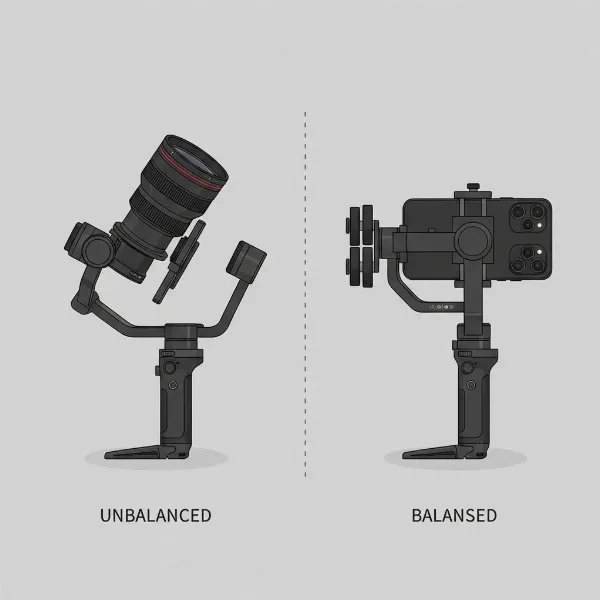 A smartphone on a gimbal, one side heavy, next to a balanced setup with counterweights.
Factors to Consider When Choosing Counterweights for Your Heavy Phone Setup
Selecting the ideal counterweight isn’t a one-size-fits-all solution; it depends on several factors specific to your gear and shooting style.
Type of Phone and Accessories
The primary consideration is the total weight and distribution of your smartphone and any mounted accessories. Modern flagship phones are already heavier, and adding substantial anamorphic lenses, matte boxes, external microphones, or LED lights will significantly shift the center of gravity.
- DSLR/Mirrorless Cameras with Phone Adapters: While less common, some setups might integrate a phone into a larger camera rig, requiring robust counterweights.
- Action Cameras (GoPro, DJI Osmo Action) on Mobile Gimbals: If adapted to a phone gimbal, their smaller size may still require minor adjustments.
- Smartphones with Extensive Rigs: This is the most common scenario, where heavy lenses, microphones, and lights demand precise counterweight solutions.
Budget
Counterweights come in various price points, from affordable universal kits to premium modular systems.
- Budget-friendly: Simple screw-on weights or clip-on sets are effective for minor adjustments.
- Mid-range: Stackable kits offer more precise control and adaptability.
- High-end: Integrated systems often come with specialized cages or quick-release plates for professional users.
Purpose of Use
Your shooting purpose dictates the level of precision and portability required from your counterweight system.
- Travel and Vlogging: You’ll prioritize compact, lightweight, and easy-to-adjust counterweights that don’t add significant bulk.
- Sports and Action: Durability and a secure mounting mechanism are crucial to withstand dynamic movements.
- Professional Filmmaking and Short Films: Precision, modularity, and the ability to fine-tune balance for complex rigs with multiple heavy accessories are paramount.
Weight and Size
Consider the overall form factor and how much additional weight you’re willing to carry.
- Portability: If you’re constantly on the move, smaller, lighter counterweights or systems that use fewer, more strategically placed weights are beneficial. Using longer extension arms for your counterweights rather than heavier ones can also help keep your rig light for travel.
- Payload Capacity: Ensure your gimbal itself has adequate payload capacity for your fully weighted setup. Most entry-level gimbals support up to 200g, but professional models can handle 300-500g or more, especially with powerful brushless motors.
- Load-Bearing Capability: The counterweights should be robust enough to hold the necessary mass securely without slipping.
Comparing Popular Counterweight Solutions
Various counterweight solutions are available, each with its strengths and ideal use cases.
| Feature | Stackable Weights (e.g., NEEWER) | Sliding Counterweights (Integrated) | Clip-on Weights (e.g., SmallRig) |
|---|---|---|---|
| Advantages | Highly precise, modular, adaptable | Seamless integration, cleaner look | Easy to attach/remove, versatile |
| Disadvantages | Can be bulky, requires threading | Limited adjustability, fixed to gimbal | Less precise, may obstruct access |
| Best For | Professional rigs, heavy lenses | Mobile gimbals with minor imbalance | Quick adjustments, light accessories |
Top Counterweight Systems for Heavy Phones
While specific product recommendations can change, certain types of counterweight systems consistently receive high praise for their effectiveness and versatility.
NEEWER Stackable Gimbal Counterweights
These are often 3x66g (200g total) weights that are stackable, allowing for precise balance. They are known for their durable, threaded build and compatibility with most gimbals. They are a go-to for professional shoots where fine-tuning is essential.
Universal Gimbal Counterweight Kit
These kits typically include a mounting bracket and several screw-on weights of varying sizes. They are budget-friendly and offer flexible configurations, making them suitable for balancing phones and light rigs.
SMALLRIG Counterweight Kit
SmallRig is renowned for its high-quality camera accessories. Their counterweight kits often feature premium metal builds and are cage-compatible, ideal for custom gimbal rigs, especially those with follow-focus systems or multiple external attachments.
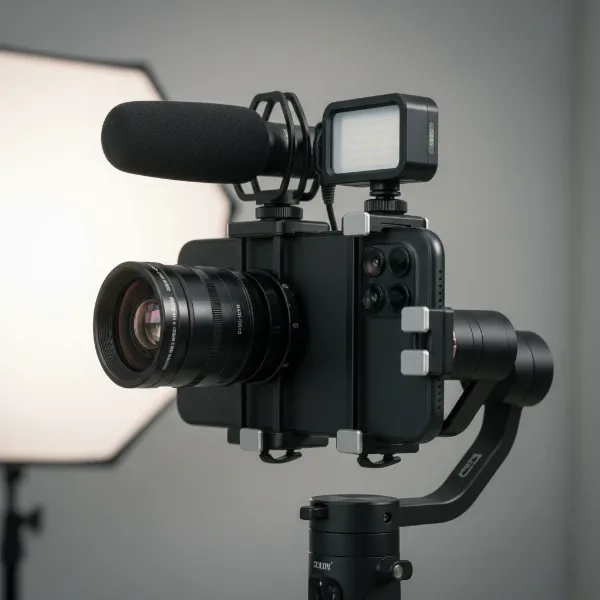 A mobile gimbal with a heavy smartphone and external accessories, balanced using various counterweights.
Guide to Using and Maintaining Your Phone Stabilizer with Counterweights
Achieving perfect balance is a blend of art and science. Follow these steps for optimal results.
Balancing and Setup
- Preparation is Key: Before mounting your phone, remove any bulky cases, pop-up lenses, or unnecessary handles that add weight. If you’re using an attachable lens, weigh it separately and factor it into your balance plan.
- Mount Your Phone and Initial Balance: Secure your phone to the gimbal. Observe its natural tilt: Is it leaning forward, backward, or to the side?
- Add Counterweights Incrementally: Many gimbals include removable counterweight rings or sliding weights. Add small, incremental counterweights to the opposite side of the heaviest point until the phone is perfectly level on all axes when the gimbal is powered off.
- Fine-Tuning: Use a smartphone tripod with a bubble-level attachment or a digital inclinometer app for precision. Aim for near-perfect horizontal balance on the tilt axis first, which simplifies pan and roll adjustments. A well-balanced gimbal should stay still when powered off and released, indicating minimal strain on the motors.
- Accessory Integration: Attach additional accessories (mics, lights) after achieving initial balance, then readjust the counterweights or gimbal arm position as needed. Remember the “Finger Balance” Test: attach all planned accessories, then gently rest the point where you grip the rig on a single finger. If it tips, you have a lopsided setup that needs more counterbalancing.
“The secret to buttery-smooth footage isn’t just a great gimbal, it’s meticulous balance. Counterweights are the silent heroes that make your rig feel weightless and your shots effortless.” – Alex Chen, Professional Mobile Cinematographer
Tips for Smooth Filming
- Practice Movement: Even with perfect balance, smooth filming requires practice. Learn to walk with a “ninja walk” to minimize vertical bobbing.
- Use Gimbal Modes: Familiarize yourself with your gimbal’s various modes (Pan Follow, Lock Mode, POV) and use them strategically for different shots.
- Adjust Motor Settings: Some gimbals allow you to adjust motor strength and responsiveness. Fine-tune these settings once your mechanical balance is achieved to further optimize stability.
Proper Care and Storage
- Clean Regularly: Wipe down your counterweights and gimbal to remove dust and grime, especially around moving parts and threads.
- Store Safely: When not in use, store counterweights in a dedicated pouch or case to prevent loss or damage. Detach them if they add excessive strain during storage.
- Check Connections: Periodically inspect screw threads and mounting points for wear and tear to ensure secure attachment.
Where to Purchase Your Counterweights
Finding the right counterweights is easier than ever, with many reputable options available.
- Specialty Camera and Video Stores: These stores often have knowledgeable staff who can help you identify the best counterweights for your specific gimbal and phone setup.
- Online Retailers (Amazon, B&H Photo, Adorama): Websites like Amazon offer a vast selection of universal and brand-specific counterweights, often with user reviews to help guide your decision. B&H Photo and Adorama are excellent for professional-grade options.
- Manufacturer Websites: Brands like DJI, Zhiyun, SmallRig, and Ulanzi often sell their proprietary counterweight kits directly, ensuring compatibility.
When purchasing, always check the product’s compatibility with your specific gimbal model and payload capacity. Pay close attention to customer reviews regarding ease of use, durability, and effectiveness. Familiarize yourself with the return and warranty policies before making a purchase.
Buying Guide: Expert Advice for Your Counterweight Investment
As an experienced technician, I’ve seen countless setups, and my advice is always consistent: don’t underestimate the power of proper balance.
- Define Your Needs: Clearly identify your phone model, the accessories you’ll use, and your typical shooting scenarios. A simple vlogging setup might need less precise balancing than a cinematic rig.
- Read Reviews and Compare: Look for reviews from users with similar phone and accessory configurations. Compare different kits based on weight options, mounting mechanisms, and overall build quality.
- Consider Modularity: Opt for stackable or modular counterweight systems if you frequently change your phone accessories, as they offer the most flexibility.
- Prioritize Compatibility: Ensure the counterweights are designed to work seamlessly with your specific gimbal and phone cage system. Check thread sizes (e.g., 1/4″-20) and mounting points.
- Factor in Longevity: Invest in durable materials like aluminum alloy, known for its rigidity and machining tolerances, to ensure your counterweights will last. While carbon fiber excels in vibration damping for support systems, precision-machined aluminum is standard for interfaces like quick-release plates.
Conclusion
Balancing a heavy phone on a stabilizer is not merely an optional step; it’s fundamental to achieving professional, smooth footage and protecting your equipment from unnecessary strain. By understanding the principles of torque and leverage, choosing the right counterweights, and carefully calibrating your setup, you can transform a cumbersome rig into an extension of your creative vision. Whether you’re a seasoned filmmaker or an aspiring vlogger, investing in the Best Counterweights For Balancing Heavy Phones is an investment in stability, comfort, and the overall quality of your mobile productions. What essential accessory have you found most challenging to balance on your mobile rig, and what’s your go-to solution?
Frequently Asked Questions
What is the most effective way to determine if my phone rig needs counterweights?
Perform the “Finger Balance” Test: With all accessories mounted, find your intended grip point and gently rest the rig on one finger. If it tips noticeably in any direction, your setup is unbalanced and will benefit significantly from counterweights to achieve a neutral, “floating” system.
Can I use DIY counterweights, or should I buy specialized ones?
While some users attempt DIY solutions like coins or washers, specialized counterweights are highly recommended. They are designed for precise weight, secure mounting, and adjustability, ensuring optimal balance without risking damage to your equipment or causing further instability.
How do counterweights affect gimbal battery life?
Properly balanced rigs significantly extend gimbal battery life. When a gimbal is unbalanced, its motors constantly expend extra energy trying to correct the lean. Counterweights alleviate this strain, allowing the motors to work more efficiently and conserve power.
What weight should I look for in counterweights for an iPhone 15 Pro Max with an anamorphic lens?
For heavy phones like the iPhone 15 Pro Max combined with an anamorphic lens and potentially other accessories, you’ll likely need a counterweight kit that offers a total of 100g to 200g, often in stackable increments, to allow for fine-tuning. Actual needs vary based on the specific lens and accessories.