As a seasoned technician with over a decade immersed in the dynamic world of camera stabilizers, I’ve seen countless innovations come and go. The quest for perfectly smooth, cinematic footage remains constant, and a reliable camera stabilizer is the filmmaker’s best friend. Today, we’re diving deep into a true workhorse that made waves a few years back: the Gudsen Moza Air 2S. The big question on everyone’s mind is, with new tech constantly emerging, does this robust gimbal still hold its own in 2026? Let’s break down its features, performance, and current value to help you decide if it’s the right choice for your evolving creative needs.
What is a Camera Stabilizer, and Why Do You Need One?
A camera stabilizer is an essential tool designed to eliminate unwanted camera shake and vibrations, ensuring your footage remains smooth and professional. Imagine capturing a tracking shot or a dynamic action sequence without distracting jitters – that’s the magic of stabilization. These devices allow filmmakers to create fluid, stable movements, transforming amateur-looking videos into polished, cinematic experiences.
There are several popular types of camera stabilizers, each with its own advantages. Gimbals, like the Moza Air 2S, use motorized axes to actively counteract movement, providing incredibly smooth results even during fast-paced action. Steadicams are mechanical stabilizers that rely on counterweights and an operator’s skill for fluid motion, often seen in professional film productions. Sliders, on the other hand, provide controlled linear camera movements, perfect for subtle reveals or product shots. For most modern videographers, a motorized gimbal offers the best balance of performance, versatility, and ease of use. The core benefit across all types is consistent: to deliver crisp, shake-free video that elevates your storytelling and captivates your audience.
Gudsen Moza Air 2S: A Closer Look at its Core Strengths
The Gudsen Moza Air 2S was launched to cater to demanding filmmakers, offering a blend of power and precision. Even today, its fundamental design and feature set present a compelling package.
Robust Build and Impressive Payload Capacity
|
Our Picks for the Best Camera Stabilizer in 2026
As an Amazon Associate I earn from qualifying purchases.
|
||
| Num | Product | Action |
|---|---|---|
| 1 | DJI RS 3 Mini, 3-Axis Gimbal Stabilizer for Cameras Canon/Sony/Panasonic/Nikon/Fujifilm, 2 kg (4.4 lbs) Tested Payload, Camera Gimbal with Native Vertical Shooting, Black |

|
| 2 | 3-Shoe DSLR/Mirrorless/Action Camera Camcorder Phone Stabilizer Expansion Cage Mount Moviemaking Holder Rig YouTube Tiktok Vlogging Video Kit Compatible with GoPro Canon Nikon Sony iPhone Android |
|
| 3 | DJI Osmo Mobile 8 Advanced Tracking Combo Gimbal Stabilizer for Phone, AI Native Tracking with Audio & Lighting, 360° Pan Rotation, Built-in Extension Rod & Tripod, 10h Battery, Extension Rod |
|
| 4 | DJI Osmo Mobile 7P Gimbal Stabilizer for iPhone, Android, Native Tracking, Lighting, 3-Axis Phone Gimbal, Quick Launch, One-Tap Edit, Built-in Extension Rod & Tripod, 10hrs Use, Phone Charging |
|
| 5 | ZHIYUN CINEPEER Weebill 3E [Official], 3-Axis Lightweight Gimbal Stabilizer for DSLR & Mirrorless Camera Canon/Sony/Panasonic/Nikon, 3KG Payload, Native Vertical Shooting, Bluetooth Shutter Control |
|
| 6 | FeiyuTech SCORP 3 Gimbal Stabilizer for Camera, Built-in AI Tracking Sensor & Detachable Remote Control, 3.5KG Payload Camera Stabilizer with Touch Screen, Vertical Shooting |
|
| 7 | Zeadio Camera Stabilizer Kit, All-in-One Handheld Stabilizer with LED Video Light, Microphone, Phone Holder & Action Camera adaper, Fits for All Camera, DSLR, Action Camera and All Smartphones |
|
| 8 | Zeadio Video Action Stabilizing Handle Grip Handheld Stabilizer with Cold-Shoe Mount for All DSLR Camera Camcorder |
|
| 9 | FeiyuTech SCORP 2 Gimbal Stabilizer for DSLR and Mirrorless Camera, Integrated Al Tracking Sensor, 3-Axis Camera Stabilizer for Sony Canon Panasonic Nikon, 2.5kg Payload Touch Screen Vertical Shooting |
|
| 10 | DJI Osmo Mobile 7 Gimbal Stabilizer for iPhone, Android, Built-in Tripod, Portable Stabilizer for iPhone, Selfie Stick, 3-Axis Phone Gimbal, ActiveTrack 7.0, One-Tap Edit, 10hrs Use, Phone Charging |
|
One of the most striking aspects of the Moza Air 2S is its construction. Built with a strengthened, engineered metal body, this gimbal exudes durability. It feels reassuringly solid in hand, designed to withstand the rigors of demanding filming environments. This robust build isn’t just for show; it contributes directly to its impressive performance.
The Moza Air 2S boasts a maximum payload capacity of 4.2 kg (9.3 lbs). This is a significant figure, enabling it to comfortably support a wide range of DSLR and mirrorless cameras, even when paired with heavier professional lenses and accessories. For filmmakers working with setups like a Canon 5D Mark IV with a 24-70mm lens, or a Panasonic GH5 with a fast prime, the Air 2S provides ample power without feeling strained. This high payload capacity means fewer limitations on your choice of camera and lens, giving you more creative freedom.
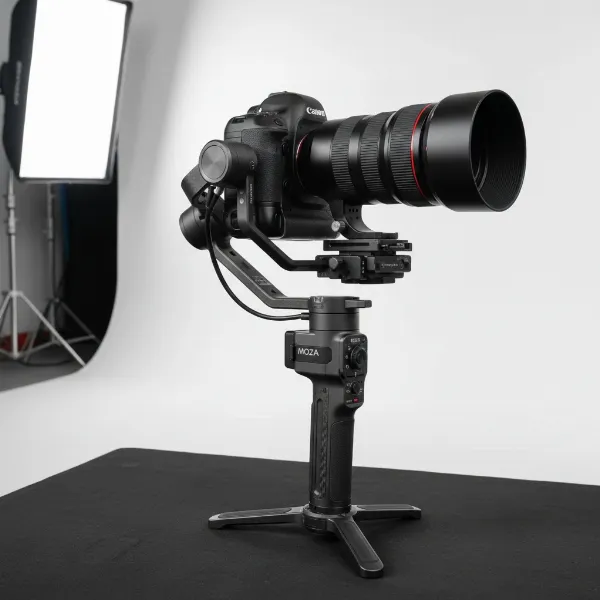 Gudsen Moza Air 2S gimbal showcasing its robust metal build and high payload capacity with a professional camera mounted
Unmatched Battery Life and Smart Power
In the field, nothing is more frustrating than a dying battery. The Moza Air 2S addresses this head-on with an exceptionally powerful built-in 3200mAh high-capacity battery. This powerhouse can deliver up to an incredible 20 hours of runtime on a single charge. This means you can film from dawn till dusk, or even over multiple shorter shoots, without constantly worrying about finding an outlet.
Beyond its impressive endurance, the Air 2S supports 30W fast charging, allowing it to go from empty to full in approximately two hours. This is a game-changer for tight schedules. Furthermore, the gimbal features an independent USB-C charging interface that not only charges the gimbal but can also supply power to external devices like monitors, wireless transmitters, or even your camera, extending the life of your entire rig during long shooting days. This “non-stop operation concept” is a significant advantage for professional workflows.
Intuitive Controls and Smart Micro Handwheel
While powerful, a gimbal must also be easy to control. The Moza Air 2S excels here with an intuitive control scheme. Its small yet clear OLED screen provides direct access to the menu, remaining visible even in bright sunlight. The handle features twelve buttons, offering direct access to various gimbal and camera functions, minimizing the need to dive into complex menus.
A standout feature is the Smart Micro Handwheel. This tactile, precision control allows for incredibly fine adjustments to focus, pan, and tilt movements. Whether you’re pulling focus smoothly or executing delicate camera movements, the handwheel provides a level of precision that enhances your creative control. This mechanical input offers a more organic and responsive experience compared to purely digital controls.
Advanced Stabilization and Creative Modes
At its core, the Moza Air 2S is about delivering smooth footage, and it does so with aplomb. Its motors are strong and responsive, providing excellent stability across various shooting scenarios – from walking shots to more dynamic movements. Users have consistently praised its smooth, reliable performance, noting a lack of vibrations or jitters in their footage.
The gimbal also offers a suite of intelligent shooting modes that unlock creative possibilities:
- FPV Mode: Allows all three axes to rotate 360°, useful for mimicking a dynamic, first-person perspective.
- Inception Mode 3.0: Automatically rotates the gimbal head, creating a unique barrel roll effect.
- Mimic Motion Control: Allows you to control gimbal movement by mimicking your smartphone’s motion (via the app).
- Object Tracking: Select a subject in the mobile app, and the gimbal will automatically follow it. (Note: Some users reported inconsistent performance on Android devices in older reviews, so testing with your specific phone is recommended).
- Motion Track Recording & Record and Repeat Follow Focus Movement: For programmable, repeatable shots.
- Sports Gear Mode: Enhances responsiveness for capturing fast-moving action.
These modes, combined with its robust stabilization, make the Moza Air 2S a versatile tool for various filmmaking styles.
Factors to Consider When Choosing a Camera Stabilizer Today
Choosing a camera stabilizer in 2026 means navigating a rapidly evolving market. While the Moza Air 2S remains a strong contender, it’s crucial to weigh its strengths against your specific needs and the latest technological advancements.
Your Camera System
The type of camera you primarily use is the most critical factor.
- DSLR/Mirrorless Cameras: The Moza Air 2S shines here. Its 4.2 kg payload capacity makes it ideal for heavier camera and lens combinations that might overwhelm smaller gimbals. If you frequently use professional-grade mirrorless cameras like a Sony a7S III, Canon R5, or even smaller cinema cameras, the Air 2S has the muscle to handle them.
- Action Cameras (GoPro, DJI Osmo Action): The Air 2S is overkill. Smaller, dedicated action camera gimbals or the cameras’ built-in stabilization are more appropriate.
- Smartphones: While the Air 2S can technically support heavier smartphone rigs, dedicated smartphone gimbals are far more portable, user-friendly, and cost-effective for mobile videography.
Budget & Value in 2026
When it was released, the Moza Air 2S offered competitive features at a price point often more accessible than some of its direct rivals. In 2026, as an older model, its price has likely decreased further, making it an attractive option on the used or refurbished market for those seeking high performance without breaking the bank. The value proposition is strong if you prioritize payload capacity and battery life over the very latest software bells and whistles or the absolute lightest design.
Your Filming Needs
Consider your primary use cases:
- Travel Vlogging/Quick Shoots: The Moza Air 2S, weighing around 1.9 kg (with battery), is not the lightest option. For maximum portability, lighter gimbals (often with lower payload capacities) might be preferred.
- Sports/Action Filming: The robust motors and Sport Gear Mode of the Air 2S make it well-suited for dynamic action. Its strong build also inspires confidence in rugged environments.
- Professional Productions/Short Films: Its high payload, long battery life, and precise controls make it a solid choice for more demanding productions where reliable performance and the ability to carry heavier cinema lenses are paramount. The ability to power external accessories is also a big plus.
Portability vs. Power
There’s always a trade-off. The Moza Air 2S offers impressive power and payload capacity, but this comes with a certain weight and size. While not excessively large, it’s a professional tool designed for robust setups, not pocketability. If lightweight travel is your top priority and you use lighter camera setups, you might find more compact alternatives appealing, even if they sacrifice some payload or battery life. Conversely, if you prioritize power and stability for heavier rigs, the Air 2S’s size is a worthwhile compromise.
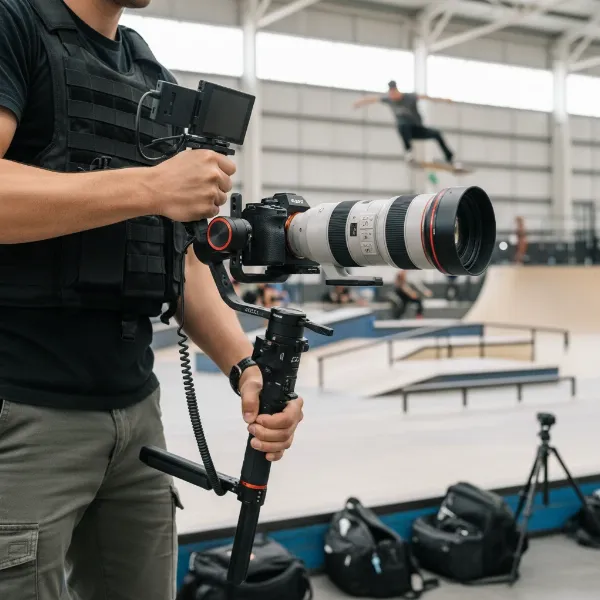 Gudsen Moza Air 2S gimbal stabilizing a professional mirrorless camera with a versatile lens, illustrating its wide camera compatibility
Moza Air 2S vs. Modern Competitors: Does it Hold Up?
The gimbal market has seen continuous innovation since the Moza Air 2S’s release. DJI, in particular, has pushed boundaries with its RS series. Let’s compare the Moza Air 2S against two popular modern DJI alternatives: the DJI RS 3 and the more powerful DJI RS 3 Pro.
| Feature | Gudsen Moza Air 2S (Approx. 2021) | DJI RS 3 (Approx. 2022) | DJI RS 3 Pro (Approx. 2022) |
|---|---|---|---|
| Max Payload | 4.2 kg (9.3 lbs) | 3.0 kg (6.6 lbs) | 4.5 kg (10 lbs) |
| Gimbal Weight | 1.9 kg (4.2 lbs) | 0.99 kg (2.18 lbs) | 1.14 kg (2.51 lbs) |
| Battery Runtime | Up to 20 hours | Up to 12 hours | Up to 12 hours |
| Charging Time | 2 hours (30W fast charge) | 2.5 hours (18W fast charge) | 1.5 hours (24W fast charge) |
| Quick Release | Manfrotto-compatible with hard stop | Dual-layered with fine-tuning knob | Dual-layered with fine-tuning knob |
| Axis Locks | Manual 3-axis locks | Automated Axis Locks | Automated Axis Locks |
| Display | OLED screen | 1.8″ OLED Touchscreen (color) | 1.8″ OLED Touchscreen (color) |
| Unique Features | Smart Micro Handwheel, USB-C power out | Bluetooth Shutter, SuperSmooth, Force Mobile | ActiveTrack Pro, LiDAR, Carbon Fiber build |
The comparison clearly shows that while the Moza Air 2S holds its own in terms of maximum payload capacity and significantly surpasses newer models in battery runtime, modern gimbals like the DJI RS 3 and RS 3 Pro offer advancements in other areas.
DJI’s automated axis locks are a major convenience, speeding up setup and breakdown significantly. Their larger, color OLED touchscreens provide a more interactive user experience. The RS 3 Pro, in particular, integrates advanced features like LiDAR autofocus and ActiveTrack Pro (with additional accessories), which are cutting-edge for precise subject tracking and focus with manual lenses. Newer gimbals also often benefit from lighter carbon fiber materials (like the RS 3 Pro) and more refined stabilization algorithms.
However, the Moza Air 2S’s raw power in handling heavy setups and its exceptional battery life remain highly competitive. The “non-stop operation concept” with external power output is also a unique advantage. While it might lack some of the automated conveniences or advanced AI tracking of the latest models, its core stabilization performance and robust design are still highly effective.
Practical Usage and Longevity: Tips for the Moza Air 2S
To maximize your experience with the Gudsen Moza Air 2S, even in 2026, a few practical tips can make all the difference.
Balancing and Setup
The Moza Air 2S features a one-step balancing system and three-axis locks. Take the time to meticulously balance your camera before every shoot. The quick-release plate, compatible with Manfrotto plates, includes a hard stop, which means once balanced, you can remove and re-attach your camera without needing to re-balance entirely. This is a huge time-saver. Always ensure all three axes are properly locked during transport to protect the motors.
Mẹo Quay Phim Mượt Mà Với Stabilizer
Here are some tips to get the smoothest footage:
- Walk Like a Ninja: Bend your knees and walk softly, rolling your feet from heel to toe to absorb shocks.
- Use Two Hands: For heavier setups or longer shoots, utilize the gimbal’s ergonomic handle with both hands for better control and reduced fatigue.
- Practice Your Moves: Experiment with different gimbal modes and movements. The Smart Micro Handwheel is excellent for slow, deliberate pans and tilts.
- Firmware Updates: While less frequent for older models, regularly check the Gudsen website for any available firmware updates. These can sometimes bring performance improvements or new features.
Vệ Sinh và Bảo Quản Stabilizer Đúng Cách
Proper maintenance ensures the longevity of your investment:
- Keep it Clean: Use a soft, dry cloth to wipe down the gimbal after each use, especially if shooting in dusty or humid environments.
- Protect the Motors: Avoid putting strain on the motors. Always power off the gimbal and engage the axis locks before mounting or unmounting your camera, or during transport.
- Store Properly: When not in use, store the Moza Air 2S in its carrying case to protect it from dust and physical damage.
- Battery Care: For long-term storage, charge the battery to about 50-60% capacity. Avoid completely draining or overcharging the battery for extended periods.
Mua Camera Stabilizer Ở Đâu?
If you’re looking to acquire a Gudsen Moza Air 2S in 2026, your purchasing options might differ from newer models.
- Online Marketplaces (Used/Refurbished): Websites like eBay, B&H Photo (for used gear), or specialized used camera equipment retailers are your best bet. Given its age, you’re unlikely to find it new from major retailers.
- Second-hand Forums/Groups: Filmmaking communities and forums often have ‘for sale’ sections where you might find a well-maintained unit.
- Local Camera Stores: Some independent camera stores might have used units, allowing you to inspect the gimbal physically before buying.
Lưu ý Khi Mua Hàng: Chính Sách Bảo Hành, Đổi Trả
When buying a used or refurbished Moza Air 2S:
- Check Condition Thoroughly: Ask for detailed photos or inspect the unit in person. Look for signs of wear and tear, especially on the motors and battery contacts.
- Test Functionality: If possible, test all axes, controls, and modes. Ensure the balancing mechanism works correctly.
- Seller Reputation: Buy from reputable sellers with good reviews or ratings.
- No Warranty Expectation: For older, used gear, a manufacturer’s warranty is unlikely. Factor this into your purchasing decision and budget.
- Return Policy: Understand the seller’s return policy before committing to a purchase.
Buying Guide: Lời khuyên từ chuyên gia
As someone who has navigated the complexities of camera stabilization for years, my advice for considering the Gudsen Moza Air 2S in 2026 is clear:
> “The Moza Air 2S remains a formidable tool for filmmakers who prioritize raw power, extended battery life, and precise control over the latest automated bells and whistles. Its value proposition, especially on the secondary market, is incredibly strong for those with heavier camera setups and a discerning eye for quality.” – Admin, StabilizerPro.com, Camera Stabilizer Expert
First and foremost, define your needs and purpose. If you consistently work with heavier DSLR or mirrorless cameras and a variety of lenses, and long shooting days are the norm, the Air 2S’s 4.2 kg payload and 20-hour battery are still incredibly compelling. If you’re a run-and-gun shooter with a lightweight mirrorless camera or primarily focus on mobile content, newer, lighter, and more automated gimbals might offer a more streamlined experience.
Secondly, read reviews and compare products. While most reviews for the Moza Air 2S are from its initial release, they highlight its core strengths and weaknesses. Use current reviews of competing gimbals to understand how the market has evolved and where newer tech might offer advantages that are critical to your workflow.
Finally, research warranty and support policies. While direct manufacturer support for an older model might be limited, understanding what recourse you have (e.g., seller’s return policy, third-party repair options) is crucial when buying used gear. The Gudsen brand has had mixed reviews regarding customer service in the past, a factor to consider for long-term ownership of any product.
Ultimately, the Moza Air 2S, despite its age, continues to be a robust and capable Camera Stabilizer. Its enduring strengths make it a smart choice for specific users, particularly those who need to handle substantial camera payloads for extended periods.
 Expert holding a Gudsen Moza Air 2S, emphasizing its professional usage and an insightful buying guide
In 2026, the Gudsen Moza Air 2S stands as a testament to solid engineering and thoughtful design. Its impressive 4.2 kg payload capacity and industry-leading 20-hour battery life mean it can still power through demanding professional shoots, making it an excellent value on the used market. While it may not boast the automated axis locks or advanced AI tracking of the very latest DJI gimbals, its robust metal build, precise Smart Micro Handwheel, and reliable stabilization performance continue to deliver professional-grade results. For filmmakers who prioritize power and endurance for heavier camera setups and are comfortable with a slightly more hands-on balancing process, the Moza Air 2S is absolutely still a worthwhile investment. Are you ready to embrace this enduring workhorse for your next cinematic adventure?
Frequently Asked Questions
What is the maximum payload of the Moza Air 2S?
The Gudsen Moza Air 2S has a robust maximum payload capacity of 4.2 kg (9.3 lbs). This allows it to support a wide array of DSLR and mirrorless cameras, along with larger lenses and accessories, catering to professional filmmaking setups.
How long does the Moza Air 2S battery last?
The Moza Air 2S is equipped with a high-capacity 3200mAh battery that provides an exceptional runtime of up to 20 hours on a single charge. It also supports 30W fast charging, allowing it to fully recharge in about two hours.
Can the Moza Air 2S track subjects?
Yes, the Moza Air 2S features an object tracking function accessible via its mobile app. However, some users have reported mixed results with this feature, particularly on certain Android devices, so it’s advisable to test its performance with your specific smartphone.
Is the Moza Air 2S good for beginners?
While the Moza Air 2S offers professional-grade stabilization, its higher payload capacity and more comprehensive controls might be a bit overwhelming for absolute beginners. Lighter gimbals with simpler interfaces might be more suitable for those just starting out, although dedicated individuals will appreciate its capabilities.
