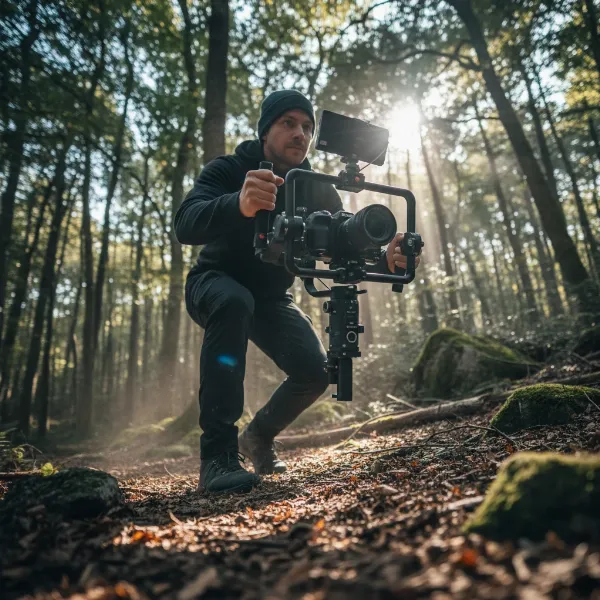
The raw energy and captivating movement of a car chase scene can be the defining moment of a film, leaving audiences on the edge of their seats. But capturing this high-octane action with professional smoothness, all while prioritizing the safety of the cast and crew, presents unique challenges. This guide dives deep into the world of filming car chases, revealing how to leverage the power of a gimbal to achieve breathtaking cinematic sequences while strictly adhering to crucial safety protocols. We’ll explore essential gear, innovative mounting solutions, and expert techniques to transform your vision into a seamless, thrilling reality.
The Power of Gimbals in Car Chase Cinematography
A gimbal is a pivotal tool in modern filmmaking, designed to stabilize cameras across multiple axes, counteracting unwanted movements such as shakes and tilts. For car chase cinematography, gimbals are not just an advantage; they are an absolute necessity. Filming from a moving car introduces a barrage of challenges: engine vibrations, sudden bumps, sharp turns, rapid accelerations, and even wind resistance, all of which can severely compromise footage quality.
Gimbals actively counteract these forces in real-time, employing motors and sophisticated sensors to maintain a level and stable camera position, regardless of how turbulent the ride becomes. This dynamic stabilization ensures that every shot is buttery smooth and professional, transforming what would otherwise be shaky, unusable footage into cinematic gold. The result is fluid, dynamic motion that enhances storytelling, immerses the audience in the action, and elevates the overall production value of your car chase sequences.
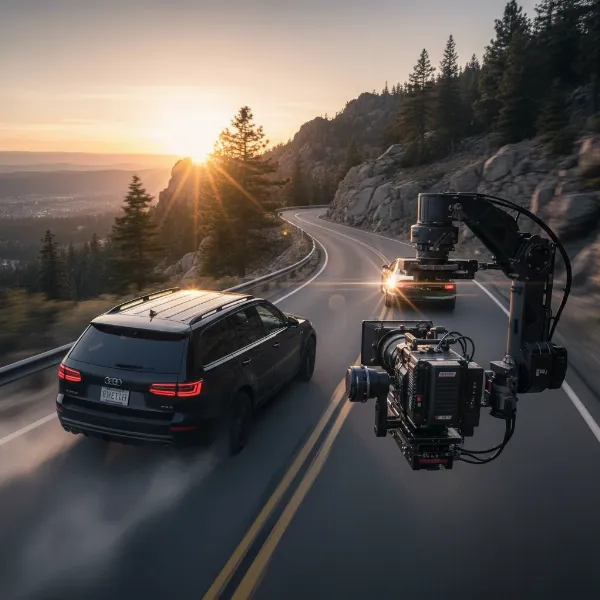 cinematic car chase with gimbal mounted on professional camera car setup
Essential Gear for Safe Car Chase Filming with a Gimbal
Achieving truly cinematic car chase footage demands more than just a camera; it requires a meticulously selected suite of gear. The right equipment not only ensures superior image quality but is fundamental to maintaining safety on a high-stakes set.
Choosing the Right Gimbal
The foundation of smooth car chase footage lies in selecting a gimbal that can handle the unique stresses of vehicle-mounted operation.
- Payload Capacity: This is paramount. Gimbals must be matched to the combined weight of your camera body, lens, and any accessories. Lightweight mirrorless cameras might work with mid-range gimbals, but cinema cameras demand professional models with higher payload capacities to prevent motor strain and ensure optimal stabilization. For instance, the DJI RSC 2 is praised for its ability to handle heavy DSLRs and mirrorless cameras, supporting payloads up to 6.6 lbs (3 kg), making it a solid choice for professional shoots. Similarly, the Zhiyun Weebill S also supports up to 3 kg, ideal for indie filmmakers needing power in a compact form.
- Vibration Handling & Shock Absorption: The constant vibrations from a moving car and road bumps can overwhelm standard gimbals. Look for models with built-in shock absorption or, even better, integrate external vibration isolators. Systems like the Proaim Airwave V530 Vibration Isolator or the Tilta Hydra Alien Car Mounting System are designed to sit between the gimbal and the mounting point, absorbing road vibrations and ensuring micro-jitters are minimized, even during high-speed or off-road filming.
- Key Models for Car-Mounted Shots:
- DJI RSC 2: Often lauded as an editor’s choice for professional shoots, offering a foldable design, strong motors, and an OLED screen for precise control.
- DJI RS 4 Mini Combo: An excellent option for beginners and vertical content creators, known for its lightweight design (under 900g), native vertical shooting, and intelligent subject tracking.
- Zhiyun Weebill S: A compact yet powerful gimbal favored by indie filmmakers, particularly for its unique Sling Mode that facilitates low-angle shots.
- Zhiyun Crane M2S: A budget-friendly, ultra-lightweight choice suitable for smartphones, action cams, and compact mirrorless cameras, prioritizing portability.
- DJI Ronin-SC: Ideal for solo creators and YouTubers, featuring ActiveTrack 3.0 for reliable subject tracking and a modular design for easy transport.
- Weather Resistance: Car chases often happen outdoors. While some gimbals offer weather sealing, most will require additional protection against dust, wind, and rain, such as waterproof covers and taped ports.
Camera Types & Setup Considerations
Beyond the gimbal, your camera choice and how you set it up significantly impact the final footage.
- Camera Versatility: Whether you’re using a high-end cinema camera, a robust DSLR/mirrorless setup, or even an advanced smartphone, ensure your chosen gimbal can comfortably support it.
- Remote Control Systems: For maximum safety and operational flexibility, especially in dynamic car chase scenarios, remote control functionalities are essential. This includes wireless video transmission for monitoring, remote follow-focus systems for precise adjustments, and mobile apps that allow operators to control gimbal movements from a safe distance, often from a lead vehicle.
Car Mounting Solutions
Securely attaching your gimbal to a vehicle is critical. A loose or inappropriate mount is not only a recipe for shaky footage but a significant safety hazard.
- Suction Cup Mounts: Best for clean, flat, non-porous surfaces like windshields, car hoods, or windows. Always opt for triple suction mounts for enhanced grip and stability. It’s crucial to thoroughly clean the mounting surface before attachment to prevent failures.
- Rigging Systems: For heavier camera setups or more aggressive driving conditions, robust rigging systems using metal rods or vehicle speed rail rigs provide superior stability and security. These are often integrated with isolation plates to further dampen vibrations.
- Mounting Best Practices:
- Stable Surface: Always attach mounts to metal or glass areas with minimal flex.
- Dampening Systems: If navigating rough terrain, place vibration dampening systems between the mount and the gimbal.
- Testing: Apply significant pressure to the mounted setup to test for any movement. A shifting mount indicates instability and requires readjustment or a more secure location.
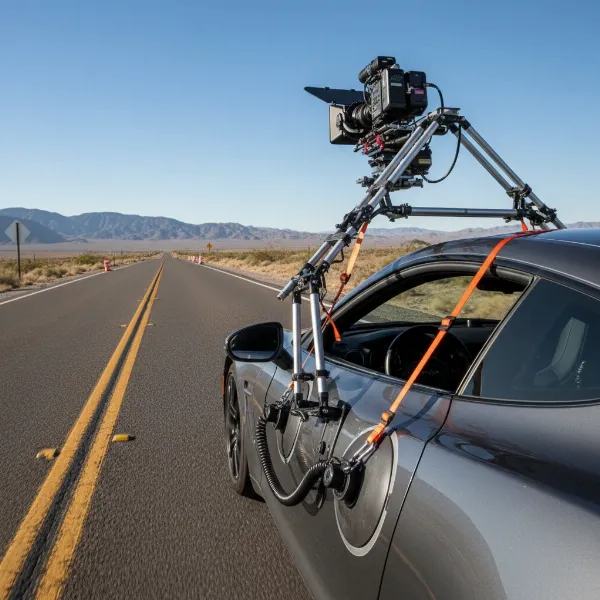 professional car camera rigging with suction cup mounts for stable filming
Critical Safety Protocols for Filming Car Chases
Safety is the absolute priority when filming car chases. Neglecting safety measures can lead to severe injuries or fatalities. Adhering to stringent protocols from pre-production through the actual shoot is non-negotiable.
Pre-production and Planning
The most dangerous situations can often be avoided with thorough planning.
- Risk Assessment: A comprehensive risk assessment must be carried out for all activities involving vehicles. This should identify potential hazards, evaluate risks to crew, public, and property, and determine necessary control measures. This document should be reviewed if circumstances change.
- Professional Drivers: For any stunts, high-speed maneuvers, or complex driving, only highly trained and experienced professional stunt drivers should be at the wheel. Their expertise is crucial for executing demanding sequences safely and consistently.
- Closed Roads & Permissions: Filming high-speed car chases or executing tracking shots on public roads almost always requires prior permission from the police or relevant authorities. When road traffic legislation cannot be complied with, private land or closed roads must be used.
- Safety Meetings: Before any action begins, mandatory safety meetings should be held, involving the director, director of photography, stunt coordinator, stunt performers, and camera crew. Everyone must feel empowered to voice safety concerns.
- Communication: Effective communication channels must be established between the camera car, the filmed car, and all personnel. Drivers and crews should be thoroughly briefed on the shots, intended speeds, and any maneuvers. A nominated person should be responsible for tracking vehicle control, working in conjunction with the driver.
On-Set Safety Measures
Implementing strict rules during filming is vital to prevent accidents.
- Personnel Restraints: All occupants of moving vehicles, including camera operators, must be properly seated and securely restrained with seat belts or appropriate harnesses.
- Never: stand up and shoot through a sunroof, crouch in a footwell, or lean out of windows. Similarly, avoid filming from the boots of saloon cars or open doors.
- Equipment Security: All camera equipment and kit inside or mounted on vehicles must be independently secured with safety lines, straps, or chains. Loose objects can become dangerous projectiles during sudden stops or collisions.
- Vehicle Modifications: Any modifications to a vehicle for filming purposes (e.g., adding mounts, platforms) must undergo a full risk assessment and be carried out by qualified vehicle technicians.
- Low-Loaders and A-frames: When using these tracking vehicles, specific legal and safety requirements apply. They often cannot legally carry passengers without police permission, and all personnel filming or recording must be securely harnessed to appropriate anchor points. The vehicle must be secured by a qualified person, and weight limits must never be exceeded.
- Remote Operation: Whenever possible, prioritize remote operation of cameras, gimbals, follow-focus, and lighting. This minimizes the need for crew members to be in potentially hazardous positions within or on moving vehicles.
- High-Visibility Clothing: For any crew working on or near public highways, wearing the correct classification of high-visibility clothing is crucial for visibility to other road users.
- Emergency Preparedness: Have essential safety equipment readily available, including fully stocked first-aid kits, fire extinguishers, and defibrillators.
“Safety is not just a guideline; it’s the foundation of every successful and ethical production, especially when dealing with the inherent risks of vehicle action.” – Admin, StabilizerPro.com
Mastering Gimbal Techniques for Dynamic Car Chase Shots
Once safety protocols are firmly in place, you can focus on the artistic techniques to make your car chase scenes unforgettable. Gimbals unlock a vast array of dynamic shots that are otherwise impossible to achieve.
Fundamental Gimbal Modes & Movements
Understanding and utilizing your gimbal’s capabilities is key to diverse and engaging footage.
- Follow Mode: This common gimbal mode is invaluable for car chases, allowing the camera to smoothly follow the pan and tilt of the operator’s movement while keeping the subject (e.g., the car) precisely centered in the frame.
- Orbit Shots: A powerful technique where the camera, often mounted on a tracking vehicle or operated handheld, smoothly circles the target car, creating a sense of dynamic motion and revealing the vehicle from all angles.
- Crane Shots: Simulating the movement of a camera jib, this technique involves smoothly transitioning the camera from a low angle to a high angle (or vice versa), adding drama and vertical dimension to the shot.
- Low Angle Shots: By positioning the gimbal close to the ground, you can emphasize speed and power, making vehicles appear more imposing and dynamic.
- Interior Shots: Gimbals can be used to capture intimate interior shots of the driver’s reactions, hands on the steering wheel, or dashboard details. A “hostess tray” rig can be used for safer interior setups.
- Lock Mode: This mode keeps the camera fixed on a single point, independent of gimbal movement. It’s useful for maintaining a stable, static shot while the car moves, particularly on straight roads.
- “Ninja Walk”: For handheld shots where the operator is on foot (e.g., moving around a stationary or slowly moving car), the “ninja walk” technique minimizes body impact, leading to smoother footage.
Camera Settings for Cinematic Results
Optimal camera settings work in tandem with your gimbal for the best output.
- Frame Rate: Shoot at 60 frames per second (fps) or higher, especially if you plan to incorporate slow-motion sequences. A higher frame rate provides more data for smoother slow-motion playback and can also aid post-production stabilization tools like warp stabilizer.
- Shutter Speed: Adhere to the 180-degree rule for natural motion blur, typically setting your shutter speed to double your frame rate (e.g., 1/120s for 60fps).
- ISO & Aperture: Keep ISO as low as possible (below 1600) for cleaner, less noisy footage. Use an aperture of f/2.8 to f/4 to achieve a pleasing soft background (bokeh) and sharp focus on your subject.
- ND Filters: When shooting in bright conditions, Neutral Density (ND) filters are indispensable. They reduce the amount of light entering the lens, allowing you to maintain your desired shutter speed and aperture without overexposing the image.
Optimizing Driving & Road Conditions
The environment itself plays a crucial role in the shot’s quality and safety.
- Speed & Smoothness: For dynamic action shots, a car speed of 30-40 mph often provides an exciting yet controllable pace for the gimbal. For more scenic or smooth shots, slowing down to 15-20 mph can yield the best results. Prioritize paved, smooth roads whenever possible, as rough terrain amplifies vibrations and makes stabilization more challenging.
- Motion Paths: Experiment with a variety of camera angles and motion paths. Shoot from the front, side, and rear of the car to create diverse perspectives and heighten the sense of a dynamic chase.
- Post-production: Even with a gimbal, shooting at higher frame rates provides more data points for software stabilization (like warp stabilizer) to fine-tune footage in post-production, further reducing any residual shakiness.
Expert Advice: Your Gimbal Buying Guide for Car Chase Filming
Navigating the market for gimbals and car filming accessories can be daunting. As a technician with over a decade of experience, here’s some expert advice to guide your decisions.
- Define Your Project Needs: Clearly establish the scope of your projects. Are you an indie filmmaker on a tight budget, a vlogger creating engaging car content, or a professional aiming for high-end cinematic sequences? Your camera type (smartphone, mirrorless, cinema camera) and the expected payload capacity are critical starting points.
- Research & Compare: Don’t just look at brand names. Dive into specifications, especially payload capacity, battery life, and any specific “car mode” or advanced stabilization features. Read reviews and watch comparison videos focusing on real-world car mounting scenarios.
- Prioritize Safety Accessories: Always factor in the cost of robust car mounting systems and vibration isolators. These are not optional extras; they are essential for protecting your equipment and ensuring stable, safe shots. Look for reputable brands known for their sturdy construction.
- Consider Rental Options: For specialized or one-off car chase projects, renting a high-end gimbal or a complete car rigging system might be more cost-effective than purchasing, allowing you access to top-tier equipment without the significant upfront investment.
- Understand Regulations: Be fully aware of local and national regulations regarding filming from or around moving vehicles, especially on public roads. Ignorance of the law is not an excuse for unsafe practices.
- Budget Wisely: While quality often comes at a price, there are excellent options across various price points. Balance your budget with the need for reliability, safety, and the performance required for your specific filmmaking goals.
Conclusion
Filming captivating car chases with a gimbal is an art that harmonizes technical prowess with an unwavering commitment to safety. From selecting the appropriate gimbal and robust mounting solutions to mastering dynamic camera movements and adhering to rigorous safety protocols, every detail contributes to the final, thrilling product. By meticulously planning, utilizing professional drivers on closed courses, and leveraging remote camera controls, filmmakers can push creative boundaries while safeguarding everyone involved. The combination of cutting-edge stabilization technology and stringent safety measures allows you to create car chase sequences that are not only visually stunning but also produced responsibly.
Are you ready to elevate your action cinematography and bring your next car chase vision to life with unparalleled stability and cinematic flair?
Frequently Asked Questions
How do I ensure my gimbal setup is secure on a fast-moving car?
To ensure security, use robust car-specific mounting systems like triple suction cups or professional rigging with metal rods. Always incorporate vibration isolators and safety lines for your gimbal and camera. Thoroughly clean mounting surfaces, tighten all screws, and perform stability tests by applying pressure to the setup before any movement begins.
What are the key safety considerations for filming car chases on public roads?
Filming car chases on public roads typically requires police permission and compliance with all road traffic legislation. It’s crucial to use professional drivers, ensure all equipment and personnel are securely restrained, and never film from open doors or vehicle boots. Prioritize remote camera operation to minimize crew exposure to risk.
Can I use a regular handheld gimbal for car-mounted shots?
While handheld gimbals offer excellent stabilization for walking or running, they generally struggle with the sustained vibrations and sudden jolts of a moving vehicle. Car-mounted gimbals or those designed for heavier payloads often have reinforced motors and better shock absorption to withstand these unique conditions more effectively.
What gimbal settings are best for smooth car tracking shots?
For smooth car tracking, increase your gimbal’s motor strength to handle higher speeds and resistance. Use a lower follow speed for gentle pans and cinematic motion. Enable “Lock Mode” for stable shots on straight roads, and “Follow Mode” to track turns naturally. Always test settings extensively before the main shoot.
How can I minimize vibrations when mounting a gimbal directly to a car?
To minimize vibrations, use high-quality vibration isolators between your gimbal and the car mount. These dampening systems absorb road bumps and engine vibrations. Also, select mounting points on the car that have minimal flex and avoid areas directly over the engine or highly resonant panels.
Are professional stunt drivers mandatory for all car chase scenes?
For any scenes involving high-speed maneuvers, stunts, or complex driving, using professional, trained stunt drivers is mandatory. Their specialized skills are essential for executing challenging sequences safely and consistently, significantly reducing the risk of accidents for the cast and crew.
What is the ideal frame rate for filming car chases to allow for slow motion?
The ideal frame rate for filming car chases, especially if you plan for slow-motion effects, is 60 frames per second (fps) or higher. This provides ample data for smooth, fluid slow-motion playback, allowing you to emphasize key moments and add dramatic impact to your action sequences.