Creating stunning real estate video tours that captivate potential buyers is essential in today’s competitive market. Gone are the days of shaky, amateur footage; smooth, professional-looking walkthroughs are now the standard. A camera stabilizer, particularly a gimbal, is an indispensable tool for achieving this cinematic quality, transforming ordinary property showcases into immersive experiences. This comprehensive guide will walk you through everything you need to know about using a gimbal to elevate your real estate videography, ensuring every shot is perfectly smooth and visually engaging.
What is a Camera Stabilizer? Why You Need It for Real Estate
A camera stabilizer is a device designed to keep your camera steady and your footage smooth, even when you’re moving. In real estate videography, where you often need to navigate various spaces, move around furniture, and showcase different angles, a stabilizer is crucial. It eliminates distracting shakes and jitters, delivering a polished, professional look that truly highlights a property’s best features.
Among the most popular types are gimbals, which are motorized stabilizers using three axes to counteract camera movements and vibrations. Other stabilizers include Steadicams (mechanical stabilizers requiring significant skill) and sliders (for smooth linear movements). For dynamic real estate tours, gimbals offer a perfect blend of ease of use, portability, and superior stabilization, allowing you to move freely through a property while maintaining fluid camera motion. The benefits extend beyond just smooth video; gimbals enable creative camera movements, seamless transitions between rooms, and a professional aesthetic that can significantly enhance a property’s appeal.
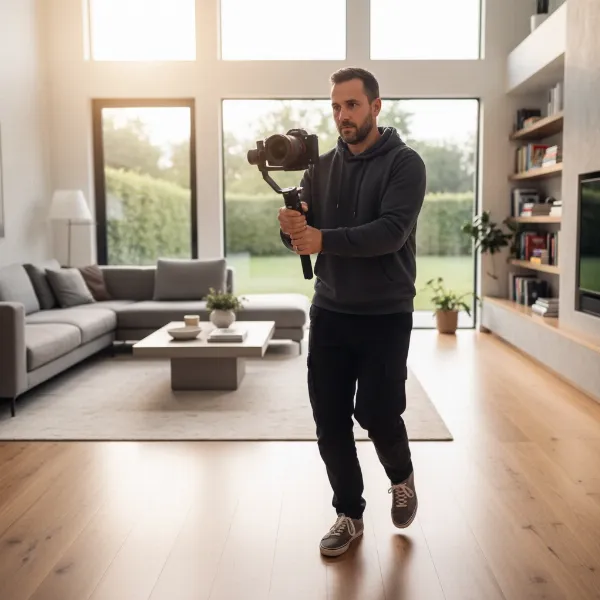 Professional videographer using a gimbal to film a real estate property interior.
Key Factors to Consider When Choosing a Camera Stabilizer
Selecting the right camera stabilizer is paramount to achieving your real estate videography goals. Several factors should influence your decision, ensuring the tool you choose is perfectly suited to your specific needs and workflow.
Camera Type
The type of camera you use dictates the kind of gimbal you’ll need.
- DSLR/Mirrorless Cameras: These heavier cameras require robust gimbals with higher payload capacities, such as the DJI RS series or Zhiyun Crane models, designed to support their weight and lens combinations.
- Action Cameras (GoPro, DJI Osmo Action): Smaller, lighter gimbals, often handheld and compact, are ideal for these cameras, offering excellent portability for dynamic shots.
- Smartphones: Dedicated smartphone gimbals like the Zhiyun Smooth 5 provide excellent stabilization for mobile videography, making them perfect for quick, high-quality social media tours. Many also offer smart tracking features.
Budget
Your budget will play a significant role in your choice, with various options available across different price points.
- Entry-Level (Budget-Friendly): These gimbals are often lighter, simpler, and suitable for smartphones or smaller mirrorless cameras. They offer basic stabilization and are a great starting point for beginners.
- Mid-Range: Offering a balance of features, payload capacity, and price, these gimbals are versatile for hobbyists and semi-professionals using mid-sized mirrorless or DSLR cameras.
- High-End (Professional): Designed for heavy camera setups and demanding productions, these gimbals provide advanced features, superior motors, and robust build quality, catering to professional videographers who need maximum stability and control.
Purpose of Use
Consider the primary application of your real estate videos.
- Vlogging/Travel Videos: Portability and ease of setup are key. Smartphone gimbals or compact mirrorless gimbals are often sufficient for dynamic, on-the-go shooting.
- Sports/Action Filming: Durability, quick balancing, and robust stabilization for fast movements are essential. Action camera gimbals or more rugged professional gimbals are suitable.
- Professional Real Estate/Short Films: Precision, advanced features (like object tracking or focus control), and high payload capacity are crucial. Gimbals designed for cinema cameras or higher-end DSLRs/mirrorless systems are preferred.
Weight and Size
The physical characteristics of the gimbal impact portability and usability.
- Portability: If you need to carry your gimbal to multiple locations or travel frequently, a lighter, more compact model is beneficial.
- Payload Capacity: This is the maximum weight the gimbal can effectively stabilize. Always ensure your camera and lens combination is well within the gimbal’s rated payload to guarantee optimal performance and prevent motor strain.
- Ergonomics: Consider how comfortable the gimbal is to hold for extended periods. Some professional gimbals offer modular designs or optional accessories for better grip and weight distribution.
Comparing Popular Camera Stabilizer Types
While gimbals are a standout choice for real estate, understanding other stabilizer types can help appreciate their unique advantages. Each offers distinct capabilities for different filmmaking scenarios.
| Feature | Gimbal | Steadicam | Slider |
|---|---|---|---|
| Pros | Easy to use, compact, flexible, smooth | Highly stable, cinematic quality, no batteries | Smooth linear motion, controlled movement |
| Cons | Requires batteries, can be costly | Requires significant skill/practice, heavier | Limited to linear movement, less versatile |
| Best For | Vlogs, real estate tours, dynamic shots | Professional films, broadcast, long takes | Interviews, product shots, revealing scenes |
Gimbals excel in providing fluid camera movements through various spaces, making them ideal for the walkthrough nature of real estate video tours. Their motorized stabilization is simpler to master than the mechanical balancing of a Steadicam, which demands extensive practice to operate smoothly. Sliders, while offering incredibly precise linear motion, are generally used for specific, controlled shots rather than full property walkthroughs.
Top Camera Stabilizers for Real Estate Videography
For real estate professionals, choosing the right gimbal can significantly impact video quality and workflow efficiency. Here are some of the most favored options:
DJI RS 3 Pro – A Professional’s Workhorse
The DJI RS 3 Pro is a highly regarded gimbal, praised for its exceptional stabilization and robust build quality. It can handle a wide range of DSLR and mirrorless cameras, making it a versatile choice for serious real estate videographers. Its active tracking capabilities and extended battery life make it a reliable tool for capturing complex property tours with ease and precision. Many professionals consider it the best gimbal for real estate videography due to its comprehensive feature set and consistent performance.
Zhiyun Weebill 3E – Excellent Stability and Ergonomics
The Zhiyun Weebill 3E offers remarkable stability and is a strong contender for real estate video production. Its ergonomic design reduces fatigue during long shoots, which is crucial when filming entire properties. It provides excellent compensation for subtle movements, helping videographers achieve consistently smooth footage. If you’re looking for a gimbal that balances performance with user comfort, the Weebill 3E is an impressive option that delivers professional results.
Zhiyun Smooth 5 – The Smartphone Powerhouse
For those primarily using smartphones for real estate tours, the Zhiyun Smooth 5 is an outstanding choice. It’s incredibly compact and powerful, designed to stabilize even larger smartphones with external wide-angle lenses. It offers a strong, smooth user experience, perfect for creating engaging, vertical social media tours or quick property previews. Its intelligent tracking features allow you to focus on composition while the gimbal keeps your subject in frame.
Mastering Your Gimbal: Usage and Maintenance
Using a gimbal effectively for real estate video tours goes beyond just attaching your camera. Proper setup, shooting techniques, and maintenance are crucial for consistent, high-quality results.
Balancing and Setup
1. Attach and Balance: Securely mount your camera and lens to the gimbal. Balancing involves adjusting the tilt, roll, and pan axes until the camera remains perfectly level in any position without motor power. This step is critical for smooth operation and prevents motor strain.
2. Adjust Settings: Set your gimbal mode to ‘Tilt Lock’ or ‘Pan & Tilt Follow’ for smooth, controlled movements. Crucially, set the ‘Follow Speed’ to ‘slow’ to avoid jerky transitions, allowing for a more cinematic feel as you navigate the property.
Tips for Smooth Filming
- The “Ninja Walk”: To minimize up-and-down bobbing, bend your knees slightly and walk heel-to-toe, gliding smoothly across the floor. Keep your arms relaxed and use your legs to absorb shock, not your arms.
- Two-Handed Grip: Whenever possible, use a two-handed grip. This provides extra stability and control, especially when navigating tight spaces or performing complex movements.
- Plan Your Shots: Before filming, scout the property and create a shot list or mentally plan your route. Visualize your movements and transitions to ensure a cohesive and engaging flow.
- Vary Height and Angle: Don’t just shoot at eye level. Experiment with low-angle shots (starting near the floor and rising), high-angle shots (for an aerial perspective), and steady pans or tilts to showcase details and create dynamic visuals.
- Slow and Steady: Avoid fast, abrupt movements. Slow, deliberate motions create a more professional and immersive viewing experience.
- Utilize Gimbal Modes: Experiment with modes like Follow Mode (camera follows handle direction), Lock Mode (camera maintains a fixed direction), and POV Mode (camera mimics your movements for immersion) to achieve different effects.
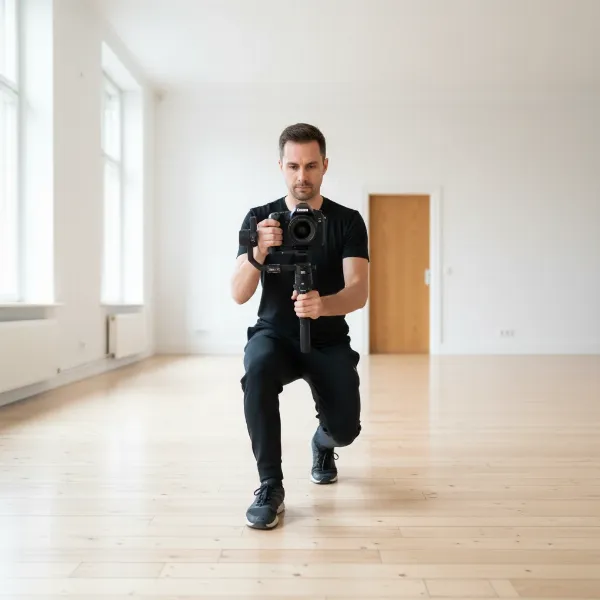 Videographer demonstrating the ninja walk technique with a camera gimbal for smooth footage.
Cleaning and Storage
Regular maintenance ensures your gimbal remains in top condition.
- Clean Regularly: Use a soft, dry cloth to wipe down the gimbal body. For stubborn dust, a slightly damp cloth can be used, followed by a dry one. Ensure no debris gets into the motor joints.
- Check Connections: Periodically inspect all cables and connections for wear and tear.
- Proper Storage: Store your gimbal in its protective case in a cool, dry place when not in use to prevent dust accumulation and physical damage. Remove batteries if storing for extended periods.
Where to Purchase Your Camera Stabilizer
Investing in a quality camera stabilizer is a smart move for any real estate videographer. You have several reliable options for purchasing your equipment:
- Specialty Camera Stores: Local and online camera stores (e.g., B&H Photo, Adorama) offer a wide selection, expert advice, and often provide warranty and support services.
- Manufacturer Websites: Direct purchases from brands like DJI or Zhiyun ensure you get genuine products and direct access to their customer support and warranties.
- Online Marketplaces: Platforms like Amazon and eBay offer a vast array of gimbals, often with competitive pricing and user reviews to guide your decision. However, always verify seller reputation and warranty details.
When buying, always prioritize retailers that offer clear warranty policies, easy returns, and reliable customer service to ensure peace of mind with your investment.
Buying Guide: Expert Advice for Your Gimbal Purchase
Choosing the perfect gimbal for real estate videography can feel overwhelming with the myriad of options available. As an experienced technician, I can offer some crucial advice to guide your decision, ensuring you make an informed choice that truly enhances your property tours.
First and foremost, clearly define your needs and objectives. Are you primarily shooting with a smartphone for social media, or do you require a robust gimbal for a full-frame mirrorless camera and cinematic lenses? Understanding your current gear and future aspirations will narrow down your options significantly. Don’t overspend on features you won’t use, but also don’t underinvest if your professional demands are high.
Secondly, thoroughly read reviews and compare products. Look beyond the marketing hype and delve into real-world user experiences. Pay attention to feedback regarding balancing ease, battery life, motor performance with various camera setups, and the overall user interface. Comparing specifications side-by-side, especially payload capacity and integrated features, is vital.
Finally, always inquire about warranty and support policies. Even the best equipment can encounter issues, and having reliable customer service and a solid warranty from the manufacturer or retailer is invaluable. A good warranty provides security for your investment, allowing you to focus on creating stunning real estate content without undue worry.
“A gimbal is more than just a tool; it’s an extension of your creative vision. Master its nuances, and you’ll unlock a new dimension of storytelling in real estate.” – John Smith, StabilizerPro.com Admin
In essence, your gimbal should feel like a natural extension of your camera, making complex movements feel intuitive. A well-chosen stabilizer will empower you to craft visually compelling real estate videos that truly stand out.
Conclusion
The power of a high-quality real estate video tour cannot be overstated in today’s market, and a camera gimbal is the key to unlocking that potential. From eliminating shaky footage to enabling dynamic, cinematic movements, a gimbal transforms how properties are showcased. By understanding your equipment, mastering fundamental techniques like the “ninja walk” and varied shot angles, and maintaining your gear, you can produce captivating walkthroughs that leave a lasting impression.
Are you ready to elevate your real estate listings and give potential buyers an unforgettable tour of their future home? Investing in the right Camera Stabilizer is your first step towards smoother, more professional, and ultimately more successful property videos.
Frequently Asked Questions
What is the most important setting on a gimbal for real estate video?
The most important setting is often ‘Tilt Lock’ or a similar mode that keeps the camera level both horizontally and vertically. Additionally, setting a slow ‘Follow Speed’ is crucial for achieving smooth, controlled camera movements, preventing abrupt shifts that can detract from the professionalism of your real estate video.
Can I use a smartphone gimbal for professional real estate tours?
Yes, modern smartphone gimbals like the Zhiyun Smooth 5 are capable of producing professional-grade real estate tours, especially when paired with a quality smartphone featuring a wide-angle lens. They are excellent for creating engaging social media content and quick property previews due to their portability and ease of use.
How do I prevent “bouncing” when walking with a gimbal?
To prevent bouncing, practice the “ninja walk” technique: keep your knees slightly bent to act as shock absorbers and walk heel-to-toe, trying to keep your upper body as stable as possible. Slow, deliberate movements and a two-handed grip also contribute significantly to smoother footage.
What’s the ideal height to film real estate videos with a gimbal?
Varying your camera height adds visual interest. While eye-level is common, experiment with low-angle shots (starting near the floor, rising to reveal a room) and slightly higher angles to showcase overall room layouts and architectural details. Avoid filming too high, as it can make rooms feel small or distort verticals.
How often should I balance my gimbal?
You should re-balance your gimbal every time you change your camera setup, including switching lenses, adding filters, or attaching external accessories. Even minor changes in weight distribution can affect the gimbal’s performance, making proper balancing essential for optimal stabilization.