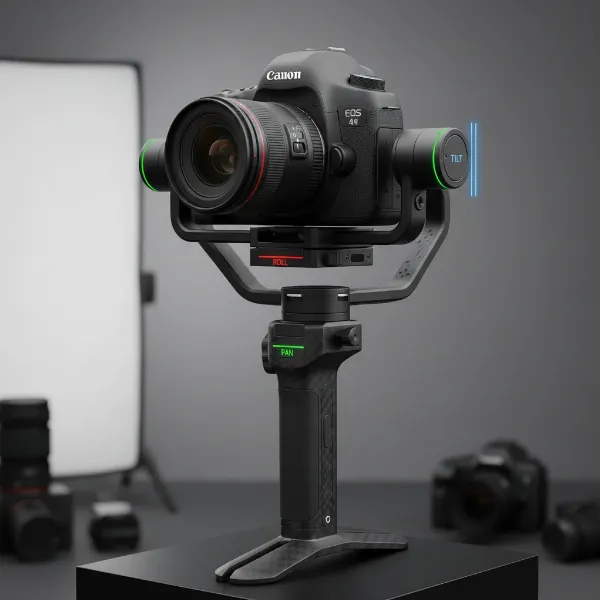
Achieving buttery-smooth, cinematic footage is the dream of every videographer, a feat often credited to the magic of camera stabilizers. But beneath the promise of fluid motion lies a critical specification that many overlook or misunderstand: payload capacity. It’s the maximum weight a stabilizer is supposed to handle, yet trusting these numbers blindly can lead to disappointing results, motor strain, and wasted investment. This article will delve into the deceptive reality of payload capacities, guiding you to make informed decisions and truly unlock your stabilizer’s potential.
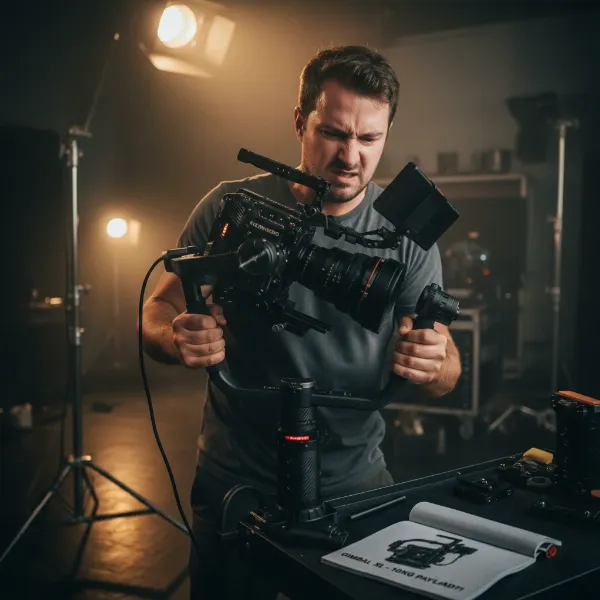 A frustrated videographer struggling to balance a camera on a gimbal, illustrating the common misconception of payload capacity.
What is Camera Stabilizer Payload Capacity and Why Does It Matter?
At its core, a camera stabilizer’s payload capacity refers to the maximum weight, usually expressed in kilograms or pounds, that the device is rated to support and stabilize effectively. This specification is crucial because it dictates which cameras and lens combinations a stabilizer can theoretically accommodate. An appropriately chosen stabilizer ensures that the motors can adequately counteract movement, maintain balance, and deliver the smooth footage you expect. Ignore it, and you risk compromising stability, damaging the equipment, and ultimately failing to capture professional-quality video.
The Deceptive Reality: Why Stated Payload Numbers Fall Short
While payload capacity seems straightforward, the numbers provided by manufacturers can often be misleading, representing an ideal laboratory scenario rather than real-world operational limits. Several factors contribute to this discrepancy, making it essential for users to look beyond the printed specification. Understanding these nuances is the first step toward choosing a stabilizer that truly meets your needs, rather than just its advertised capabilities.
Static vs. Dynamic Load
|
Our Picks for the Best Camera Stabilizer in 2026
As an Amazon Associate I earn from qualifying purchases.
|
||
| Num | Product | Action |
|---|---|---|
| 1 | FeiyuTech SCORP 3 Gimbal Stabilizer for Camera, Built-in AI Tracking Sensor & Detachable Remote Control, 3.5KG Payload Camera Stabilizer with Touch Screen, Vertical Shooting |

|
| 2 | DJI RS 3 Mini, 3-Axis Gimbal Stabilizer for Cameras Canon/Sony/Panasonic/Nikon/Fujifilm, 2 kg (4.4 lbs) Tested Payload, Camera Gimbal with Native Vertical Shooting, Black |
|
| 3 | Zeadio Camera Stabilizer Kit, All-in-One Handheld Stabilizer with LED Video Light, Microphone, Phone Holder & Action Camera adaper, Fits for All Camera, DSLR, Action Camera and All Smartphones |
|
| 4 | DJI Osmo Mobile 7 Gimbal Stabilizer for iPhone, Android, Built-in Tripod, Portable Stabilizer for iPhone, Selfie Stick, 3-Axis Phone Gimbal, ActiveTrack 7.0, One-Tap Edit, 10hrs Use, Phone Charging |
|
| 5 | FeiyuTech SCORP 2 Gimbal Stabilizer for DSLR and Mirrorless Camera, Integrated Al Tracking Sensor, 3-Axis Camera Stabilizer for Sony Canon Panasonic Nikon, 2.5kg Payload Touch Screen Vertical Shooting |
|
| 6 | DJI Osmo Mobile 8 Advanced Tracking Combo Gimbal Stabilizer for Phone, AI Native Tracking with Audio & Lighting, 360° Pan Rotation, Built-in Extension Rod & Tripod, 10h Battery, Extension Rod |
|
| 7 | 3-Shoe DSLR/Mirrorless/Action Camera Camcorder Phone Stabilizer Expansion Cage Mount Moviemaking Holder Rig YouTube Tiktok Vlogging Video Kit Compatible with GoPro Canon Nikon Sony iPhone Android |
|
| 8 | DJI Osmo Mobile 7P Gimbal Stabilizer for iPhone, Android, Native Tracking, Lighting, 3-Axis Phone Gimbal, Quick Launch, One-Tap Edit, Built-in Extension Rod & Tripod, 10hrs Use, Phone Charging |
|
| 9 | ZHIYUN CINEPEER Weebill 3E [Official], 3-Axis Lightweight Gimbal Stabilizer for DSLR & Mirrorless Camera Canon/Sony/Panasonic/Nikon, 3KG Payload, Native Vertical Shooting, Bluetooth Shutter Control |
|
| 10 | Zeadio Video Action Stabilizing Handle Grip Handheld Stabilizer with Cold-Shoe Mount for All DSLR Camera Camcorder |
|
Many manufacturers quote a static load capacity, which means the maximum weight the motors can hold when the stabilizer is at rest. However, filmmaking involves constant motion—panning, tilting, walking, and running. A stabilizer’s ability to maintain balance and smooth motion under these dynamic loads can be significantly less than its static rating. When in motion, the motors must work much harder to constantly adjust and stabilize the camera, a task that becomes exponentially more difficult as the rig approaches the advertised maximum.
Beyond Camera Weight: The Full Setup
It’s easy to focus solely on your camera body’s weight, but a complete video rig involves much more. Lenses, especially telephoto or cinema prime lenses, can add substantial weight. Furthermore, essential accessories like external monitors, microphones, wireless video transmitters, follow focus motors, and camera cages all contribute to the total payload. These often overlooked components can quickly push your setup beyond the true operational capacity of a stabilizer, even if your camera body alone seems well within limits.
Balance and Center of Gravity
Weight isn’t the only factor; balance is equally, if not more, critical. A stabilizer needs to balance your camera rig perfectly around its three axes (pan, tilt, and roll). Long or heavy lenses shift the center of gravity significantly forward, making balancing much more challenging. Even if the total weight of your camera and lens is within the payload limit, an unwieldy setup can make it impossible for the stabilizer’s motors to achieve optimal balance and smooth operation. The physical dimensions of your camera-lens combination play a huge role in how effectively a gimbal can cradle and maneuver it.
Motor Strength and Performance Limits
When a stabilizer operates close to its stated maximum payload, its motors are under immense strain. This can lead to several performance issues: decreased responsiveness, audible motor hum, increased power consumption (reducing battery life), and, most importantly, less effective stabilization. You might notice subtle jitters, micro-vibrations, or difficulty in maintaining a perfectly level horizon. Pushing motors beyond their comfortable operating range can also lead to overheating and premature wear and tear, shortening the lifespan of your valuable equipment.
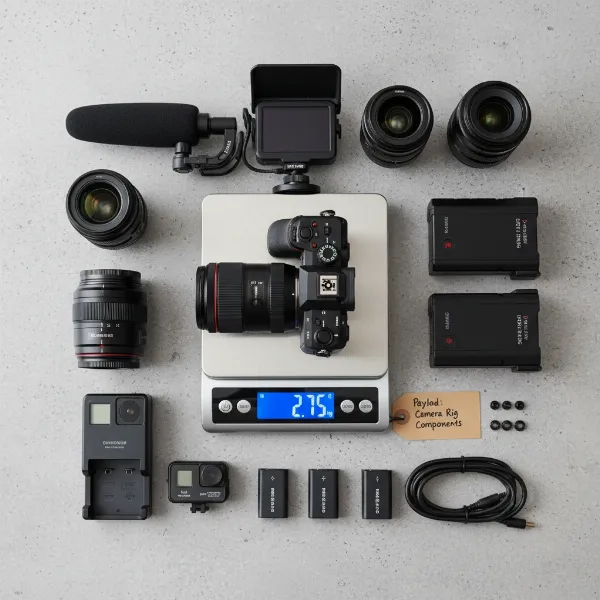 A collection of camera gear being weighed on a digital scale, emphasizing the need to consider all components for true payload assessment.
Essential Factors to Consider for Accurate Payload Assessment
To avoid the pitfalls of misleading payload numbers, a proactive and thorough approach to assessing your camera rig’s weight and balance is essential. It requires going beyond a quick glance at the camera’s spec sheet and truly understanding the demands you’ll place on your stabilizer. This meticulous assessment will be your best defense against underperforming equipment and ultimately lead to more stable and professional footage.
Your Complete Camera Rig’s True Weight
The most critical step is to calculate the total weight of your entire camera setup. This includes:
- Camera Body: With battery and memory card inserted.
- Lens: The specific lens you plan to use most often. If you switch lenses, calculate for your heaviest or longest.
- Camera Cage: If you use one for mounting accessories.
- External Monitor: With its own battery, if applicable.
- Microphone: Shotgun mic, wireless receiver, and mount.
- Wireless Video Transmitter: And its battery.
- Follow Focus System: Motor and rod clamps.
- ND Filters/Matte Box: If part of your regular setup.
Use a kitchen scale or a postal scale to weigh each component individually, then sum them up. Do not guesstimate. Precision here directly translates to better stabilizer performance.
Lens Dimensions and Compatibility
Beyond just weight, consider the physical size of your lens. A long telephoto lens, even if its weight is within the stabilizer’s official limit, can extend too far forward, making it difficult to balance. The stabilizer’s arms might not have enough clearance or travel to accommodate the lens’s center of gravity. Always check for known compatibility issues or watch video reviews with users running similar camera and lens combinations. Some gimbals are designed with longer arms or modular designs to better handle extended setups.
Accessory Integration
Think about where your accessories will be mounted. Placing a heavy monitor on top of the camera or a large battery pack on the side can drastically shift the center of gravity away from the gimbal’s axes. This can exacerbate balancing challenges and put undue stress on the motors. Look for stabilizers that offer versatile mounting options and consider accessories that are lightweight and compact. Sometimes, strategic placement of counterweights can help, but it also adds to the total payload.
Operational Buffer Zone
A golden rule for professional videographers is to always choose a stabilizer with a payload capacity significantly higher than your total rig weight. Aim for at least a 20-30% buffer. If your fully rigged camera weighs 3kg (6.6 lbs), look for a gimbal rated for 3.6-3.9kg (8-8.6 lbs) or more. This buffer ensures the motors aren’t constantly struggling at their maximum, allowing them to operate efficiently, provide smoother stabilization, and extend their lifespan. It also gives you headroom for minor additions or unexpected weight changes.
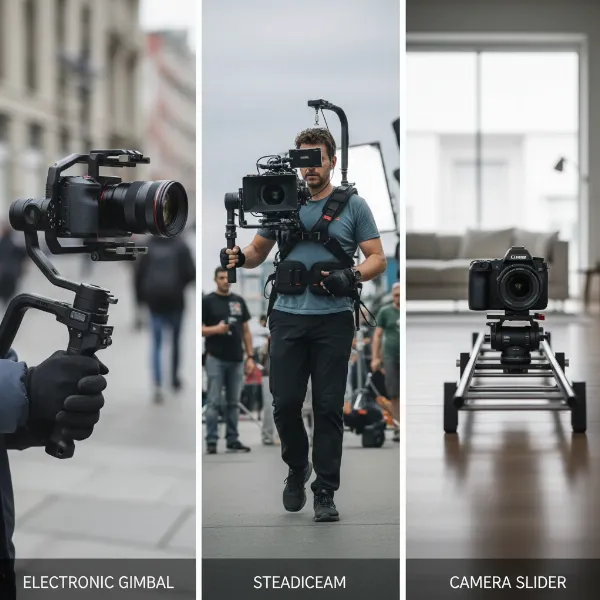 A side-by-side comparison of a handheld gimbal, a steadicam rig, and a camera slider, highlighting their distinct payload handling characteristics.
Comparing Stabilizer Types Through a Payload Lens
Different types of camera stabilizers interact with payload capacity in unique ways. Understanding these differences is crucial for selecting the right tool for your specific camera rig and shooting style, especially when the advertised numbers can be misleading. Each system has its strengths and limitations when it comes to managing the weight and balance of your setup.
| Feature | Electronic Gimbal (3-Axis) | Mechanical Stabilizer (Steadicam) | Sliders/Dolly Systems |
|---|---|---|---|
| Payload Interpretation | Stated limits often overstated for dynamic use. Extremely sensitive to precise balance and center of gravity. Motors strain easily near max. | Less about ‘payload limit’, more about operator strength & endurance and the capacity of the vest/arm. | Limits are primarily for static weight. Motion affects stability more than pure payload. |
| Balancing Complexity | High. Requires meticulous balancing on all three axes; lens length is a major factor. Auto-tune functions assist but don’t negate fundamental balance. | Very high. Requires significant skill, practice, and experience to perfectly trim for smooth, floating shots. | Simpler initial setup for static shots, but achieving perfectly smooth motion across the track requires technique. |
| Real-World Challenges | Jittery footage, motor vibrations, reduced battery life, difficult balancing, and potential motor failure when pushed too close to stated maximums. | Operator fatigue, especially with heavy rigs over long shoots. Requires continuous focus and physical stamina. | Limitations in shot length, restricted movement patterns. Uneven tracks can introduce bumps. |
| Best For (Payload Perspective) | Mid-weight DSLR/mirrorless setups, compact cinema cameras, where a 20-30% payload buffer is applied. Ideal for fluid, multi-axis movements. | Heavy cinema cameras and professional film productions where the operator’s body absorbs movement, allowing for large, complex rigs. | Controlled, linear movements for various camera weights, often used for static product shots or interviews. |
Top Stabilizer Categories and Their Payload Realities
The market offers a wide array of camera stabilizers, each designed for different camera sizes and use cases. However, even within popular categories, the advertised payload capacity needs to be critically examined against real-world performance. Knowing the typical limitations of each category can help you set realistic expectations.
Entry-Level Smartphone Gimbals
These compact gimbals are designed for smartphones, but even here, payload can be deceptive. While they easily handle a bare iPhone, adding a heavy phone case, an external microphone, or a wide-angle adapter lens can push them to their limit. Larger “pro” model smartphones also weigh more. When overloaded, smartphone gimbals often show reduced responsiveness, slower motor speeds, and less effective stabilization, especially during fast movements.
Mid-Range DSLR/Mirrorless Gimbals
This is arguably where payload capacity claims are most often scrutinized. Gimbals like the DJI Ronin-S/SC, Zhiyun Weebill series, or FeiyuTech AK series are popular for their versatility with DSLR and mirrorless cameras. While they might boast a 3kg (6.6 lbs) or even 4.5kg (10 lbs) payload, this often applies to compact mirrorless bodies with small prime lenses. Attach a full-frame DSLR with a heavy zoom lens (e.g., 24-70mm f/2.8) and an external monitor, and you’ll find many struggling. Performance degrades significantly, making intricate shots challenging. Always check specific lens compatibility lists and user reviews for your exact camera and lens combination.
Professional Cinema Gimbals
Designed for heavier payloads, professional-grade gimbals such as the DJI Ronin 2, Freefly MōVI Pro, or larger Zhiyun Crane models offer much more robust motor systems and higher true operational capacities. While their stated payload limits are generally more reliable, even these systems benefit from a buffer. With cinema cameras (RED, ARRI, Blackmagic) and large zoom lenses, adding crucial accessories like matte boxes, follow focus, and heavy cinema batteries can still push these powerful gimbals close to their actual performance threshold. A buffer here ensures optimal stability, precise control, and longevity of the high-investment equipment.
Maximizing Performance: Tips for Using Your Stabilizer with Heavy Rigs
Even with a stabilizer that theoretically handles your payload, proper technique is paramount to achieving the best results. Overlooking these steps, particularly with heavier setups, can negate the benefits of even the most robust equipment. Mastering the art of balancing and operation will unlock the true potential of your stabilizer and prevent footage from looking unprofessional.
- Meticulous Balancing: This cannot be overemphasized. A perfectly balanced rig requires minimal motor effort. Start with the tilt axis (vertical), then the roll axis (horizontal), and finally the pan axis. Ensure the camera remains stationary at any angle without motor assistance.
- Use Counterweights Strategically: For long or heavy lenses that shift the center of gravity forward, small counterweights attached to the back of the camera plate or gimbal arm can help achieve better balance without overloading the motors from the front.
- Firmware Updates: Always keep your stabilizer’s firmware updated. Manufacturers often release updates that improve motor algorithms, balancing capabilities, and overall performance, especially for newer camera models.
- Learn Operating Modes: Familiarize yourself with different follow modes (pan follow, tilt follow, all-locked). Some modes are more efficient for specific shots and can reduce motor strain.
- Pre-plan Your Shots: With heavier rigs, sudden, jerky movements are more likely to result in instability. Practice smooth starts and stops, and plan your camera movements in advance.
- Monitor Battery Life: Heavy payloads demand more power. Always start with a fully charged battery and carry spares. Reduced battery voltage can also lead to decreased motor performance.
Making an Informed Purchase: Where to Buy and What to Ask
When investing in a camera stabilizer, especially one that needs to handle a specific payload, the “where” and “how” of your purchase are almost as important as the stabilizer itself. A thoughtful approach ensures you not only get the right gear but also reliable support. Don’t just click “buy” after reviewing a spec sheet; seek out comprehensive information and reliable vendors.
- Reputable Retailers: Purchase from authorized dealers or well-known electronics retailers. They typically offer better return policies, warranty support, and customer service.
- Online Marketplaces: While often offering competitive prices, be cautious on general marketplaces. Ensure the seller is reputable, and check their return/warranty policies rigorously.
- Check Return Policies: Given the complexities of payload and real-world performance, a generous return policy is invaluable. It allows you to test the stabilizer with your actual rig and return it if it doesn’t meet your performance expectations.
- Read User Reviews & Watch Test Videos: Prioritize reviews and videos from users who have the exact same camera and lens setup as you. Pay close attention to their experiences with balancing, motor noise, and the smoothness of their footage.
- Ask the Community: Online forums, Facebook groups, and Reddit communities dedicated to filmmaking or specific stabilizer brands are excellent resources for real-world insights into payload performance. Ask direct questions about your setup.
Buying Guide: Expert Insights on Payload Capacity
Choosing a camera stabilizer is more art than science, especially when navigating the tricky waters of payload capacity. It’s not just about the numbers; it’s about understanding the synergy between your camera, lens, accessories, and the stabilizer itself. My years of experience reveal that the biggest mistake is overestimating a gimbal’s real-world capabilities.
“The true payload capacity of a camera stabilizer isn’t just a number on a spec sheet; it’s a dynamic equation influenced by lens length, accessory weight, and your camera’s center of gravity. Always aim for a significant buffer beyond your total rig weight. A gimbal working at 70-80% of its advertised capacity will always outperform one struggling at 95%.” – Adrian Finch, Stabilizer Systems Engineer
Don’t let marketing numbers dictate your purchase. Instead:
- Define Your Full Rig: Know the exact weight and dimensions of your camera, lens, and all planned accessories.
- Prioritize a Buffer: Always seek a stabilizer with an advertised payload capacity at least 20-30% higher than your calculated total rig weight.
- Research Real-World Performance: Consult reviews and test videos featuring your specific camera setup.
- Consider Physical Balance: Ensure the stabilizer’s arms can physically accommodate your lens length and allow for proper balancing.
- Evaluate Future Needs: If you plan to upgrade to heavier cameras or lenses, choose a stabilizer with more headroom.
Conclusion
The pursuit of flawlessly stable footage often begins with selecting the right camera stabilizer. However, the journey can quickly hit a snag if you “Don’t Trust the Numbers Blindly” when it comes to payload capacities. Manufacturers’ specifications, while a starting point, rarely tell the full story of real-world performance. By meticulously calculating your complete rig’s weight, understanding the nuances of static versus dynamic load, considering balance, and opting for an operational buffer, you empower yourself to make a truly informed decision. This diligent approach ensures your chosen stabilizer not only handles your equipment but also consistently delivers the smooth, professional results your projects demand. What Camera Stabilizer challenges have you faced due to misleading payload specs?
Frequently Asked Questions
What is the difference between static and dynamic payload capacity?
Static payload capacity is the maximum weight a stabilizer can hold while stationary. Dynamic payload capacity, often unstated, refers to the weight it can effectively stabilize and move smoothly during actual operation, which is typically lower due to motor strain and real-world forces.
How much buffer should I leave for my camera stabilizer’s payload?
It is highly recommended to leave an operational buffer of at least 20-30%. If your total camera rig weighs 3 kg, you should ideally choose a stabilizer with an advertised payload capacity of 3.6 kg to 3.9 kg or more to ensure optimal performance and longevity.
Can a gimbal be damaged by overloading?
Yes, consistently overloading a gimbal can lead to significant damage. It puts excessive strain on the motors, causing them to overheat, wear out prematurely, or even burn out. Overloading also reduces battery life and can compromise the stability of the entire system.
Does lens length affect a gimbal’s performance more than its weight?
Both lens length and weight are critical, but lens length often poses a greater challenge for balancing. A long lens, even if relatively light, can shift the center of gravity far forward, making it difficult or impossible for the gimbal to achieve perfect balance and operate smoothly, irrespective of the total weight.
Are professional gimbals more accurate with their stated payload?
Professional-grade gimbals generally provide more reliable payload capacities than entry-level or mid-range models. Their more powerful motors and robust designs can handle heavier and more challenging setups. However, even with professional gimbals, applying a buffer and considering real-world scenarios is still a best practice.