Compact cameras like the Sony ZV-1 are a content creator’s dream – powerful, portable, and designed for stellar visuals. Yet, even with excellent in-camera stabilization, truly cinematic, shake-free footage often remains elusive when shooting handheld. The subtle jitters and distracting wobbles can undermine your message and diminish the professional quality of your videos. This is where a dedicated camera gimbal becomes an indispensable tool, transforming your ZV-1 from a great camera into a dynamic filmmaking instrument.
Imagine gliding through a scene with effortless grace, every pan, tilt, and follow shot as smooth as silk. A quality gimbal doesn’t just eliminate shake; it unlocks new creative possibilities, allowing you to tell stories with fluid, engaging motion. This guide will walk you through everything you need to know about choosing the perfect gimbal for your Sony ZV-1, from understanding essential features to exploring top recommendations and mastering usage tips.
What is a Camera Stabilizer, and Why Do You Need It?
A camera stabilizer, at its core, is a device designed to minimize unwanted camera movement, ensuring your footage remains steady and professional. While the term “camera stabilizer” is broad, encompassing tools like mechanical Steadicams and sliders, for dynamic video capture with compact cameras, the focus is predominantly on gimbals. A gimbal is an electronic stabilizer that uses brushless motors and advanced algorithms to counteract movement across three axes: pan (horizontal rotation), tilt (vertical rotation), and roll (rotation along the lens axis).
Why is this crucial for your Sony ZV-1? Even with optical or digital image stabilization built into your camera, a 3-axis gimbal offers a level of smoothness and control that internal systems simply cannot match. It allows for buttery-smooth walking shots, elegant camera movements, and dynamic tracking that make your videos significantly more engaging and professional. This external stabilization reduces operator fatigue during long shoots and dramatically enhances the perceived production value of your content, whether you’re vlogging, capturing travel footage, or shooting short films.
Factors to Consider When Choosing a Camera Stabilizer for Your Sony ZV-1
Selecting the right gimbal for your Sony ZV-1 requires careful consideration of several key factors. The ZV-1 is a lightweight, compact camera, so its ideal gimbal companion should align with its strengths while offering robust performance.
Camera Type
|
Our Picks for the Best Camera Stabilizer in 2026
As an Amazon Associate I earn from qualifying purchases.
|
||
| Num | Product | Action |
|---|---|---|
| 1 | ZHIYUN CINEPEER Weebill 3E [Official], 3-Axis Lightweight Gimbal Stabilizer for DSLR & Mirrorless Camera Canon/Sony/Panasonic/Nikon, 3KG Payload, Native Vertical Shooting, Bluetooth Shutter Control |
![Check ZHIYUN CINEPEER Weebill 3E [Official], 3-Axis Lightweight Gimbal Stabilizer for DSLR & Mirrorless Camera Canon/Sony/Panasonic/Nikon, 3KG Payload, Native Vertical Shooting, Bluetooth Shutter Control on Amazon](https://stabilizerpro.com/wp-content/plugins/amazon-tables/assets/images/buy.png)
|
| 2 | 3-Shoe DSLR/Mirrorless/Action Camera Camcorder Phone Stabilizer Expansion Cage Mount Moviemaking Holder Rig YouTube Tiktok Vlogging Video Kit Compatible with GoPro Canon Nikon Sony iPhone Android |
|
| 3 | DJI Osmo Mobile 7 Gimbal Stabilizer for iPhone, Android, Built-in Tripod, Portable Stabilizer for iPhone, Selfie Stick, 3-Axis Phone Gimbal, ActiveTrack 7.0, One-Tap Edit, 10hrs Use, Phone Charging |
|
| 4 | Zeadio Video Action Stabilizing Handle Grip Handheld Stabilizer with Cold-Shoe Mount for All DSLR Camera Camcorder |
|
| 5 | DJI Osmo Mobile 7P Gimbal Stabilizer for iPhone, Android, Native Tracking, Lighting, 3-Axis Phone Gimbal, Quick Launch, One-Tap Edit, Built-in Extension Rod & Tripod, 10hrs Use, Phone Charging |
|
| 6 | FeiyuTech SCORP 2 Gimbal Stabilizer for DSLR and Mirrorless Camera, Integrated Al Tracking Sensor, 3-Axis Camera Stabilizer for Sony Canon Panasonic Nikon, 2.5kg Payload Touch Screen Vertical Shooting |
|
| 7 | DJI RS 3 Mini, 3-Axis Gimbal Stabilizer for Cameras Canon/Sony/Panasonic/Nikon/Fujifilm, 2 kg (4.4 lbs) Tested Payload, Camera Gimbal with Native Vertical Shooting, Black |
|
| 8 | FeiyuTech SCORP 3 Gimbal Stabilizer for Camera, Built-in AI Tracking Sensor & Detachable Remote Control, 3.5KG Payload Camera Stabilizer with Touch Screen, Vertical Shooting |
|
| 9 | Zeadio Camera Stabilizer Kit, All-in-One Handheld Stabilizer with LED Video Light, Microphone, Phone Holder & Action Camera adaper, Fits for All Camera, DSLR, Action Camera and All Smartphones |
|
| 10 | DJI Osmo Mobile 8 Advanced Tracking Combo Gimbal Stabilizer for Phone, AI Native Tracking with Audio & Lighting, 360° Pan Rotation, Built-in Extension Rod & Tripod, 10h Battery, Extension Rod |
|
The Sony ZV-1 is a prime example of a premium compact camera, weighing approximately 294 grams (about 0.65 lbs). This lightweight nature means you don’t need a heavy-duty gimbal designed for large DSLRs or mirrorless setups with massive lenses. Instead, focus on gimbals built for compact cameras, smartphones, or lightweight mirrorless cameras. These gimbals are often smaller themselves and require less effort to balance, providing better portability and ease of use. Ensure the gimbal’s minimum payload capacity comfortably supports your ZV-1, with a little extra headroom for potential accessories like an external microphone or a small on-camera light.
Budget
Gimbals come in a wide range of price points, from budget-friendly options to professional-grade systems. For a compact camera like the ZV-1, you generally won’t need to break the bank on the most expensive gimbals.
- Entry-level: Often suitable for casual users or those new to gimbals, offering basic stabilization at an accessible price.
- Mid-range: Provides a good balance of features, build quality, and performance, ideal for serious vloggers and content creators. This is often the sweet spot for ZV-1 users.
- High-end: Offers advanced features, higher payload capacities, and superior build, but might be overkill and unnecessarily bulky for the ZV-1.
Purpose of Use
Your primary use case will heavily influence your choice.
- Vlogging/Travel: Prioritize lightweight, compact, and easy-to-set-up gimbals. Features like quick portrait/landscape switching, built-in mini tripods, or hybrid compatibility for smartphones can be highly beneficial.
- Action/Sports: Look for robust stabilization, responsive motors, and potentially weather-resistant designs. While the ZV-1 isn’t a dedicated action camera, a gimbal can enhance its capabilities in dynamic environments.
- Professional Short Films/Event Coverage: While ZV-1 might not be a primary cinema camera, a more feature-rich gimbal capable of precise control and repeatable movements will be valuable for more controlled cinematic shots. Consider gimbals with good app integration and advanced tracking features.
Weight and Size
Since the Sony ZV-1’s appeal lies in its compact design, pairing it with an equally portable gimbal is essential. A bulky, heavy gimbal will negate the ZV-1’s portability, making it cumbersome to carry and operate for extended periods. Look for gimbals that are lightweight and ideally foldable for easy packing. The gimbal’s own weight and its ability to collapse into a compact form factor are crucial for travel and run-and-gun shooting. Always check the gimbal’s weight against its maximum payload capacity to ensure a good fit for your camera.
Comparing Popular Camera Stabilizer Types for Compact Cameras
When it comes to stabilizing your Sony ZV-1, modern gimbals offer a variety of features and form factors tailored to different needs. Here’s a comparison of common gimbal types you’ll encounter that are suitable for compact cameras:
| Feature | Compact Hybrid Gimbals (e.g., FeiyuTech Scorp Mini, Zhiyun Crane M2/M3) | Lightweight Mirrorless Gimbals (e.g., DJI RS 4 Mini) |
|---|---|---|
| Payload Capacity | Typically 0.5kg – 1.2kg (ideal for ZV-1) | Up to 2kg (good for ZV-1 + heavier accessories/small lens) |
| Portability | Very compact, often foldable, designed for maximum travel-friendliness | Compact, but generally slightly larger and heavier than dedicated compact camera gimbals |
| Key Features | Hybrid compatibility (supports compact cameras, phones, action cams), some with built-in AI tracking, small screens, built-in fill lights (Zhiyun M3) | Auto-axis locks, advanced stabilization algorithms, optional intelligent tracking module, more robust motor performance |
| Ease of Use | Generally easier to balance due to lighter cameras and intuitive controls; often a great choice for beginners | Requires careful balancing, but auto-locking mechanisms significantly speed up setup; can have a learning curve for advanced features |
| Price Range | Mid-range, offering excellent value for versatility | Mid-to-high range, reflecting advanced engineering and ecosystem benefits |
| Ideal User | Vloggers, casual content creators, travelers, those needing a versatile gimbal for multiple small devices, solo shooters benefiting from AI tracking | Vloggers, run-and-gun filmmakers, creators seeking professional-grade stabilization with good payload headroom for modest setups |
> “The true magic of a compact gimbal lies in its ability to empower creators to capture dynamic, cinematic shots without the burden of heavy, complex equipment. It’s about bringing professional polish to everyday storytelling.” – Sarah Chen, Senior Videography Instructor
Top Camera Gimbals for Sony ZV-1
For Sony ZV-1 users, finding a gimbal that balances performance, portability, and features is key. Here are some of the top contenders that excel with compact cameras:
FeiyuTech Scorp Mini 3 Pro – Best for Hybrid & AI Tracking
The FeiyuTech Scorp Mini 3 Pro stands out as an incredibly versatile 4-in-1 gimbal, perfectly suited for the Sony ZV-1, as well as smartphones, action cameras, and small mirrorless cameras. Its compact and foldable design makes it highly travel-friendly, ideal for vloggers and content creators on the go. One of its most compelling features is the built-in AI tracking sensor, allowing the gimbal to intelligently follow a subject without requiring an external module or smartphone app for basic tracking. This is a game-changer for solo creators, enabling dynamic shots as if you had a dedicated camera operator. It offers robust stabilization, intuitive controls via a 1.3-inch OLED touchscreen and physical knobs, and a decent 1kg payload capacity, comfortably handling the ZV-1 even with a small microphone attached.
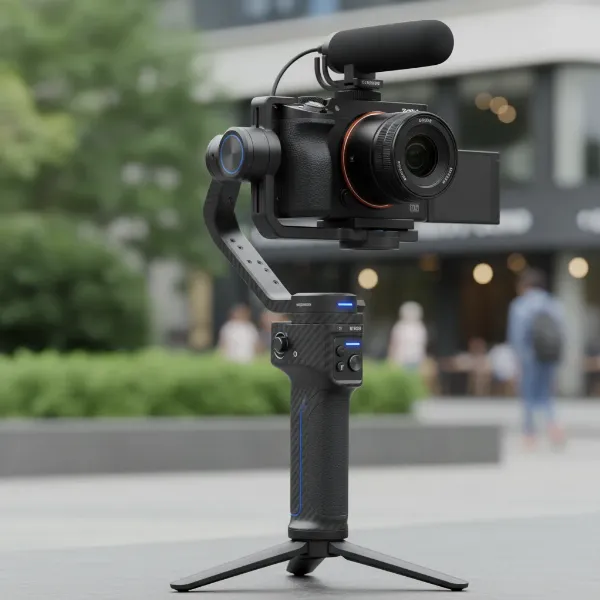 FeiyuTech Scorp Mini 3 Pro gimbal holding a Sony ZV-1 compact camera, demonstrating its compact size and AI tracking capabilities.
Zhiyun Crane M3 – Best for Versatility & Future-Proofing
The Zhiyun Crane M3 has earned a strong reputation as a highly capable and versatile gimbal that performs exceptionally well with the Sony ZV-1. While slightly larger than some ultra-compact options, its robust motors can handle a payload up to 1.2kg, making it suitable not only for the ZV-1 but also for slightly heavier setups, offering a degree of future-proofing if you decide to upgrade to a small mirrorless camera later. A standout feature is its integrated fill light with adjustable color temperature, which is incredibly useful for improving lighting in vlogging or interview scenarios. It also boasts a full-color touchscreen, a redesigned quick-release plate, and excellent ergonomics. The Crane M3 offers precise control and smooth stabilization, ensuring your ZV-1 footage looks professional and cinematic.
DJI RS 4 Mini – Best for Portability & DJI Ecosystem
The DJI RS 4 Mini is a powerful miniature gimbal from a leading brand, designed for users who prioritize professional-grade stabilization in a remarkably portable package. Despite its “Mini” designation, it comfortably supports a payload of up to 2kg, which is ample for the Sony ZV-1 plus common accessories. It inherits advanced features from DJI’s larger gimbals, such as automatic axis locks, which streamline setup and breakdown, making it incredibly efficient for fast-paced shoots. Its lightweight design (only 890g) ensures it won’t strain your arms during long shooting sessions. The RS 4 Mini delivers butter-smooth footage, and with an optional AI tracking module, it can also intelligently follow subjects, making it an excellent choice for solo content creators already familiar with or interested in the DJI ecosystem.
Using and Maintaining Your Camera Gimbal
Getting the most out of your camera gimbal for your Sony ZV-1 involves more than just attaching the camera; proper setup, usage, and maintenance are key to consistently smooth results and extending your gear’s lifespan.
How to Balance and Set Up Your Stabilizer
Balancing is the most critical step for any gimbal. An improperly balanced gimbal will strain its motors, reduce battery life, and produce less stable footage.
- Mount the Camera: Secure your Sony ZV-1 onto the quick-release plate and then attach it to the gimbal. Ensure it’s centered.
- Rough Balance (Horizontal): Unlock the pan axis and adjust the camera’s position left or right until it stays level when tilted to either side.
- Tilt Axis Balance (Vertical): Unlock the tilt axis. Point the camera straight up or down. If it falls forward or backward, adjust the camera’s position along the arm until it remains stationary.
- Roll Axis Balance: Unlock the roll axis. Tilt the camera 45 degrees. If it swings, adjust the camera’s front-to-back position until it holds steady.
- Fine-tuning: Once mechanically balanced, power on the gimbal. Most modern gimbals have an auto-tune feature that optimizes motor strength for your setup, providing the best stabilization.
Tips for Smooth Filming with Your Stabilizer
- Walk Like a Ninja: Bend your knees slightly and walk heel-to-toe, keeping your body as steady as possible. The gimbal handles fine shakes, but good footwork prevents major bumps.
- Use Two Hands: For heavier setups or longer shoots, use the gimbal’s mini tripod or a second handle to reduce arm fatigue and enhance control.
- Master Gimbal Modes: Experiment with different modes like Pan Follow (camera follows your pan, but tilt/roll are locked), Lock Mode (camera points in a fixed direction regardless of your movement), FPV (all axes follow your movement for dynamic, immersive shots), and Vortex Mode (spins the camera).
- Practice Smooth Transitions: Use the joystick or control wheel to execute slow, deliberate pans and tilts. Avoid jerky movements.
- Monitor Your Shots: Use your ZV-1’s flip-out screen or an external monitor to ensure your framing is always perfect.
Cleaning and Proper Storage of Your Stabilizer
Gimbals contain sensitive electronics and motors that require care.
- Cleaning: Use a soft, dry cloth to wipe down the gimbal after use, removing dust and fingerprints. Avoid harsh chemicals. If contacts or ports are dirty, use compressed air or a cotton swab with a small amount of isopropyl alcohol.
- Battery Care: Charge batteries regularly, but avoid overcharging or letting them completely drain for extended periods. Store the gimbal with batteries at about 50-60% charge if not using for a while.
- Storage: Always lock the gimbal’s axes or fold it into its compact travel mode (if applicable) before storage. Keep it in its original case or a protective pouch to prevent damage to the motors and arms. Avoid extreme temperatures and humidity.
Where to Buy Your Camera Gimbal
Acquiring the right gimbal for your Sony ZV-1 is an investment that pays off in the quality of your content. Knowing where to purchase ensures you get genuine products with good support.
Online Retailers
Major online electronics and photography stores are often the go-to for gimbals, offering convenience, competitive pricing, and a vast selection.
- Amazon: Provides a wide array of brands and models, often with user reviews to help inform your decision. Check seller ratings for authenticity.
- B&H Photo Video / Adorama: These are dedicated photography and videography retailers known for their extensive product knowledge, reliable shipping, and excellent customer service. They often carry the latest models and offer detailed specifications.
- Manufacturer Websites: Buying directly from brands like DJI, Zhiyun, or FeiyuTech can ensure you receive genuine products, the latest firmware, and direct access to warranty support.
Specialty Camera Stores
While less common than online giants, local camera stores can offer a unique advantage.
- Hands-on Experience: You can physically test the gimbal with your Sony ZV-1 (if permitted) to get a feel for its weight, size, and balancing process.
- Expert Advice: Sales associates at specialty stores are often knowledgeable photographers and videographers who can provide personalized recommendations and troubleshooting tips.
Key Considerations When Purchasing
No matter where you buy, keep these points in mind:
- Warranty: Always verify the manufacturer’s warranty and the retailer’s return policy. This protects your investment in case of defects.
- Authenticity: Purchase from reputable sellers to avoid counterfeit products, especially for popular brands.
- Bundle Deals: Sometimes, retailers offer bundles that include essential accessories like extra batteries, carrying cases, or even a compatible microphone, which can provide better value.
Buying Guide: Expert Advice for Your Perfect Gimbal
Choosing the right gimbal for your Sony ZV-1 might seem daunting with so many options available. As someone who has spent over a decade working with Camera Stabilizers, here’s my candid advice to help you make an informed decision:
First and foremost, clearly define your needs and primary purpose. Are you a travel vlogger who needs ultimate portability? A solo content creator who benefits from intelligent tracking? Or do you occasionally shoot cinematic sequences and prioritize robust stabilization and creative control? Your answers will guide your choices toward specific features and form factors.
Next, read reviews and watch video tests meticulously. While specifications are important, real-world performance demonstrations are invaluable. Pay attention to how the gimbal handles the Sony ZV-1 specifically, noting ease of balancing, motor performance, battery life, and overall user experience. Look for reviews from creators whose shooting style resembles yours.
Always check the payload capacity against your current and anticipated setup. The Sony ZV-1 is lightweight, but if you plan to add a shotgun mic, an external monitor, or other accessories, ensure the gimbal has enough headroom. Overloading a gimbal is a common mistake that leads to poor performance and potential motor damage.
Prioritize portability and ease of use. For a compact camera like the ZV-1, a gimbal that is quick to set up, easy to balance, and comfortable to operate for extended periods is far more practical than a feature-heavy but cumbersome unit. Features like quick-release plates and automatic axis locks can significantly improve your workflow.
Finally, consider additional features that enhance your specific workflow. Built-in AI tracking is a boon for solo creators. An integrated fill light or dedicated microphone ports can simplify your rigging. Bluetooth camera control can enable seamless start/stop recording directly from the gimbal. These thoughtful additions, while not always essential, can truly elevate your creative process.
Conclusion
The Sony ZV-1 is a fantastic compact camera, and pairing it with the right gimbal is a transformative step towards producing truly professional and captivating video content. By understanding your needs, considering factors like portability and payload, and exploring top-rated models like the FeiyuTech Scorp Mini 3 Pro, Zhiyun Crane M3, or DJI RS 4 Mini, you can unlock a new level of creative freedom. These powerful tools offer more than just stability; they provide the means to tell your stories with fluid, cinematic motion, elevating your visual narratives from good to exceptional.
Investing in a quality gimbal is an investment in your craft, giving you the power to capture moments with unparalleled smoothness and precision. Which cinematic adventures will your steady shots take you on?
Frequently Asked Questions
What is the best gimbal for Sony ZV-1?
For the Sony ZV-1, top contenders include the FeiyuTech Scorp Mini 3 Pro for its hybrid compatibility and AI tracking, the Zhiyun Crane M3 for its versatility and potential for future upgrades to slightly larger cameras, and the DJI RS 4 Mini for its professional stabilization and lightweight, portable design. The “best” choice depends on your specific needs for features, portability, and budget.
Can I use a smartphone gimbal with my Sony ZV-1?
While the Sony ZV-1 is compact, it’s generally not recommended to use a smartphone gimbal. Smartphone gimbals are designed for the specific size, weight, and form factor of phones. The ZV-1’s dimensions and mounting point (a 1/4″-20 screw mount) differ significantly, making proper balancing and secure attachment difficult, and potentially damaging both the camera and the gimbal.
How important is payload capacity for the ZV-1 when choosing a gimbal?
Payload capacity is very important. The Sony ZV-1 is lightweight (around 294g), so you need a gimbal whose minimum payload supports this. More importantly, consider any accessories you might add, such as external microphones or small LED lights. A gimbal with a slightly higher payload capacity (e.g., up to 1kg or 2kg) ensures the motors aren’t strained and allows for future flexibility.
Do I need a gimbal if my Sony ZV-1 has in-body stabilization?
Yes, you still benefit greatly from a gimbal. While the Sony ZV-1 has optical and electronic stabilization, a 3-axis gimbal provides superior, mechanical stabilization across pan, tilt, and roll. This allows for truly cinematic, buttery-smooth tracking shots, walking footage, and dynamic movements that in-body stabilization alone cannot achieve, especially when you’re moving vigorously.
