Finding the Best Dslr Gimbal For Heavy Cameras can feel like searching for a needle in a haystack. You’ve invested in a powerful camera body and exquisite cinema-grade lenses, only to find your footage is marred by the subtle jitters of handheld operation. This is where a robust 3-axis stabilizer transforms your work from amateur to professional, but not all gimbals are created equal. A gimbal that buckles under the weight of your rig is worse than no gimbal at all. It’s a frustrating, and potentially expensive, lesson to learn.
This guide is your definitive resource. We’ll move beyond simple product lists and delve into the core principles of heavy-lift stabilization. We will dissect the technology, demystify the specifications, and empower you to select the perfect tool that will not only carry your gear but unleash its full cinematic potential. Think of this not just as a buying guide, but as a masterclass in motion.
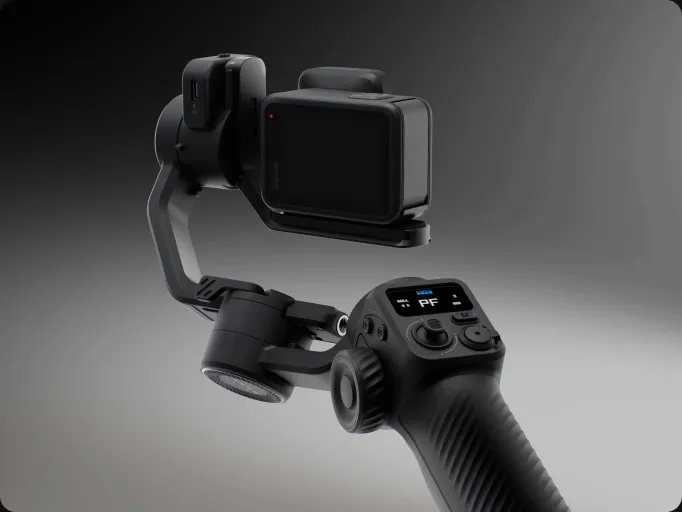
Why Heavy-Duty Gimbals Are a Game-Changer
Before the advent of modern electronic gimbals, achieving smooth camera movement was the exclusive domain of Hollywood-level productions with complex, expensive equipment like dollies and Steadicam rigs. The 3-axis gimbal democratized cinematic motion, but as cameras and lenses grew more capable, a new challenge emerged: weight.
A standard gimbal designed for a lightweight mirrorless setup simply lacks the motor strength to handle a professional DSLR rig, which might include:
- A full-frame DSLR or mirrorless body (e.g., Canon EOS R5 C, Sony FX3)
- A heavy cinema zoom or prime lens
- A matte box with filters
- A follow focus system
- An on-camera monitor
- A professional microphone and audio transmitter
This is the precise problem that heavy-duty gimbals were born to solve. They represent the pinnacle of consumer and prosumer stabilization technology, offering more powerful motors, more rigid construction, and more advanced algorithms designed specifically to manage the inertia of a heavy payload.
The Science Behind the Smoothness: How Gimbals Work
What exactly is the magic that keeps your heavy camera perfectly level while you’re walking, running, or panning? It’s a symphony of sophisticated hardware and software working in perfect harmony. Understanding these components is crucial when selecting the best dslr gimbal for heavy cameras.
Brushless Motors: The Unsung Heroes
At the heart of any gimbal are three brushless motors, one for each axis of movement: pan (left and right), tilt (up and down), and roll (rotation). Think of these motors as hyper-responsive, silent guardians. They don’t just hold the camera; they make thousands of micro-adjustments per second to counteract your every movement. For heavy rigs, motor torque is the most critical factor. Weak motors will result in vibrations, stuttering, or outright failure to hold the camera’s position during dynamic shots.
The IMU: The Gimbal’s Brain
The Inertial Measurement Unit (IMU) is the gimbal’s sensory organ. It’s a tiny component containing a gyroscope and an accelerometer.
The IMU constantly measures the gimbal’s orientation and motion in 3D space. It senses every slight tremor, tilt, and pan, feeding this spatial data to the main processor in real-time. It’s the source of truth for the entire stabilization system.
Algorithms: The Secret Sauce
This is where the real differentiation happens. The gimbal’s firmware contains complex algorithms that interpret the data from the IMU and translate it into precise commands for the brushless motors. A superior algorithm can predict motion, differentiate between intentional and unintentional movements, and produce flawlessly smooth footage even with a heavy, top-heavy camera setup. This is why two gimbals with similar payload specs can perform very differently in the real world.
How to Choose the Best DSLR Gimbal for Heavy Cameras
Now, let’s get practical. Selecting the right gimbal isn’t about picking the one with the biggest number on the box. It’s about a holistic assessment of your specific needs. Follow this checklist to make an informed decision.
- Calculate Your Total Rig Payload
This is the single most important step. Don’t just consider the weight of your camera body and lens. You must weigh everything you plan to mount on the gimbal.- Camera body + battery
- Lens + lens cap/hood
- Matte box + filters
- Cables
- Monitor + battery
- Microphone + transmitter
- Follow focus motor
- Mounting plates
Pro Tip: Once you have your total weight, look for a gimbal with a maximum payload capacity that is at least 20-30% higher. This headroom ensures the motors aren’t constantly struggling at their limit, which provides smoother performance and better battery life.
- Evaluate Motor Strength and Clearance
Payload capacity is one thing; physical space is another. A gimbal might be able to lift your camera, but can it move freely without colliding with the gimbal arms? This is especially important for cameras with a wider body or when using long cinema lenses. Look for gimbals with longer roll and tilt arms to accommodate larger setups. - Consider Build Quality and Ergonomics
A gimbal for a heavy camera is, by necessity, a substantial piece of equipment.- Materials: Look for high-grade aluminum alloy or carbon fiber construction. Carbon fiber reduces the overall weight, which your arms will thank you for on a long shoot day.
- Ergonomics: How does it feel in your hands? Can you easily access the controls? Does it support dual-handle or sling-style operation for better weight distribution?
- Analyze the Ecosystem and Connectivity
A modern gimbal is more than a stabilizer; it’s a control hub. Check for features like:- Accessory Ports: Does it have NATO rails and 1/4″-20 or 3/8″-16 threads for mounting monitors and handles?
- Power Outputs: Can the gimbal power your follow focus motor or a video transmitter?
- Camera Control: Does it have a port to connect to your camera, allowing you to start/stop recording or pull focus directly from the gimbal’s handle?
- Software Features: A robust companion app for features like motion-lapse, object tracking, and fine-tuning motor parameters is a huge plus.
- Prioritize Ease of Balancing
Balancing a heavy and complex rig can be time-consuming. Features that make this process easier are invaluable on a professional set.- Axis Locks: These lock each motor in place, allowing you to balance one axis at a time. This is a non-negotiable feature.
- Memory Locks/Quick Release: Look for systems that allow you to remove the camera for a battery change and re-mount it without having to completely re-balance from scratch.
Top Contenders for Heavy Camera Stabilization in 2024
While specifications are important, real-world performance is king. Here’s a look at the leading models that consistently deliver for filmmakers with demanding payloads.
| Model | Max Payload (Approx.) | Gimbal Weight | Key Feature | Ideal For |
|---|---|---|---|---|
| DJI RS 3 Pro | 4.5 kg (10 lbs) | 1.5 kg | Superb automated axis locks, LiDAR focusing system, excellent ecosystem. | The all-around professional workhorse for solo shooters and small crews. |
| Zhiyun CRANE 3S | 6.5 kg (14.3 lbs) | 2.47 kg | Modular design with a detachable handle, incredible payload capacity. | Cinema camera users and those needing maximum payload flexibility. |
| Moza Air 2S | 4.2 kg (9.3 lbs) | 1.9 kg | Smart micro handwheel for precise control, excellent battery life. | Budget-conscious filmmakers who still need robust performance. |
Dr. Amelia Vance, a mechanical engineer specializing in cinematic robotics, notes, “The trend is moving beyond raw power. The best gimbals now leverage sophisticated predictive algorithms and integrated accessories like LiDAR to not just stabilize, but to actively assist the creative process. It’s about making complex shots more achievable for a single operator.”
Frequently Asked Questions (FAQ)
What is the most important spec for a heavy-duty gimbal?
Payload capacity is the most important initial specification. If the gimbal cannot safely support the weight of your entire camera rig, nothing else matters. Always ensure you have a 20-30% buffer between your rig’s weight and the gimbal’s maximum payload.
Can I use a lens that is too long or front-heavy on a gimbal?
Even if the total weight is within the payload limit, an extremely front-heavy lens can be very difficult to balance. It can strain the tilt motor and limit its range of motion. Look for gimbals with adjustable mounting plates and extended arms to better accommodate long lenses.
How critical is balancing a heavy camera perfectly?
It is absolutely critical. An improperly balanced gimbal forces the motors to work overtime, which drains the battery, causes micro-vibrations in your footage, and can lead to long-term damage to the motors. Take the time to achieve a perfect balance on all three axes.
Do I need the absolute best dslr gimbal for heavy cameras for professional work?
“Best” is subjective and depends on your specific camera rig and shooting style. A solo corporate video shooter might prioritize the lighter weight and smart features of a DJI RS 3 Pro, while a filmmaker using a cinema camera might need the sheer power of a Zhiyun CRANE 3S. The best gimbal is the one that reliably meets your needs.
DJI vs. Zhiyun: Which is better for heavy setups?
Both brands make exceptional products. DJI is often praised for its polished user experience, powerful app, and seamless ecosystem. Zhiyun often pushes the boundaries of payload capacity and modularity, appealing to users with the heaviest and most unconventional camera rigs.
Conclusion
Choosing the best dslr gimbal for heavy cameras is a significant decision that directly impacts the quality of your final product. It’s an investment in production value. By moving past marketing claims and focusing on the core principles—payload, motor torque, ergonomics, and ecosystem—you can confidently select a tool that will serve as a reliable partner on any set. Remember, the goal isn’t just to eliminate camera shake; it’s to unlock a new language of camera movement, enabling you to tell more dynamic, engaging, and visually stunning stories. Armed with this knowledge, you are now prepared to choose the stabilizer that will truly set your creative vision in motion.