Have you ever watched a film and wondered how they achieve those incredibly dynamic, yet perfectly smooth, camera movements that tell a story without a single word? The secret often lies with a camera stabilizer, specifically a gimbal. While gimbals are celebrated for their ability to eliminate shakes and jitters, truly unlocking their potential means delving into advanced techniques like the parallax and reveal shots. These aren’t just fancy moves; they are powerful tools for visual storytelling that can transform your footage from good to genuinely cinematic.
This guide will take you beyond the basics, exploring the artistry and technical execution behind the parallax and reveal shots. We’ll break down what makes them so impactful, how to master their intricacies with your gimbal, and provide expert tips to elevate your filmmaking to professional standards.
Unveiling Cinematic Magic: What Are Parallax and Reveal Shots?
Before diving into the “how,” understanding the “what” and “why” of these advanced gimbal techniques is crucial. Each shot serves a distinct narrative and aesthetic purpose, adding layers of depth and engagement to your visual storytelling.
The Parallax Shot: Dynamic Depth in Motion
|
Our Picks for the Best Camera Stabilizer in 2026
As an Amazon Associate I earn from qualifying purchases.
|
||
| Num | Product | Action |
|---|---|---|
| 1 | ZHIYUN CINEPEER Weebill 3E [Official], 3-Axis Lightweight Gimbal Stabilizer for DSLR & Mirrorless Camera Canon/Sony/Panasonic/Nikon, 3KG Payload, Native Vertical Shooting, Bluetooth Shutter Control |
![Check ZHIYUN CINEPEER Weebill 3E [Official], 3-Axis Lightweight Gimbal Stabilizer for DSLR & Mirrorless Camera Canon/Sony/Panasonic/Nikon, 3KG Payload, Native Vertical Shooting, Bluetooth Shutter Control on Amazon](https://stabilizerpro.com/wp-content/plugins/amazon-tables/assets/images/buy.png)
|
| 2 | FeiyuTech SCORP 3 Gimbal Stabilizer for Camera, Built-in AI Tracking Sensor & Detachable Remote Control, 3.5KG Payload Camera Stabilizer with Touch Screen, Vertical Shooting |
|
| 3 | FeiyuTech SCORP 2 Gimbal Stabilizer for DSLR and Mirrorless Camera, Integrated Al Tracking Sensor, 3-Axis Camera Stabilizer for Sony Canon Panasonic Nikon, 2.5kg Payload Touch Screen Vertical Shooting |
|
| 4 | DJI Osmo Mobile 7P Gimbal Stabilizer for iPhone, Android, Native Tracking, Lighting, 3-Axis Phone Gimbal, Quick Launch, One-Tap Edit, Built-in Extension Rod & Tripod, 10hrs Use, Phone Charging |
|
| 5 | DJI Osmo Mobile 7 Gimbal Stabilizer for iPhone, Android, Built-in Tripod, Portable Stabilizer for iPhone, Selfie Stick, 3-Axis Phone Gimbal, ActiveTrack 7.0, One-Tap Edit, 10hrs Use, Phone Charging |
|
| 6 | Zeadio Video Action Stabilizing Handle Grip Handheld Stabilizer with Cold-Shoe Mount for All DSLR Camera Camcorder |
|
| 7 | DJI RS 3 Mini, 3-Axis Gimbal Stabilizer for Cameras Canon/Sony/Panasonic/Nikon/Fujifilm, 2 kg (4.4 lbs) Tested Payload, Camera Gimbal with Native Vertical Shooting, Black |
|
| 8 | DJI Osmo Mobile 8 Advanced Tracking Combo Gimbal Stabilizer for Phone, AI Native Tracking with Audio & Lighting, 360° Pan Rotation, Built-in Extension Rod & Tripod, 10h Battery, Extension Rod |
|
| 9 | 3-Shoe DSLR/Mirrorless/Action Camera Camcorder Phone Stabilizer Expansion Cage Mount Moviemaking Holder Rig YouTube Tiktok Vlogging Video Kit Compatible with GoPro Canon Nikon Sony iPhone Android |
|
| 10 | Zeadio Camera Stabilizer Kit, All-in-One Handheld Stabilizer with LED Video Light, Microphone, Phone Holder & Action Camera adaper, Fits for All Camera, DSLR, Action Camera and All Smartphones |
|
A parallax shot creates a stunning illusion of depth by moving the camera around a subject while keeping the subject relatively fixed in the frame. The background appears to shift and move at a different speed than the foreground, giving viewers a powerful sense of dimension and immersion. This effect is naturally perceived by the human eye, making the cinematic application of parallax inherently captivating. It’s a dynamic way to highlight a character or object within its environment, emphasizing their presence and the surroundings simultaneously.
The Reveal Shot: Building Anticipation
The reveal shot is a technique designed to build suspense and surprise by gradually uncovering a subject, location, or a crucial narrative element. Instead of simply cutting to a scene, you guide the audience’s eye, moving the camera from behind an obstruction, a tight detail, or a previously unseen angle, to unveil something new. This deliberate unveiling creates anticipation, drawing viewers deeper into the narrative and making the eventual reveal much more impactful. It’s an essential technique for establishing shots, character introductions, or dramatic plot points.
Mastering the Parallax Shot with Your Gimbal
Executing a flawless parallax shot requires a harmonious blend of careful planning, precise movement, and a keen eye for composition. It’s a dance between you, your camera, and the environment.
The Core Technique: Orbit and Maintain
At its heart, the parallax shot involves orbiting your subject while ensuring it remains centered in the frame. The magic happens as your camera circles, causing the foreground elements to move past your subject at one speed, and the background elements at another, creating that signature layered effect. The key is to keep your camera’s focus locked on your subject throughout the movement, allowing the background to blur into a beautiful, dynamic canvas.
Advanced Execution Tips
Achieving buttery-smooth parallax shots isn’t just about the gimbal; it’s about the operator. Here are refined techniques to perfect your execution:
- Footwork Fundamentals: Your movement is paramount. Adopt a “ninja walk” – bending your knees to absorb vertical impacts and maintaining a low center of gravity. Many professionals utilize a “crisscross” or “heel-to-toe” walking method, ensuring a stable platform. Wearing comfortable, soft-soled shoes can also help dampen unwanted movements, making your steps almost imperceptible.
- Gimbal Handling: Hold your gimbal with both hands for maximum stability, keeping your elbows tucked into your sides. This two-handed approach provides better control and minimizes any rotational instability that might creep in with a single-handed grip.
- Lens Choice: While wide-angle lenses are common for sweeping gimbal shots, a longer focal length (e.g., 50mm, 70mm, or even 85mm) can dramatically enhance the parallax effect. Longer lenses compress the foreground and background, making the relative motion more pronounced and creating a more visually striking depth illusion. Experiment to find what works best for your scene.
- Gimbal Settings: Fine-tune your gimbal’s motor strength. Sometimes, slightly lowering the motor strength can result in a less robotic, more organic movement. Utilize your camera’s grid lines for precise framing and to help keep your subject perfectly centered as you orbit.
- Combine Movements: For a truly dynamic parallax, subtly integrate a slow tilt or pan into your orbital movement. This combination can add another layer of visual interest, making the shot even more engaging. However, ensure these additional movements are deliberate and controlled, not accidental.
“A great parallax shot isn’t just about moving the camera; it’s about making the environment feel alive around your subject, creating a tangible sense of space and energy.” – Sarah Chen, Cinematic Movement Specialist
Crafting Compelling Narratives: The Gimbal Reveal Shot
The reveal shot is a cornerstone of cinematic storytelling, masterfully building tension and drawing the audience’s attention to a new discovery. Using a gimbal elevates this technique, ensuring the unveiling is as smooth and professional as possible.
Types of Reveal Shots
There are several variations of the reveal shot, each with its own dramatic impact:
- Obstruction Reveal: This classic involves moving your camera from behind an object—be it a tree, a pillar, a wall, or even another person—to expose your subject or scene. The obstruction serves as a temporary visual block, heightening curiosity before the grand reveal.
- Vertical Reveal: This can be executed as a tilt-up reveal, where you start filming the ground or a low detail and smoothly tilt upwards to unveil a person, building, or landscape. Conversely, a tilt-down reveal begins with the camera pointed high, at the sky or a ceiling, and tilts downwards to reveal the primary subject or location. Both create a sense of discovery and scale.
- Dolly Reveal (Full Back Reveal): Starting in a tight close-up on a subject, you smoothly pull the gimbal backward, widening the frame to reveal the broader context or environment. This transition offers a powerful shift in perspective, moving from intimacy to a grander scope.
- Focus Reveal: This technique involves starting with an out-of-focus foreground or background, then smoothly shifting focus to reveal your subject sharply. Often done by shooting in reverse – focusing on the subject, pulling back to wide out of focus, then reversing the footage in post-production to create a push-in with a focus transition. This adds intrigue and a dreamy quality to the reveal.
Executing Flawless Reveals
Smoothness and deliberate pacing are crucial for effective reveal shots:
- Smooth Motion: Consistency is key. Whether you’re moving horizontally, vertically, or diagonally, maintain a steady speed throughout the shot. Abrupt changes in motion will disrupt the cinematic flow.
- Anticipation: The pacing of your reveal directly impacts its dramatic effect. Hold the “hidden” state long enough to build curiosity, then transition smoothly to the reveal.
- Gimbal Modes: Utilize your gimbal’s lock mode or pan follow mode to maintain precise control over your camera’s orientation. This allows you to focus on your physical movement while the gimbal stabilizes the shot.
- Creative Obstacles: Look for natural elements in your environment that can serve as compelling obstructions. A partially opened door, a dense foliage, or even the corner of a building can become an integral part of your storytelling.
Common Challenges and Troubleshooting for Advanced Gimbal Shots
Even seasoned filmmakers encounter hurdles with advanced gimbal techniques. Knowing how to identify and resolve common issues is part of the mastery.
- Shaky Footage: The most common culprit is improper walking technique. Revisit your “ninja walk” practice, ensure bent knees, and review your gimbal’s balancing. An imbalanced gimbal will struggle to stabilize effectively.
- Jerky Movements: If your movements feel stiff or robotic, check your gimbal’s motor settings. Sometimes, the motors might be too strong, leading to overcorrection. Adjusting them for a softer, more organic response can significantly smooth out your shots. Inconsistent operator movement also plays a role; practice smooth, fluid transitions.
- Maintaining Focus/Framing: For parallax shots, keeping the subject perfectly centered requires practice and coordination. For reveals, ensuring critical elements are in focus as they appear is vital. Utilize your gimbal’s active tracking features if available, or rely on clear visual markers and consistent physical distance.
- Lens Distortion/Compression: While longer focal lengths enhance parallax, they can also introduce more noticeable compression. Conversely, wide-angle lenses can stretch perspectives. Understand how your chosen lens will impact the visual outcome and select it strategically for the desired effect.
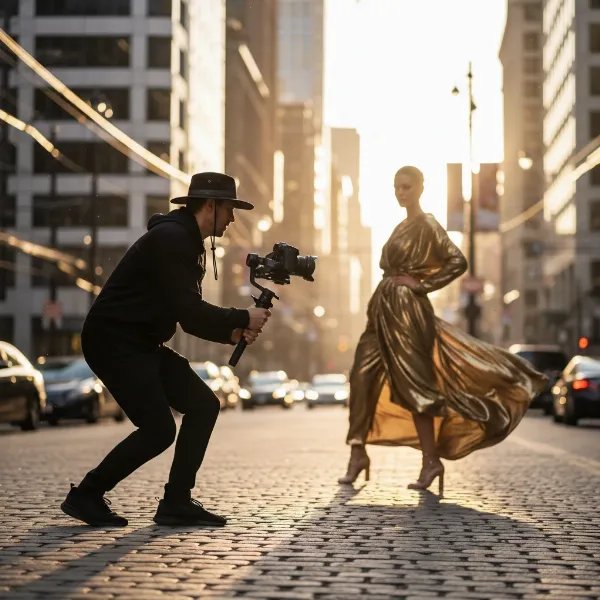 A filmmaker operating a camera gimbal, executing a parallax shot around a subject in an urban environment with a blurred background, showcasing depth and movement.
Expert Tips for Elevating Your Gimbal Filmmaking
Beyond the mechanics, a few overarching principles will transform your technical execution into true cinematic artistry.
- Practice Consistently: Like any skill, mastering advanced gimbal techniques requires repetition. Dedicate time to practice your movements, experiment with different scenarios, and review your footage critically. The muscle memory and intuitive understanding you develop will be invaluable.
- Shoot in Higher Frame Rates: Capturing footage at 60fps or 120fps allows you to slow down your shots in post-production, making even the slightest movements appear incredibly smooth and dreamlike. This is particularly effective for accentuating the flow of parallax and the drama of a reveal.
- Plan Your Shots Meticulously: Visualize your shot before you even press record. What is the subject? What story are you telling? Where will the obstruction be for a reveal? How will the background move for parallax? Planning minimizes errors and maximizes creative potential.
- Use Post-Production for Refinement: While a good shot is built in-camera, post-production offers powerful tools for enhancement. Minor stabilization, color grading, and timing adjustments can take a great gimbal shot and make it truly extraordinary.
Buying Guide: Choosing a Gimbal for Advanced Techniques
Selecting the right gimbal is fundamental. For advanced techniques, look beyond basic stabilization features.
- Stability and Payload Capacity: Ensure your gimbal can comfortably support your camera and lens setup. Overloading a gimbal can compromise its stabilization and lead to jerky movements. Check the maximum payload capacity and aim for a gimbal that offers a good margin.
- Ergonomics and Handling: Consider how the gimbal feels in your hands. Comfort is crucial for executing complex, multi-take shots. Look for designs that allow for versatile gripping positions, such as underslung mode or a dual-handle setup, which enhance control and reduce fatigue.
- Advanced Features: Modern gimbals offer intelligent features that can assist with complex shots. Look for features like advanced tracking (ActiveTrack, RavenEye), customizable controls, and robust motor response adjustments, which can be invaluable for perfecting parallax and reveal shots.
Buying Guide: Expert Advice
When investing in a Camera Stabilizer for advanced techniques, consider your entire workflow. It’s not just about the gimbal itself, but how it integrates with your camera system and your shooting style. Look for reliable brands with good support, and prioritize gimbals that offer intuitive controls, allowing you to focus on the shot rather than wrestling with settings. Read reviews from experienced users and watch tutorials specific to the gimbal you’re considering. This diligence will ensure your investment genuinely enhances your creative output.
Conclusion
Mastering advanced gimbal techniques like the parallax and reveal shots transforms your filmmaking, allowing you to craft visually compelling narratives with unparalleled smoothness and professionalism. These aren’t mere camera movements; they are artistic choices that add depth, emotion, and anticipation to your stories. From the dynamic layering of a parallax shot that immerses viewers in a scene, to the dramatic unveiling of a reveal that captivates their attention, your gimbal is a powerful storytelling instrument. With practice, careful planning, and an understanding of your equipment, you can unlock a new level of cinematic expression. So, grab your gimbal, step out, and start experimenting – what incredible stories will you reveal next?
Frequently Asked Questions
What is the difference between a parallax shot and a dolly zoom?
A parallax shot involves physically moving the camera around a fixed subject to create depth illusion through background movement. A dolly zoom (or “vertigo effect”) involves dollying the camera towards or away from a subject while simultaneously zooming the lens in the opposite direction, creating a disorienting effect where the background appears to change size relative to the subject, without necessarily orbiting.
Can I achieve these shots with any camera stabilizer?
While a 3-axis gimbal is ideal for the smooth, controlled movements required for parallax and reveal shots, some simpler stabilizers (like smartphone gimbals) can achieve basic versions of these techniques. However, the precision, control, and payload capacity of dedicated camera gimbals offer superior results for advanced and cinematic applications.
How important is balancing my gimbal for advanced techniques?
Proper balancing is absolutely critical for all gimbal operations, especially advanced techniques. An unbalanced gimbal will strain its motors, lead to shaky footage, reduce battery life, and make precise movements incredibly difficult. Always take the time to perfectly balance your camera on your gimbal before attempting any shot.