Capturing truly cinematic, butter-smooth video with a DSLR camera can be a formidable challenge, especially when paired with the formidable weight and length of a heavy zoom lens. The added bulk and shifting center of gravity demand a stabilization solution far beyond what in-body image stabilization can offer. For serious videographers and filmmakers, a high-performance gimbal isn’t just an accessory; it’s an essential tool that unlocks unparalleled creative potential, transforming shaky handheld shots into professional-grade motion. This comprehensive guide will navigate the complexities of selecting the best gimbals specifically designed to handle the rigorous demands of heavy DSLR cameras and their accompanying zoom lenses, ensuring your footage remains rock-steady, no matter the action.
What is a Camera Stabilizer, and Why Do You Need One for Heavy Setups?
A Camera Stabilizer is a device engineered to isolate your camera from unwanted movements, providing fluid and stable footage. While the term “stabilizer” can broadly encompass various tools like Steadicams and sliders, our focus here is on gimbals. Gimbals are motorized stabilizers that use gyroscopes and brushless motors to counteract motion across three axes—pan, tilt, and roll—keeping your camera level and steady.
For heavy DSLR cameras combined with substantial zoom lenses, the need for a dedicated gimbal becomes paramount. The increased weight and forward bias of such setups create greater inertia, making them inherently difficult to handhold steadily. Even minor movements can result in noticeable wobbles or jarring shifts in your video. A robust gimbal actively works to eliminate this shake, allowing you to achieve complex tracking shots, smooth pans, and dynamic tilts that would be impossible otherwise. Beyond the technical benefits, using a gimbal reduces operator fatigue during long shoots, enabling more consistent and creative output.
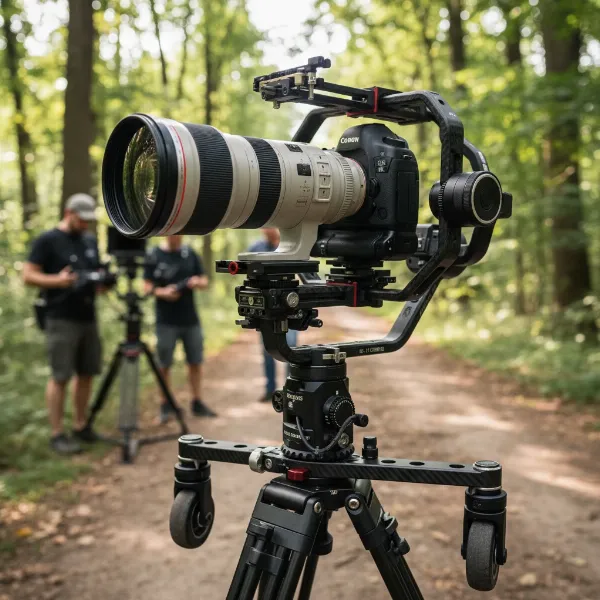 Professional DSLR camera with a heavy zoom lens mounted on a robust gimbal for cinematic video.
Key Factors When Choosing a Gimbal for Heavy DSLR & Zoom Lenses
Selecting the right gimbal for a demanding camera setup requires careful consideration of several critical specifications. Compromising on these aspects can lead to frustration, poor performance, or even equipment damage.
Payload Capacity: The Non-Negotiable Criterion
The single most important factor when choosing a gimbal for a heavy DSLR and zoom lens is its payload capacity. This specification indicates the maximum weight the gimbal’s motors can effectively stabilize. Attempting to mount a camera and lens combination that exceeds this limit will result in strained motors, inconsistent stabilization, and potentially damaging stress on the gimbal’s components. To ensure optimal performance, accurately calculate the total weight of your camera body, lens, and any essential accessories like external monitors, microphones, or wireless transmitters. Always choose a gimbal with a payload capacity comfortably above this calculated weight to allow for smooth operation and future flexibility. Many professional gimbals designed for heavy setups offer capacities of 4 kg (8.8 lbs) or more, providing ample headroom for most DSLR and heavy zoom lens combinations.
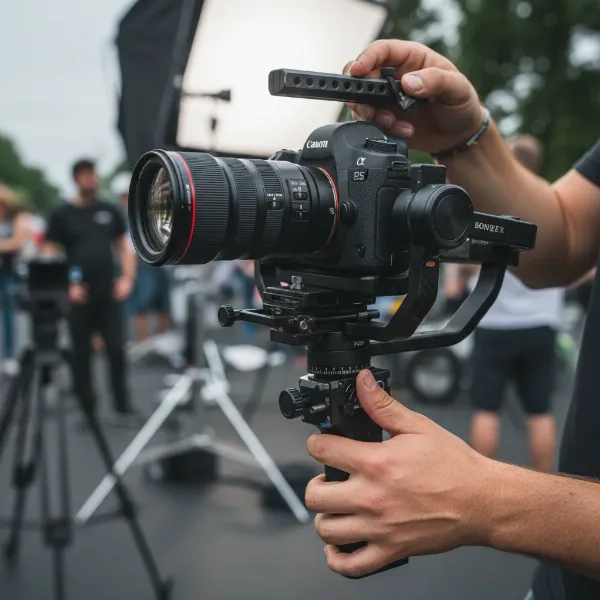 A videographer carefully balancing a heavy DSLR and zoom lens on a professional gimbal.
Balancing Mechanism and Ease of Setup
Even with a high payload capacity, a gimbal is only as effective as its balance. Heavy and front-heavy camera-lens setups, common with zoom lenses, require precise balancing to distribute weight evenly across the gimbal’s axes. Modern gimbals incorporate features that significantly simplify this often-tedious process. Look for gimbals with fine-tuning knobs on the tilt axis for micro-adjustments, as well as Teflon-coated arms or dual sliding bearings that allow for smoother, less frictional movement during balancing. An efficient quick-release plate system is also invaluable, enabling fast mounting and dismounting of your camera without needing to rebalance entirely each time. Some advanced gimbals even feature automatic axis locks that secure the arms for transport and unlock automatically when powered on, preventing accidental movement and protecting the motors.
Motor Strength and Responsiveness
Powerful, high-torque brushless motors are essential for handling the inertia of heavy camera-lens rigs, particularly during dynamic movements. These motors must be strong enough to quickly adjust and maintain stability against shifts in weight and external forces. Advanced stabilization algorithms, such as DJI’s SuperSmooth mode or Zhiyun’s Instune system, further enhance performance by predicting and counteracting micromovements, ensuring exceptionally stable footage even with challenging 100mm zoom lenses. A gimbal with responsive motors can keep up with rapid changes in direction, delivering consistently smooth results.
Ergonomics and Handling
Operating a gimbal with a heavy DSLR and zoom lens for extended periods can be physically demanding. Ergonomics play a crucial role in user comfort and the ability to maintain steady shots. Gimbals designed for heavy loads often feature adjustable sling grips and wrist rests to redistribute weight and reduce arm fatigue. Two-handed operation options or modular designs that allow for additional handles can also provide greater stability and control, particularly when navigating complex movements or working with very heavy setups. Consider the overall weight of the gimbal itself; while it needs to be robust, an overly heavy gimbal will add to operator strain.
Battery Life
Professional shoots often require long hours of continuous operation. A gimbal with excellent battery life is therefore a significant advantage. Many top-tier gimbals offer 12 to 20 hours of runtime on a single charge. Additionally, look for models that support fast charging, allowing you to quickly top up the battery during short breaks and minimize downtime.
Compatibility & Ecosystem
Ensure the gimbal is fully compatible with your specific DSLR camera model and provides camera control features through either physical buttons, a touchscreen, or a companion smartphone app. Features like focus, zoom, ISO, and shutter speed control directly from the gimbal can streamline your workflow. The availability of accessory mounts (such as NATO rails or RSA ports) is also important for integrating external monitors, microphones, lights, and follow focus systems, allowing you to build a complete, customized filming rig.
Top Gimbals for DSLR Cameras with Heavy Zoom Lenses
Based on payload capacity, advanced features, and user feedback, several gimbals stand out for their ability to handle heavy DSLR cameras with zoom lenses.
DJI RS 4 Pro
The DJI RS 4 Pro is often hailed as a premier choice for heavy camera setups, boasting a robust payload capacity of up to 4.5 kg (10 lbs). This makes it ideal for full-frame DSLRs combined with substantial zoom lenses. A key innovation is its precision-control knob on the tilt axis, which allows for micro-adjustments, greatly simplifying the balancing process, especially with front-heavy lens configurations. The Teflon-coated arms and dual sliding bearings on the roll axis further contribute to smooth adjustments. The RS 4 Pro also features automatic axis locks, streamlining setup and breakdown while protecting the motors. Its extensive battery life (up to 12 hours, with an optional grip extending it to 29 hours) and compatibility with a wide range of accessories make it a favorite for professional cinematographers.
Zhiyun Crane 4
The Zhiyun Crane 4 is another powerhouse designed for professional use, supporting payloads of approximately 4 kg (8.8 lbs). It excels in ergonomic design, featuring an adjustable sling grip and wrist rest that significantly enhance comfort and reduce fatigue during extended shooting sessions with heavy gear. The Crane 4 includes innovative motor warning lights on each axis, providing instant visual feedback for precise balancing, which is a valuable time-saver when switching lenses. It also integrates a built-in fill light and offers intuitive touchscreen and app controls. While its battery is non-swappable, it provides a solid 12 hours of operation.
MOZA Air 2S
The MOZA Air 2S is a strong contender for professional DSLR users, offering a payload capacity of 9.3 lbs (4.2 kg). Its standout feature is an impressive 20-hour battery life, ensuring uninterrupted shooting even on the longest days, with the added benefit of rapid 2-hour charging. The Air 2S features a smart micro handwheel for precise control over zoom, pan, tilt, and focus, along with a quick-release system for one-step balancing. Its universal extension bracket allows for easy attachment of various accessories, enabling extensive customization for any shooting scenario.
Mastering Your Gimbal: Tips for Smooth Footage
Acquiring a powerful gimbal is just the first step; mastering its use is crucial for consistently smooth, professional results.
- Proper Balancing is Paramount: Invest time in perfectly balancing your camera and lens on the gimbal. An unbalanced setup forces the motors to work harder, draining battery and potentially leading to jerky footage. Follow your gimbal’s specific instructions meticulously, adjusting each axis until the camera remains stationary in any position without motor power.
- Understand Gimbal Modes: Familiarize yourself with the different operating modes (e.g., Pan Follow, Tilt Follow, All Locked, POV, Sport Mode). Each mode serves a specific creative purpose, and knowing when to use them will elevate your shots.
- Practice Movement Techniques: Smooth gimbal operation requires specific body mechanics. Practice walking with a slight bend in your knees, mimicking a “ninja walk” to absorb shock. Use your core and arms to guide the gimbal, rather than relying solely on wrist movements.
- Regular Calibration and Firmware Updates: Keep your gimbal’s firmware updated to ensure optimal performance and access to new features. Periodically recalibrate the motors as recommended by the manufacturer, especially if you notice any drift or inconsistent stabilization.
Where to Buy Your Professional DSLR Gimbal
When investing in a high-quality gimbal for your heavy DSLR and zoom lenses, it’s essential to purchase from reputable sources.
- Authorized Retailers: Major photography and video equipment stores (both online and physical) are the best places to buy. They typically offer official warranties, customer support, and genuine products.
- Manufacturer Websites: Purchasing directly from brands like DJI, Zhiyun, or MOZA ensures authenticity and direct access to their support network.
- Check Policies: Always review the retailer’s warranty, return, and exchange policies before making a purchase. This is especially important for complex and expensive equipment like professional gimbals.
Buying Guide: Expert Advice for Your Investment
As an experienced technician at StabilizerPro.com, I’ve seen countless setups and learned what truly makes a difference in the field. Here’s my expert advice for making the best investment:
“Don’t underestimate the combined weight of your DSLR and zoom lens. Many users choose a gimbal based on their camera body alone, forgetting that a heavy telephoto can easily double or triple the total payload. Always measure your complete setup before making a purchase decision. Overloading a gimbal is the quickest way to kill its performance and lifespan.” – Admin, StabilizerPro.com
- Be Realistic About Your Payload: As emphasized, accurately weigh your entire camera and lens setup, including any quick release plates, external monitors, or microphones you intend to use. Then, choose a gimbal with a safety margin on its payload capacity.
- Prioritize Ease of Balancing: For heavy and front-heavy zoom lenses, a gimbal with precise fine-tuning knobs and smooth-gliding arms will save you immense time and frustration on set. This feature is often more valuable than raw payload capacity alone.
- Consider Your Workflow: If you frequently switch between different camera-lens combinations, a gimbal with quick-release plates and efficient auto-lock features will be a game-changer. For long shoots, battery life and ergonomic comfort cannot be overlooked.
- Read User Reviews with Similar Setups: While expert reviews are helpful, seek out testimonials from users who are operating the gimbal with similar DSLR models and heavy zoom lenses. Their real-world experiences can provide invaluable insights into a gimbal’s practical performance and limitations.
- Invest in Quality: For professional results with heavy gear, a budget gimbal will often fall short. Skimping on cost can lead to poor stabilization, unreliability, and a frustrating user experience. Consider a gimbal an investment in your craft.
Conclusion
Choosing the Best Gimbals For DSLR Cameras With Heavy Zoom Lenses is about empowering your filmmaking with unparalleled stability and creative freedom. The journey begins with a clear understanding of your equipment’s weight and the specific demands of your shooting style. By prioritizing robust payload capacity, intuitive balancing mechanisms, powerful motors, and ergonomic design, you can confidently select a gimbal that will transform your footage from shaky to cinematic. Top contenders like the DJI RS 4 Pro, Zhiyun Crane 4, and MOZA Air 2S consistently deliver the performance needed for demanding professional setups. With the right gimbal and a commitment to mastering its operation, you’re well on your way to capturing breathtaking, fluid visuals that truly stand out. What cinematic masterpieces will you create next with your perfectly stabilized rig?
Frequently Asked Questions
What’s the fundamental difference between a gimbal and a Steadicam?
While both gimbals and Steadicams provide camera stabilization, they achieve it through different mechanisms. Gimbals use motorized axes and electronic sensors to actively counteract movement, offering automated stabilization. Steadicams are mechanical devices that rely on weights, counterbalances, and a skilled operator’s movements to achieve fluid shots, requiring significant practice to master. Gimbals are generally easier for beginners, while Steadicams can offer a unique “floating” feel.
Can I use any zoom lens on a gimbal designed for heavy DSLRs?
While gimbals for heavy DSLRs have high payload capacities, the physical dimensions and weight distribution of certain extremely long or unusually shaped zoom lenses might still present balancing challenges. Always check the gimbal’s compatibility list and consider the physical length of your lens, as some gimbals may have limitations on the maximum camera-plus-lens length they can accommodate and balance effectively. A detachable lens support can often help with longer lenses.
How often should I rebalance my gimbal?
You should rebalance your gimbal every time you change your camera body, lens, or add/remove significant accessories. Even minor changes in weight or weight distribution can affect the gimbal’s performance. While some gimbals have quick-release plates that retain some balance settings, a full rebalance is typically necessary for optimal stability and to prevent motor strain. Regular checks ensure your footage remains consistently smooth.
