In the relentless pursuit of cinematic perfection, filmmakers constantly seek tools that transcend limitations and unlock new creative possibilities. The Freefly Mōvi Pro, upon its groundbreaking release in 2016, was precisely one such innovation. It revolutionized camera stabilization, setting new benchmarks for professional filmmaking and quickly becoming a staple on sets worldwide. Years later, as technology continues its rapid evolution, a crucial question arises: Does the Mōvi Pro still command its “industry standard” title in 2026? This comprehensive review dives deep into the Mōvi Pro’s enduring strengths, its current limitations, and ultimately, whether this venerable gimbal remains a pivotal tool in the modern filmmaker’s arsenal.
The Freefly Mōvi Pro: A Legacy of Cinematic Innovation
The Freefly Mōvi Pro arrived as a monumental shift in camera stabilization. Introduced in November 2016, it quickly established itself as a game-changer, renowned for its advanced camera movement system, high performance, and remarkable flexibility. It empowered filmmakers to capture dynamic, impossibly smooth shots that were once far more challenging or even unachievable with previous technologies.
Designed primarily for professional cinematographers, the Mōvi Pro’s core purpose was to provide unwavering stability for a wide range of camera setups, from DSLRs to heavier cinema camera bodies with sophisticated zoom lenses. Its robust design and continually expanding ecosystem, including strong third-party support, rapidly solidified its position as a go-to choice for demanding productions globally.
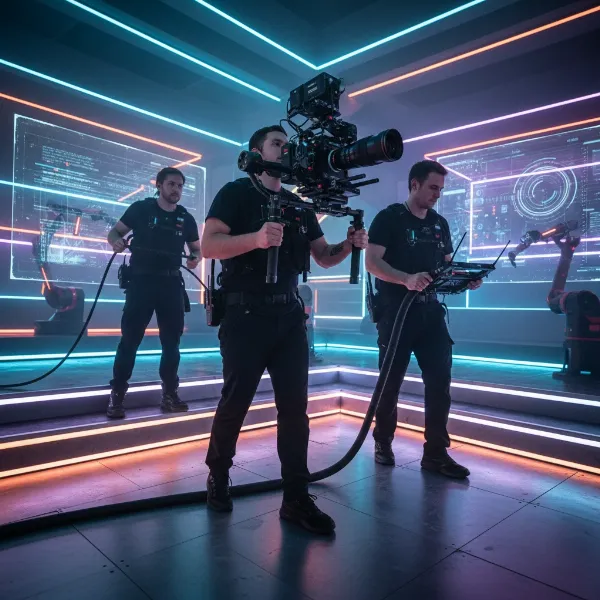 Freefly Mōvi Pro gimbal capturing smooth cinematic footage on a film set, highlighting its innovative design
Unpacking the Mōvi Pro: Key Features and Specifications
The Mōvi Pro’s enduring appeal stems from a meticulously engineered suite of features designed for professional use. Understanding these core attributes is essential to appreciating its role in today’s cinematic landscape.
Design and Build Quality
|
Our Picks for the Best Camera Stabilizer in 2026
As an Amazon Associate I earn from qualifying purchases.
|
||
| Num | Product | Action |
|---|---|---|
| 1 | 3-Shoe DSLR/Mirrorless/Action Camera Camcorder Phone Stabilizer Expansion Cage Mount Moviemaking Holder Rig YouTube Tiktok Vlogging Video Kit Compatible with GoPro Canon Nikon Sony iPhone Android |

|
| 2 | FeiyuTech SCORP 3 Gimbal Stabilizer for Camera, Built-in AI Tracking Sensor & Detachable Remote Control, 3.5KG Payload Camera Stabilizer with Touch Screen, Vertical Shooting |
|
| 3 | ZHIYUN CINEPEER Weebill 3E [Official], 3-Axis Lightweight Gimbal Stabilizer for DSLR & Mirrorless Camera Canon/Sony/Panasonic/Nikon, 3KG Payload, Native Vertical Shooting, Bluetooth Shutter Control |
|
| 4 | DJI RS 3 Mini, 3-Axis Gimbal Stabilizer for Cameras Canon/Sony/Panasonic/Nikon/Fujifilm, 2 kg (4.4 lbs) Tested Payload, Camera Gimbal with Native Vertical Shooting, Black |
|
| 5 | DJI Osmo Mobile 7P Gimbal Stabilizer for iPhone, Android, Native Tracking, Lighting, 3-Axis Phone Gimbal, Quick Launch, One-Tap Edit, Built-in Extension Rod & Tripod, 10hrs Use, Phone Charging |
|
| 6 | Zeadio Video Action Stabilizing Handle Grip Handheld Stabilizer with Cold-Shoe Mount for All DSLR Camera Camcorder |
|
| 7 | DJI Osmo Mobile 8 Advanced Tracking Combo Gimbal Stabilizer for Phone, AI Native Tracking with Audio & Lighting, 360° Pan Rotation, Built-in Extension Rod & Tripod, 10h Battery, Extension Rod |
|
| 8 | DJI Osmo Mobile 7 Gimbal Stabilizer for iPhone, Android, Built-in Tripod, Portable Stabilizer for iPhone, Selfie Stick, 3-Axis Phone Gimbal, ActiveTrack 7.0, One-Tap Edit, 10hrs Use, Phone Charging |
|
| 9 | FeiyuTech SCORP 2 Gimbal Stabilizer for DSLR and Mirrorless Camera, Integrated Al Tracking Sensor, 3-Axis Camera Stabilizer for Sony Canon Panasonic Nikon, 2.5kg Payload Touch Screen Vertical Shooting |
|
| 10 |
|
|
The Mōvi Pro is often described as “robust” and a “next level of gimbal,” built to withstand the rigors of demanding professional production environments. Its construction prioritizes durability and reliability, making it a trusted companion on set. Crucially, for its capability class, the Mōvi Pro is remarkably lightweight. At approximately 6 lbs (2.5-2.63 kg) without batteries or a camera, it offers a significant portability advantage over many competitors. This reduced weight makes it considerably more manageable for extended handheld operation, reducing operator fatigue when a heavier support rig isn’t feasible or desired.
Payload Capacity
The Mōvi Pro comfortably supports camera setups weighing up to approximately 15 lbs (6.8 kg). This capacity is ample for a vast array of popular DSLR, mirrorless, and compact cinema cameras, often with prime lenses or lightweight zooms. However, it’s important to note this limitation. For very heavy cinema camera builds or specialized long zoom lenses, the Mōvi Pro’s payload capacity can be a restrictive factor, a point where some competitors gain an edge.
Advanced Stabilization Technology
At the heart of the Mōvi Pro’s performance are its sophisticated stabilization mechanics. It features twice the continuous pan torque of the original Mōvi units, allowing for more powerful and precise movements. High-speed MEMS sensors, floating-point processors, a 3-axis compass, and an inbuilt barometer work in concert to deliver incredibly precise control and exceptional stabilization performance. Adding to its user-friendliness, the Mōvi Pro boasts an automated self-tuning algorithm that quickly finds optimal stiffness and filter settings, streamlining the setup process.
Ecosystem and Control
Freefly has cultivated a comprehensive ecosystem around the Mōvi Pro, including official accessories like the Mōvi Controller, Mōvi Wheels, and the innovative Mimic handheld control system. The Mimic, in particular, gained popularity for its intuitive, gesture-based remote camera operation. Beyond Freefly’s offerings, a “huge third-party market” from companies such as Ignite Digi and Cinemilled provides an extensive array of specialized mounts, power solutions, and integration accessories, significantly enhancing the Mōvi Pro’s versatility across diverse production workflows. Furthermore, its integrated REDLink Command Protocol offers direct, remote control over RED Epic and Scarlet camera settings.
Power and Portability
The Mōvi Pro utilizes Freefly’s SL4 battery ecosystem. While reliable, its original 1800mAh batteries generally offer less capacity compared to some newer competitors, like the Ronin 2’s 4200mAh units, which often provide more integrated power for cameras and peripherals. However, the Mōvi Pro compensates with a fast boot-up time, reportedly under two seconds, and a “fastboot” mode for instant readiness, ensuring minimal downtime on set. It also provides professional D-Tap ports and COM ports for powering accessories and focus motors.
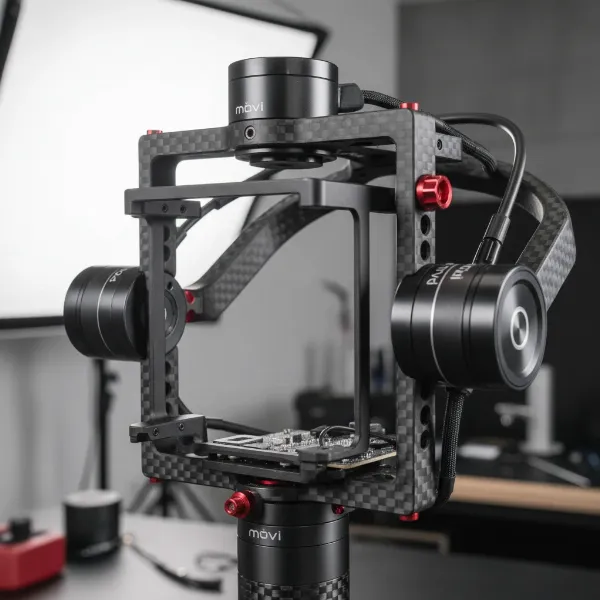 Close-up of the Freefly Mōvi Pro gimbal, emphasizing its robust build and advanced stabilization motors
Mōvi Pro vs. The Competition: Standing Tall in 2026?
To assess the Mōvi Pro’s current standing, a direct comparison with its primary competitor, the DJI Ronin 2, is essential. These two gimbals have dominated the high-end professional market for years, each with distinct advantages.
| Feature | Freefly Mōvi Pro | DJI Ronin 2 |
|---|---|---|
| Payload Capacity | ~15 lbs / 6.8 kg | 30 lbs / 13.6 kg |
| Weight (Gimbal only) | ~6 lbs / 2.63 kg | ~15 lbs / 6.8 kg |
| Battery Capacity | 1800mAh (original) | 4200mAh |
| Software/OS | Stable, but some beta features lingered | Often preferred, “nailed” from the start |
| Ecosystem | Strong third-party support (Ignite Digi, Cinemilled) | Growing DJI ecosystem, improved customer service |
The “industry standard” question is multifaceted. While the Mōvi Pro was undeniably a groundbreaking device, it is no longer the sole or undisputed standard for every application. The DJI Ronin 2, with its significantly higher payload capacity, captured a substantial market share, particularly for heavier camera setups and its more integrated power solutions.
However, the Mōvi Pro’s lightweight design, robust build, and extensive, mature third-party ecosystem ensure its continued relevance. Many professionals still build their careers around being a “Mōvi OP,” valuing its agility and refined operating experience. The choice between the Mōvi Pro and its rivals often boils down to specific project requirements, the weight of the camera package, and individual operator preference. For those who prioritize portability and a proven system for lightweight to mid-range cinema cameras, the Mōvi Pro very much holds its own.
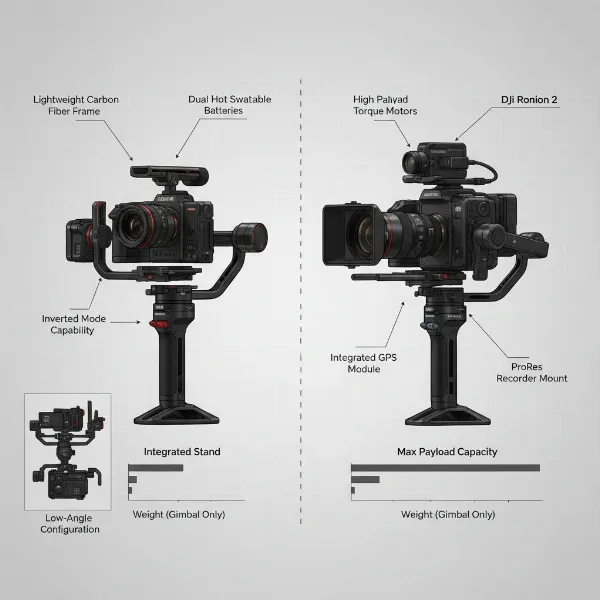 A side-by-side conceptual image comparing the Freefly Mōvi Pro and DJI Ronin 2, focusing on their distinct designs
Pros and Cons of the Freefly Mōvi Pro in Today’s Landscape
Even years after its initial release, the Freefly Mōvi Pro presents a compelling set of advantages and a few notable limitations in the competitive camera stabilization market.
Enduring Advantages
- Superior Portability: Its lighter weight remains a significant asset, making it more practical for extended handheld use without the immediate need for heavy support rigs like an Easy Rig or Ready Rig.
- Robust & Reliable Construction: Built to a professional standard, the Mōvi Pro’s sturdy engineering ensures it can endure demanding production environments and maintain performance over time.
- Mature Ecosystem: The extensive range of official and third-party accessories provides unparalleled rigging flexibility, allowing it to adapt to almost any creative or logistical challenge on set.
- Precise Control & Performance: Thanks to its advanced motors and sophisticated sensors, the Mōvi Pro continues to deliver exceptionally smooth and accurate camera movements, crucial for high-end cinematic results.
Current Limitations
- Payload Ceiling: The 15 lb payload limit, while generous for many setups, can restrict its use with very heavy cinema camera configurations or certain large, professional zoom lenses.
- Battery Life/Power Management: Compared to some newer gimbals, the Mōvi Pro’s older battery technology, even with the SL4 system, may