In the ever-evolving world of videography, the quest for flawlessly smooth footage remains a constant. From casual vloggers to professional cinematographers, everyone seeks to eliminate the distracting shakes and jitters that can mar an otherwise perfect shot. This pursuit has fueled a dynamic debate: as in-camera stabilization technologies advance rapidly, will they eventually render traditional gimbals obsolete? The answer, as with many technological discussions, is nuanced, highlighting a future where both systems continue to play crucial, albeit distinct, roles.
The Core of Stabilization: Understanding the Technologies
At its heart, camera stabilization is about counteracting unwanted movement to produce steady images and video. This is essential not only for a professional aesthetic but also for engaging viewers without causing visual fatigue. Today, filmmakers leverage several key technologies, each with unique principles and applications.
In-camera stabilization primarily refers to systems built directly into the camera body or lens. In-Body Image Stabilization (IBIS) shifts the camera sensor to compensate for movement, while Optical Image Stabilization (OIS) does the same with lens elements. Electronic Image Stabilization (EIS), on the other hand, is a software-based solution that digitally processes video frames to smooth out motion. External gimbals, typically motorized 3-axis devices, physically keep the camera level and isolated from operator movement, offering a distinct approach to achieving stability.
In-Camera Stabilization: Strengths and Limitations
Modern cameras boast impressive built-in stabilization, making handheld shooting more viable than ever. Yet, these systems come with inherent strengths and weaknesses that define their utility.
In-Body Image Stabilization (IBIS)
IBIS is a marvel of engineering, allowing the camera’s sensor to move on multiple axes to counteract shake. This offers significant convenience, as the stabilization is integrated into the camera body itself, meaning it works with any attached lens. It’s particularly effective for still photography and for smoothing out minor jitters in static video shots, offering a “plug-and-play” advantage without requiring extra gear or setup time. However, its effectiveness can diminish significantly when using longer telephoto lenses or attempting aggressive, deliberate camera movements such as a fast walk or a complex tracking shot. Additionally, continuous use of IBIS, particularly during extended video shoots, can lead to increased battery drain and potential overheating issues in some camera models.
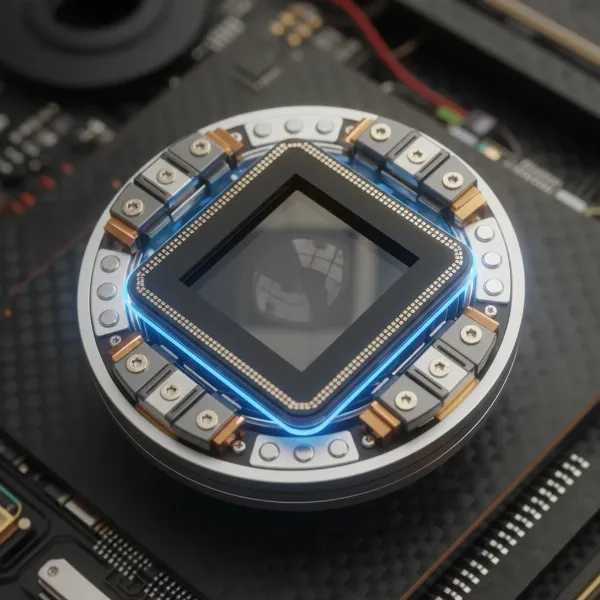 Close-up of a camera sensor showing in-body image stabilization mechanism with shifting sensor.
Electronic Image Stabilization (EIS) and Optical Image Stabilization (OIS)
EIS operates by analyzing video frames and digitally shifting them to maintain a stable composition. While it can produce surprisingly smooth results, especially for general video, this method often incurs a “crop factor,” meaning a portion of the image edges is sacrificed to provide the necessary buffer for digital manipulation. This can limit your field of view and alter the intended focal length. OIS, found in many lenses, uses floating lens elements to compensate for shake, primarily benefiting still photography and static video by providing clear images without blur. Both EIS and OIS, while effective for their intended purposes, primarily compensate for movement rather than actively preventing it, which sets them apart from the mechanical control offered by gimbals.
Gimbals: The Reign of Dynamic Stability
Despite the strides in in-camera technology, gimbals continue to hold a vital position in the videographer’s toolkit, particularly when it comes to dynamic, controlled camera movements.
Gimbals are motorized stabilizers that isolate the camera from the operator’s movements across multiple axes (pan, tilt, and roll). Their primary advantage lies in their ability to deliver superior stability for complex, deliberate movements like walking, running, or elaborate tracking shots, providing that coveted “floating camera” look. Unlike digital stabilization, gimbals preserve the full resolution and true focal length of your lenses, avoiding unwanted crop factors. Modern gimbals also integrate advanced features such as AI-powered tracking, gesture controls, and various shooting modes that unlock immense creative potential. Furthermore, a single gimbal can be used with multiple camera bodies, making it a versatile investment compared to upgrading an entire camera system for improved IBIS.
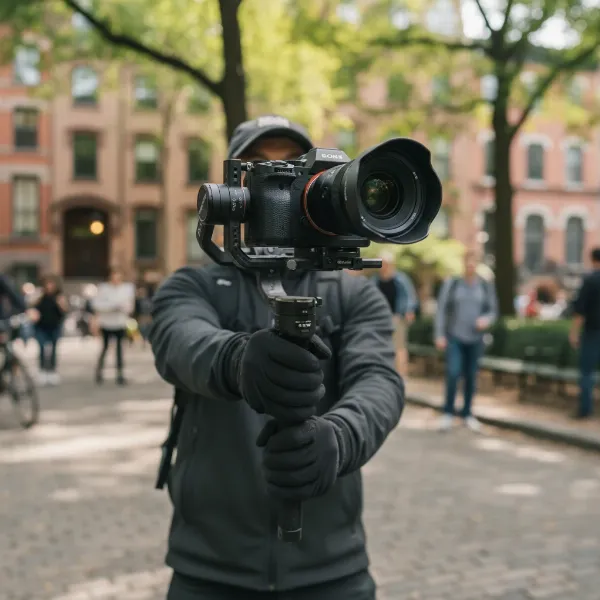 Professional camera mounted on a 3-axis motorized gimbal, ready for dynamic shooting.
“While in-camera stabilization is a fantastic convenience, gimbals offer a level of creative control and smooth cinematic motion that current built-in systems simply cannot replicate for dynamic shots.” – Alex Chen, Professional Cinematographer and Stabilizer Expert
However, gimbals come with their own set of considerations. They are bulkier and heavier than a standalone camera, adding to your gear load. They require careful setup and balancing for each camera and lens combination, which can be time-consuming, especially when switching lenses frequently. This additional equipment also represents an extra investment and a learning curve to master their operation effectively.
The Evolving Landscape: Where Are We Headed?
The future of stabilization points towards a synergy of these technologies rather than one completely replacing the other. Innovations are rapidly integrating hardware and software to provide unparalleled stability. We’re seeing the rise of hybrid stabilization systems that combine the best aspects of OIS, IBIS, and advanced EIS with powerful AI algorithms. These “smart” stabilization systems could potentially predict movement patterns and adapt in real-time, offering unprecedented precision and smoothness across various devices and shooting scenarios.
The global Camera Stabilizer market is projected to continue its robust growth, driven by the ever-increasing demand for high-quality video content from social media creators, vloggers, and professional filmmakers alike. This growth emphasizes that the need for stable footage is not diminishing, but rather expanding, necessitating more portable, user-friendly, and durable solutions across all categories. Compact integration of stabilization into smaller lenses and camera bodies is also on the horizon, making advanced stability more accessible for lightweight setups.
Choosing Your Path: Gimbal or Camera Stabilization?
The decision between relying solely on in-camera stabilization or investing in a gimbal largely depends on your specific needs, shooting style, and creative aspirations.
For filmmakers who primarily shoot handheld, especially with short to medium focal lengths, and whose content involves less aggressive movement, the convenience and effectiveness of advanced IBIS or EIS systems might suffice. These built-in solutions are perfect for “run-and-gun” scenarios where speed and portability are paramount.
However, if your projects demand consistently silky-smooth tracking shots, complex camera movements, or if you frequently work with longer lenses and heavier camera rigs, a gimbal remains an indispensable tool. It offers a level of professional polish and dynamic stability that current in-camera systems can only approximate. Consider your budget, your willingness to carry extra gear, and your comfort level with a slightly steeper learning curve when opting for a gimbal.
Expert Advice: Making an Informed Decision
Navigating the world of camera stabilization can feel overwhelming, but making an informed choice boils down to understanding your priorities. Start by clearly defining your primary shooting scenarios and the aesthetic you aim to achieve. Are you a travel vlogger needing lightweight versatility, or a filmmaker crafting cinematic sequences? Read reviews, watch comparison videos, and if possible, try out different systems with your camera setup. A high-quality gimbal provides unmatched fluidity for deliberate camera movements, while robust in-camera stabilization offers incredible freedom for everyday shooting and reduces setup complexity. The most effective approach for many videographers is to use both, leveraging the strengths of each system for different creative needs.
Buying Guide: Lời khuyên từ chuyên gia
- Xác định rõ nhu cầu và mục đích sử dụng: Your projects dictate your tools. Simple vlogging might only need IBIS, while cinematic tracking demands a gimbal.
- Đọc kỹ đánh giá và so sánh sản phẩm: Research specific models and how they perform with your camera setup.
- Tìm hiểu về chính sách bảo hành và hỗ trợ: Good support is crucial for any complex tech investment.
Conclusion
The debate over whether cameras will replace gimbals isn’t a simple “either/or” proposition. Instead, we are witnessing a remarkable evolution where both in-camera stabilization and external gimbals are pushing the boundaries of what’s possible in video production. While in-camera technologies like IBIS, OIS, and EIS continue to improve, offering unparalleled convenience and commendable stability for many scenarios, gimbals maintain their edge for achieving complex, fluid, and perfectly controlled dynamic movements without compromise. The future likely involves a synergistic approach, with creators choosing the best tool for each specific shot, leveraging the strengths of both to capture breathtakingly smooth footage. What kind of stable stories will you tell next?
Frequently Asked Questions
Do professional filmmakers still use gimbals?
Yes, professional filmmakers absolutely still use gimbals for shots requiring dynamic, smooth motion that in-camera stabilization cannot fully achieve, such as tracking subjects, elaborate camera moves, or maintaining a perfectly level horizon while moving. While IBIS and EIS are great, gimbals offer superior control and fluidity for high-end cinematic production.
Can IBIS fully replace a gimbal for walking shots?
While modern IBIS has made significant strides in smoothing out handheld footage, it generally cannot fully replace a gimbal for walking shots, especially if the movement is aggressive or prolonged. Gimbals provide a mechanical decoupling of the camera from the operator’s motion, resulting in a much smoother, “floating” feel that IBIS often struggles to replicate without introducing micro-jitters or a noticeable crop factor.
What are the main drawbacks of digital stabilization?
The primary drawback of digital stabilization (EIS) is the inherent crop factor it applies to the footage. This means your effective field of view is reduced, which can be problematic for wide-angle shots. Additionally, while much improved, EIS can sometimes introduce subtle artifacts or a slightly “floaty” or “jello” effect, and it cannot actively prevent camera movement in the same way a gimbal does.
Is AI stabilization the future?
AI stabilization is indeed a significant part of the future of camera stabilization. By leveraging artificial intelligence, systems can predict movement patterns, intelligently adjust stabilization in real-time, and potentially integrate hardware and software more seamlessly. This adaptive technology promises unmatched precision and could significantly enhance both in-camera and gimbal performance, leading to even smoother, more intelligent stabilization.