Capturing cinematic, buttery-smooth footage used to be the exclusive domain of professional filmmakers with elaborate, expensive rigs. Today, thanks to incredible advancements in technology, achieving stable, shake-free video is within reach for everyone from aspiring vloggers to seasoned cinematographers. If you’ve ever watched a beautiful shot ruined by shaky hands or jerky movements, you understand the transformative power of a camera stabilizer. This guide will walk you through the top camera stabilizers of 2026, helping you cut through the noise to find the perfect device to elevate your videography.
What is a Camera Stabilizer and Why Do You Need One?
A camera stabilizer is a device designed to reduce unwanted camera movement, vibration, and shake during filming, resulting in smooth, professional-looking footage. It’s an essential tool for anyone serious about video production, dramatically improving the quality and watchability of your content. Without a stabilizer, even the slightest hand tremor can translate into distracting jitters, making your audience feel disoriented and detracting from your message.
The most common types of camera stabilizers include gimbals, mechanical stabilizers (Steadicams), and sliders. Gimbals use motors and sensors to actively counteract movement in multiple axes, offering dynamic and highly controlled stabilization. Steadicams, or mechanical stabilizers, rely on counterweights and a vest system to achieve balance and isolation from the operator’s movements. Sliders provide smooth linear camera motion along a track, ideal for adding subtle, controlled movement to static shots. The core benefit across all types is consistent, fluid motion that captivates viewers and enhances storytelling.
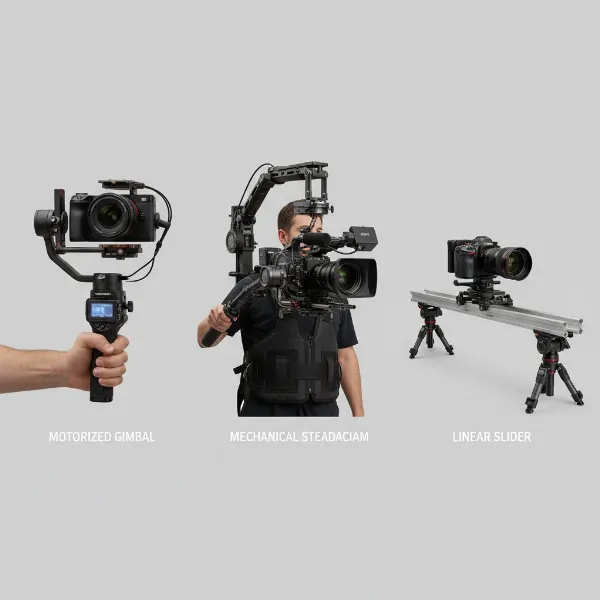 Three distinct camera stabilizers: a motorized gimbal, a traditional mechanical Steadicam rig, and a camera slider.
Factors to Consider When Choosing a Camera Stabilizer
Selecting the right camera stabilizer can seem daunting given the variety of options available. To make an informed decision, it’s crucial to evaluate several key factors that align with your specific needs and shooting style.
Camera Type
The type of camera you use is arguably the most critical factor. Different stabilizers are designed to handle varying weights and sizes.
- DSLR/Mirrorless Cameras: These require robust stabilizers with higher payload capacities. Many modern gimbals are specifically engineered for these cameras, offering advanced features and precise control. Compatibility with specific lens setups is also a key consideration.
- Action Cameras (GoPro, DJI Osmo Action): Smaller, lighter stabilizers, often waterproof and rugged, are ideal for action cameras. These are designed for portability and can withstand demanding environments, perfect for adventure sports and dynamic shots.
- Smartphones: The market for smartphone gimbals has exploded, offering highly portable and affordable options. These often include intelligent features like face tracking, gesture control, and creative shooting modes, making professional-looking phone footage easier than ever.
Budget
Camera stabilizers span a wide price range, from under $100 to several thousand dollars. Your budget will significantly influence the features and build quality you can expect.
- Entry-Level (Under $200): Typically smartphone gimbals or basic mechanical stabilizers for lightweight cameras. These are excellent for beginners or casual users.
- Mid-Range ($200 – $600): Offers more advanced smartphone gimbals and capable gimbals for smaller mirrorless cameras. You’ll find better motors, more sophisticated control, and a wider range of features in this segment.
- High-End ($600+): Designed for professional DSLR/mirrorless setups, heavy cinema cameras, or advanced Steadicam systems. These boast superior build quality, advanced stabilization algorithms, extensive customization, and the ability to handle heavier payloads and accessories.
Intended Use
Your primary filming purpose will dictate the most suitable type of stabilizer.
- Travel Vlogging & Everyday Shooting: Lightweight, portable gimbals for smartphones or small mirrorless cameras are ideal. Ease of setup and operation, along with good battery life, are paramount for on-the-go content creation.
- Sports & Action Filming: Rugged, often splash-proof gimbals designed for action cameras or compact setups are best. Look for durability, quick response, and the ability to handle fast movements.
- Professional Cinematography & Short Films: High-payload gimbals or traditional Steadicam rigs are necessary. These demand precision, extensive accessory support, and the ability to achieve complex, cinematic shots.
Weight and Size
The physical characteristics of the stabilizer itself are crucial for portability and user comfort.
- Portability: If you plan to travel frequently or shoot for extended periods, a lightweight and compact stabilizer that can easily fit into a backpack is essential.
- Payload Capacity: This refers to the maximum weight the stabilizer can effectively balance and operate with. Always ensure your camera and lens combination falls comfortably within the stabilizer’s payload limit to ensure optimal performance and prevent motor strain.
Comparing Popular Camera Stabilizer Types
Each type of camera stabilizer offers distinct advantages and disadvantages, making them suitable for different shooting scenarios. Understanding these differences is key to choosing wisely.
| Feature | Gimbal | Steadicam (Mechanical) | Slider |
|---|---|---|---|
| Pros | Easy to use, compact, highly flexible, precise electronic stabilization | Superior stabilization for complex, long takes, cinematic feel, battery-free operation | Creates smooth linear motion, easy to control, adds production value to static shots |
| Cons | Requires battery power, can be heavy for long takes, some models have a learning curve for advanced features | Requires significant skill and training to operate effectively, heavier, bulky system | Limited to linear movement, not for dynamic handheld shots, can be cumbersome to set up in certain environments |
| Best For | Vlogging, run-and-gun shooting, travel, general video production | Professional narrative films, commercials, broadcast, events requiring fluid tracking shots | Interviews, product showcases, establishing shots, cinematic reveals, B-roll |
Top Camera Stabilizers of 2026: Reviews and Top Picks
The market in 2026 offers an impressive array of camera stabilizers, each pushing the boundaries of technology and user experience. Here are some of the standout models.
DJI RS 5 Pro – The Professional’s Choice for Mirrorless/DSLR
The DJI RS 5 Pro continues DJI’s legacy of powerful, feature-rich gimbals. It boasts an enhanced stabilization algorithm, improved motor torque, and a streamlined balancing process, making it a favorite for professionals. Its robust build quality allows it to support a wide range of mirrorless and DSLR cameras, even with heavier lenses and accessories. The seamless integration with DJI’s ecosystem, including focus motors and transmission systems, creates an unparalleled workflow.
Zhiyun Weebill 4 Lab – Compact Powerhouse
Zhiyun’s Weebill 4 Lab introduces a revolutionary foldable design that makes it incredibly portable without compromising on performance. This gimbal is engineered for mirrorless cameras, offering intuitive controls, a vivid touchscreen display, and a quick-release system for effortless transitions. Its upgraded motors deliver excellent stability, even in dynamic shooting conditions, and the ergonomic grip ensures comfortable extended use.
FeiyuTech Scorp Mini – Versatility for Hybrid Shooters
The FeiyuTech Scorp Mini is a highly adaptable stabilizer designed to work with mirrorless cameras, smartphones, and action cameras, making it a versatile tool for creators who use multiple camera types. Its lightweight yet sturdy construction and comfortable underslung grip allow for unique low-angle shots. The Scorp Mini offers a comprehensive set of intelligent shooting modes and precise controls via its integrated joystick and buttons.
Insta360 Flow 2 – The Smartest Smartphone Gimbal
Building on the success of its predecessor, the Insta360 Flow 2 elevates smartphone videography to new heights. Its AI-powered tracking is incredibly precise, keeping subjects perfectly in frame even during complex movements. The integrated selfie stick, tripod, and power bank features make it an all-in-one solution for mobile content creators. Its compact, foldable design and intuitive app integration cement its place as a top pick for phone users.
Moza AirCross 4 – Lightweight Performance
The Moza AirCross 4 is a strong contender for mirrorless camera users seeking a balance between payload capacity and lightweight design. It offers excellent stabilization with quick response times, making it ideal for fast-paced shooting. The gimbal’s ergonomic handle and intuitive interface ensure a comfortable and efficient shooting experience, while its versatile accessory ports allow for expanded creative possibilities.
“The advancement in camera stabilizer technology in 2026 means that professional-grade stability is no longer exclusive to Hollywood budgets. Creators can now achieve stunning, fluid shots with devices that are more affordable, intelligent, and user-friendly than ever before.” – Dr. Elena Petrova, Lead Engineer, Advanced Robotics & Imaging Solutions
Guide to Using and Maintaining Your Camera Stabilizer
Getting the most out of your camera stabilizer involves proper setup, effective shooting techniques, and diligent maintenance.
Balancing and Setup
Proper balancing is the single most critical step for any stabilizer. For gimbals, this involves adjusting the axes until the camera remains level in any orientation, even when powered off. Most modern gimbals offer tool-less adjustments and fine-tuning knobs. Many also include app-guided balancing procedures to simplify the process. An imbalanced gimbal will strain its motors, reduce battery life, and lead to less effective stabilization.
Tips for Smooth Filming
- Walk like a ninja: Bend your knees and keep your core stable to minimize body-induced vertical movement.
- Start and end slowly: Smooth acceleration and deceleration are key to avoiding jarring starts and stops.
- Plan your shots: Pre-visualize your movement and composition before pressing record.
- Practice: Consistent practice with your stabilizer will significantly improve your muscle memory and shot fluidity.
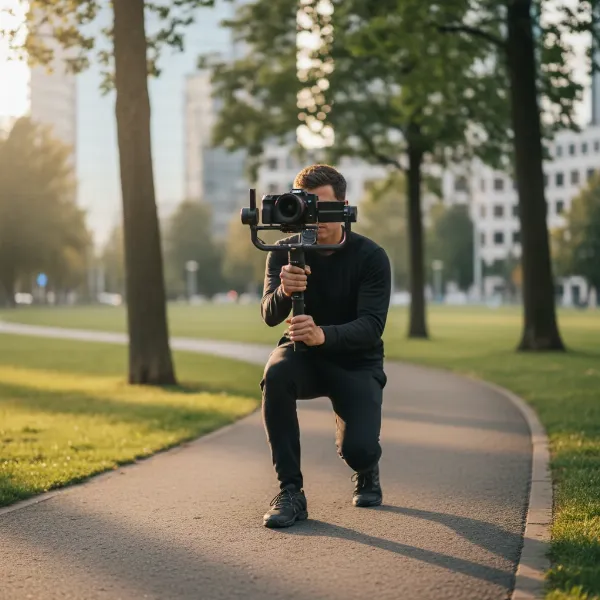 A videographer demonstrates proper "ninja walk" technique while operating a camera stabilizer for fluid video.
Cleaning and Maintenance
Regular maintenance ensures the longevity and optimal performance of your stabilizer.
- Keep it clean: Use a soft, dry cloth to wipe down the body and motors. Avoid harsh chemicals.
- Protect the motors: Do not force motor movements when the gimbal is off. Keep motors free of dust and debris.
- Store properly: Use the original case or a padded bag to protect your stabilizer during transport and storage.
- Firmware updates: Regularly check for and install firmware updates, which often bring performance improvements and new features.
Where to Buy a Camera Stabilizer?
Finding the right place to purchase your camera stabilizer is as important as choosing the right model.
- Specialized Camera Stores: Reputable retailers like B&H Photo, Adorama, and local camera shops offer expert advice, hands-on demonstrations, and often better warranty support.
- Online Marketplaces: Amazon, eBay, and the official brand websites (DJI, Zhiyun, FeiyuTech, Insta360) provide a vast selection, competitive pricing, and convenient delivery. Always check seller ratings and return policies.
- Consider Used/Refurbished: For budget-conscious buyers, certified refurbished units from reputable sellers can offer significant savings.
When purchasing, always prioritize retailers that offer clear warranty policies, good customer service, and a hassle-free return process.
Buying Guide: Expert Advice for Your Purchase
Choosing a camera stabilizer is an investment in your video quality. Here’s some expert advice to guide your decision:
- Define Your Needs Clearly: Before looking at products, list your primary camera, lens setup, typical shooting environments, and budget. This clarifies what features are essential.
- Read Reviews and Watch Demos: Don’t rely solely on specifications. Watch video reviews and tutorials to see the stabilizer in action and hear about real-world experiences.
- Check Payload Capacity (Again!): Always double-check that your heaviest camera and lens combination is well within the stabilizer’s rated payload. Overloading is the quickest way to damage your device.
- Consider Ecosystem: For brands like DJI, their ecosystem of accessories (follow focus, video transmission) can greatly enhance workflow if you plan to expand your kit.
- Warranty and Support: Understand the manufacturer’s warranty and the retailer’s return policy. Good support can save you headaches down the line.
Conclusion
The world of camera stabilizers in 2026 offers an incredible array of tools designed to transform your shaky footage into smooth, professional-looking video. From the professional-grade power of the DJI RS 5 Pro to the intelligent simplicity of the Insta360 Flow 2, there’s a perfect stabilizer for every type of creator and every budget. By carefully considering your camera type, intended use, and budget, and by practicing proper technique, you can unlock a new level of cinematic expression. Which camera stabilizer will be the game-changer for your next project?
Frequently Asked Questions
What is the main difference between a gimbal and a Steadicam?
A gimbal is an electronic, motorized device that uses sensors to actively counteract camera movement, making it generally easier to use for beginners. A Steadicam is a mechanical system involving counterweights and a vest, requiring significant skill to operate but offering a unique, natural float for professional, long takes.
Can I use a camera stabilizer for a smartphone and a DSLR?
While some hybrid stabilizers like the FeiyuTech Scorp Mini offer compatibility with multiple camera types, most gimbals are optimized for a specific weight class (e.g., smartphone, mirrorless, or heavy DSLR). Ensure the stabilizer’s payload capacity and mounting system match your camera.
How long does a camera stabilizer battery last?
Battery life varies significantly by model and usage, typically ranging from 8 to 20 hours for electronic gimbals. Factors like motor strain (due to imbalance or heavy cameras) and constant rebalancing can reduce battery life. Always carry a spare battery or a power bank for extended shoots.
Is a camera stabilizer necessary for vlogging?
While not strictly “necessary,” a Camera Stabilizer dramatically improves the professionalism and watchability of vlogs by eliminating shaky footage. It allows for dynamic walk-and-talk segments and smoother cinematic B-roll, enhancing the overall viewer experience and engagement.